
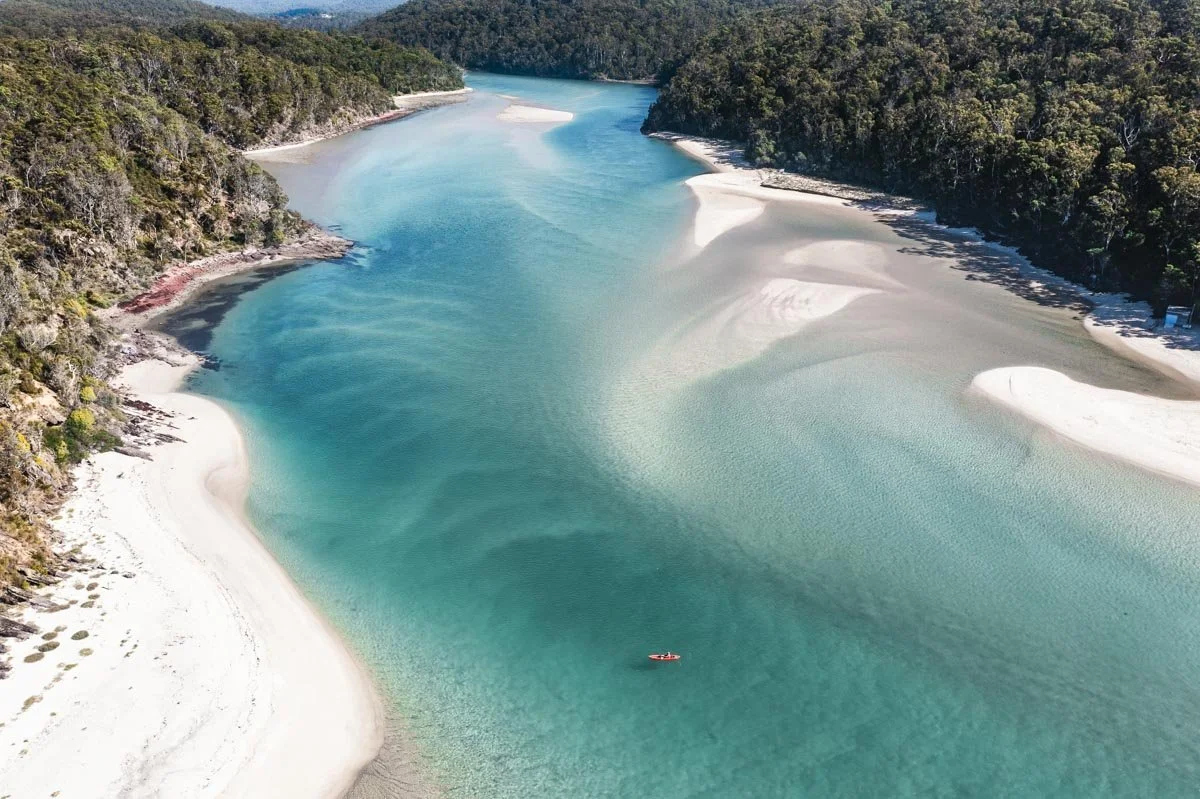
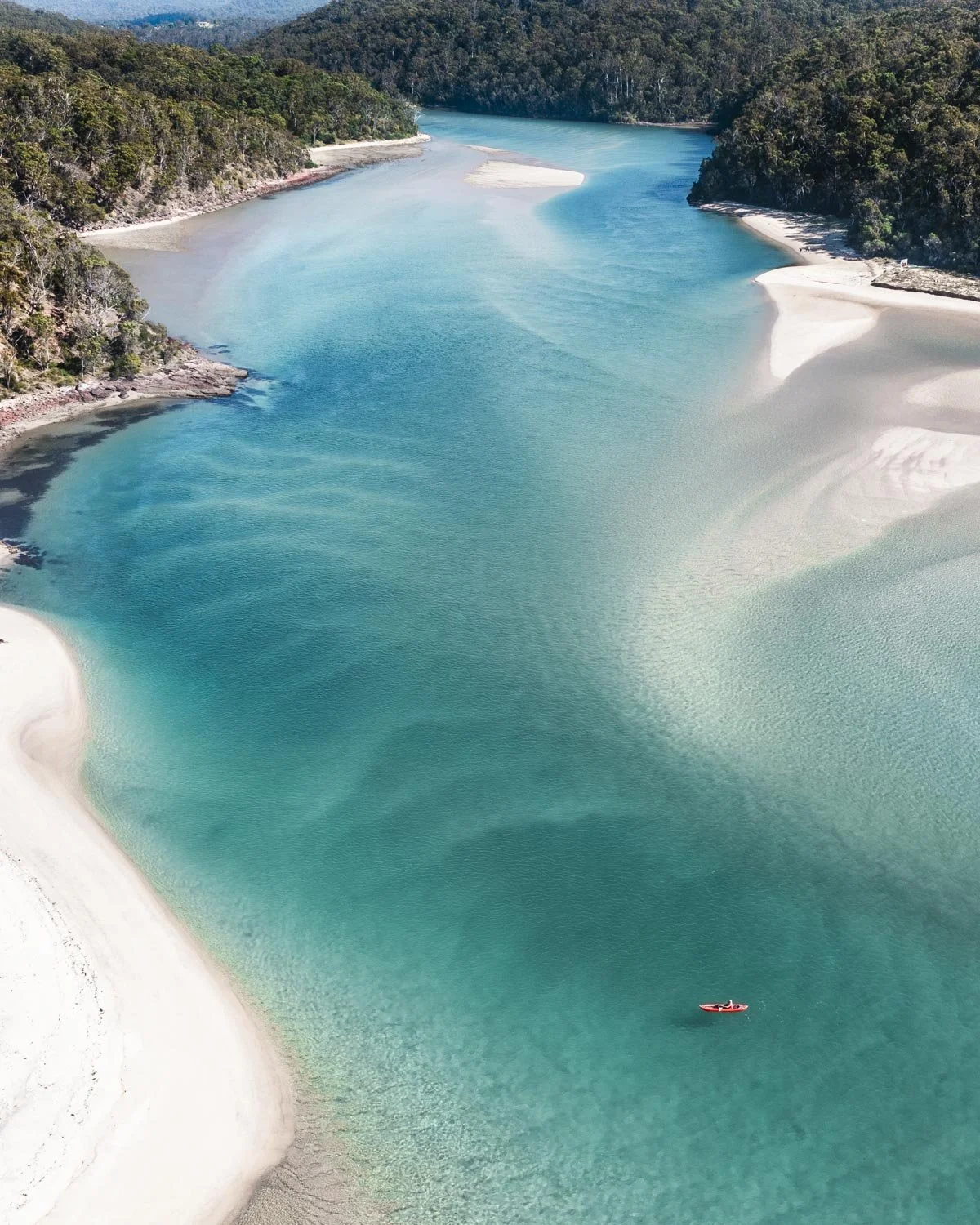
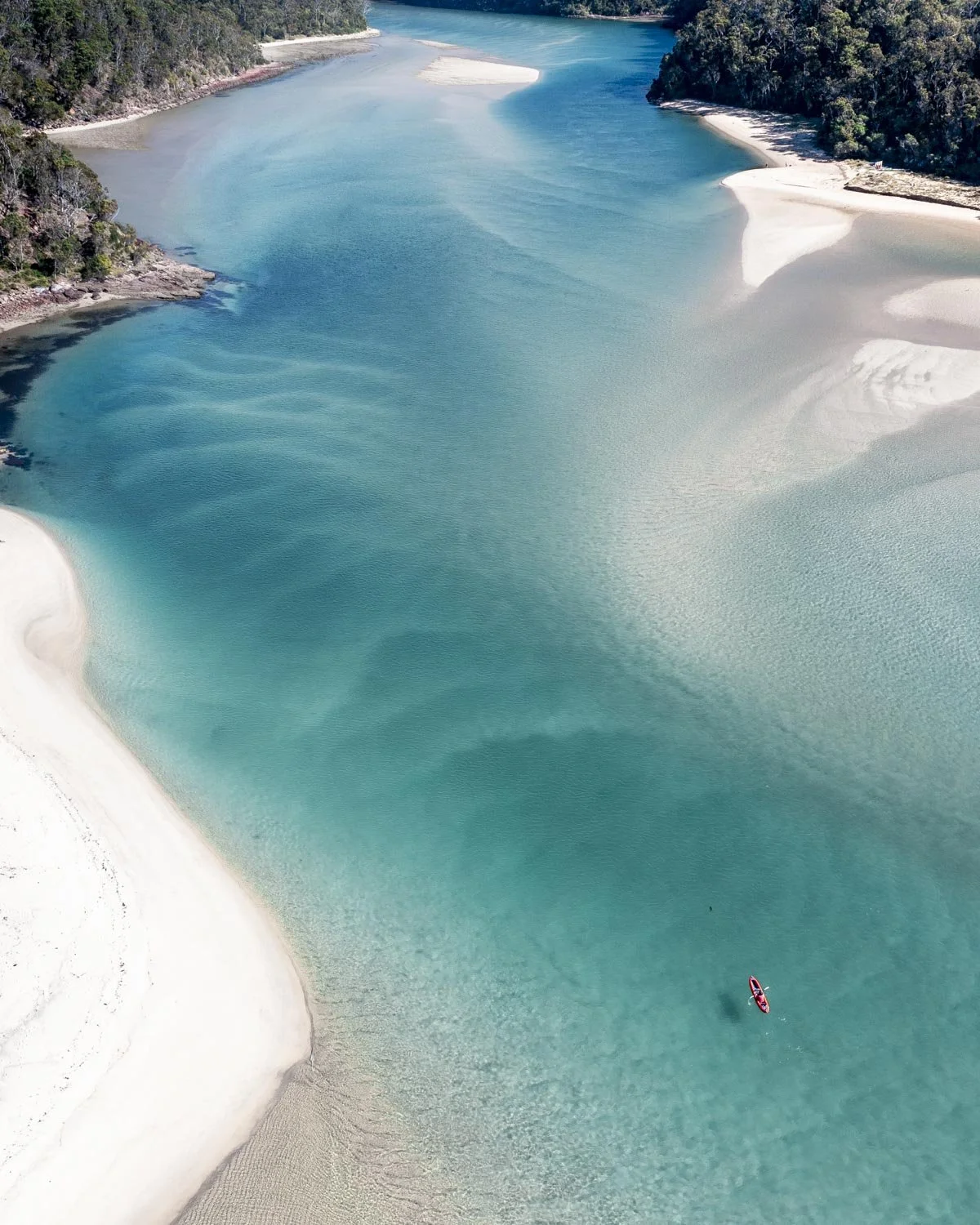
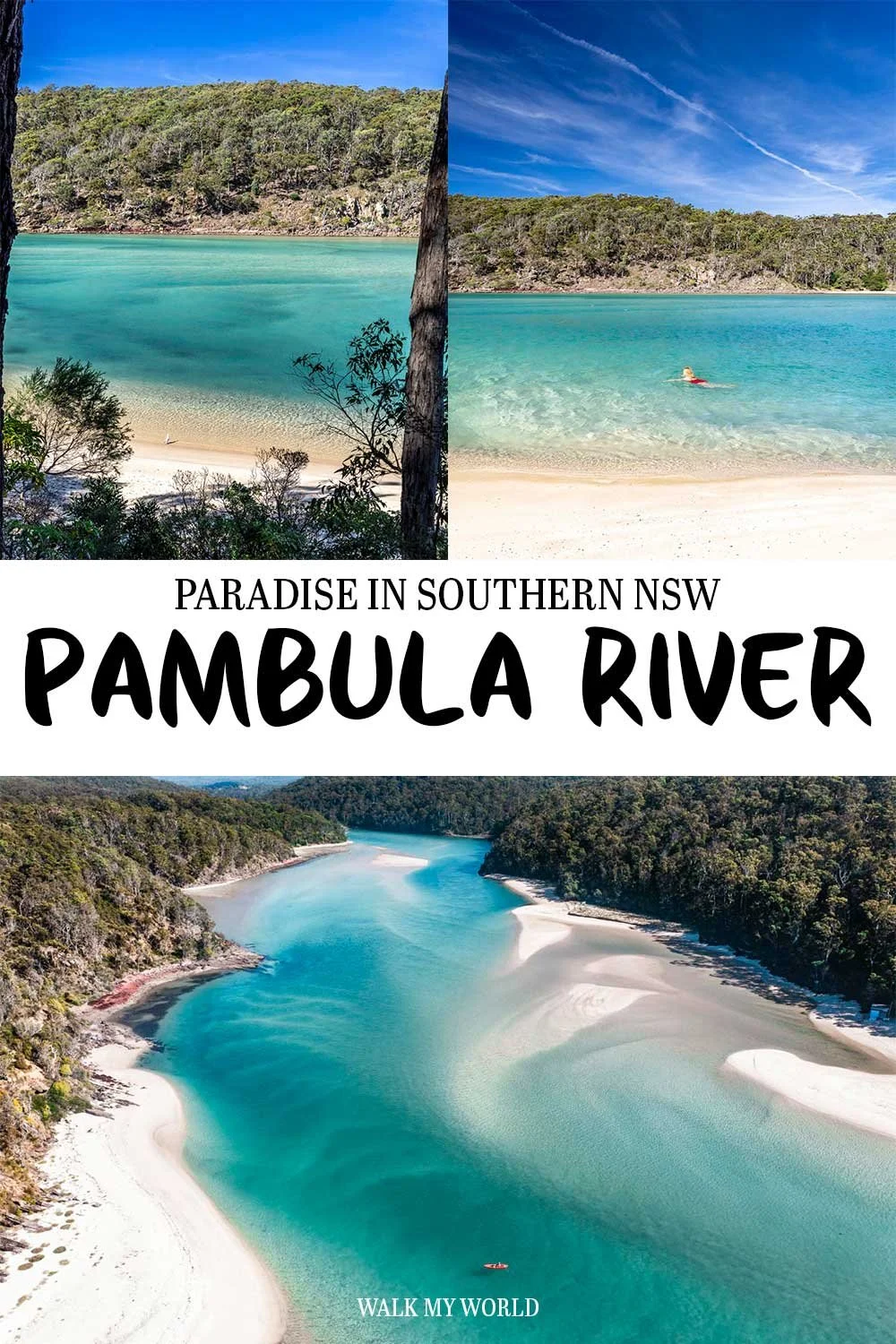
With gatorade blue water lined and golden sand beaches fringed with gum trees, the Pambula River is one of the most sensational swimming spots in NSW. The water colour really does need to be seen to be believed - we visited three times and were blown away every single time!
At low tide sand bars begin to form giving you additional mini beaches to relax on. It’s pure tropical island vibes without having to leave NSW!
There is a strong current in the river so you need to pick your swimming area carefully, more on that in the notes below.
Here’s what to expect from a visit to the stunning Pambula River.
Visiting the Pambula River
We’ve listed three different areas on the Pambula River and two are a 30 minute drive apart (despite being a really short distance across the water from each other). This map will help you visualise the spots so you can plan your trip more easily.
The red lines show the walking trails you need to take to access each spot.
The Pambula Rivermouth
The first part of the Pambula River you will come to from the parking area is the rivermouth, just down from where it meets the ocean.
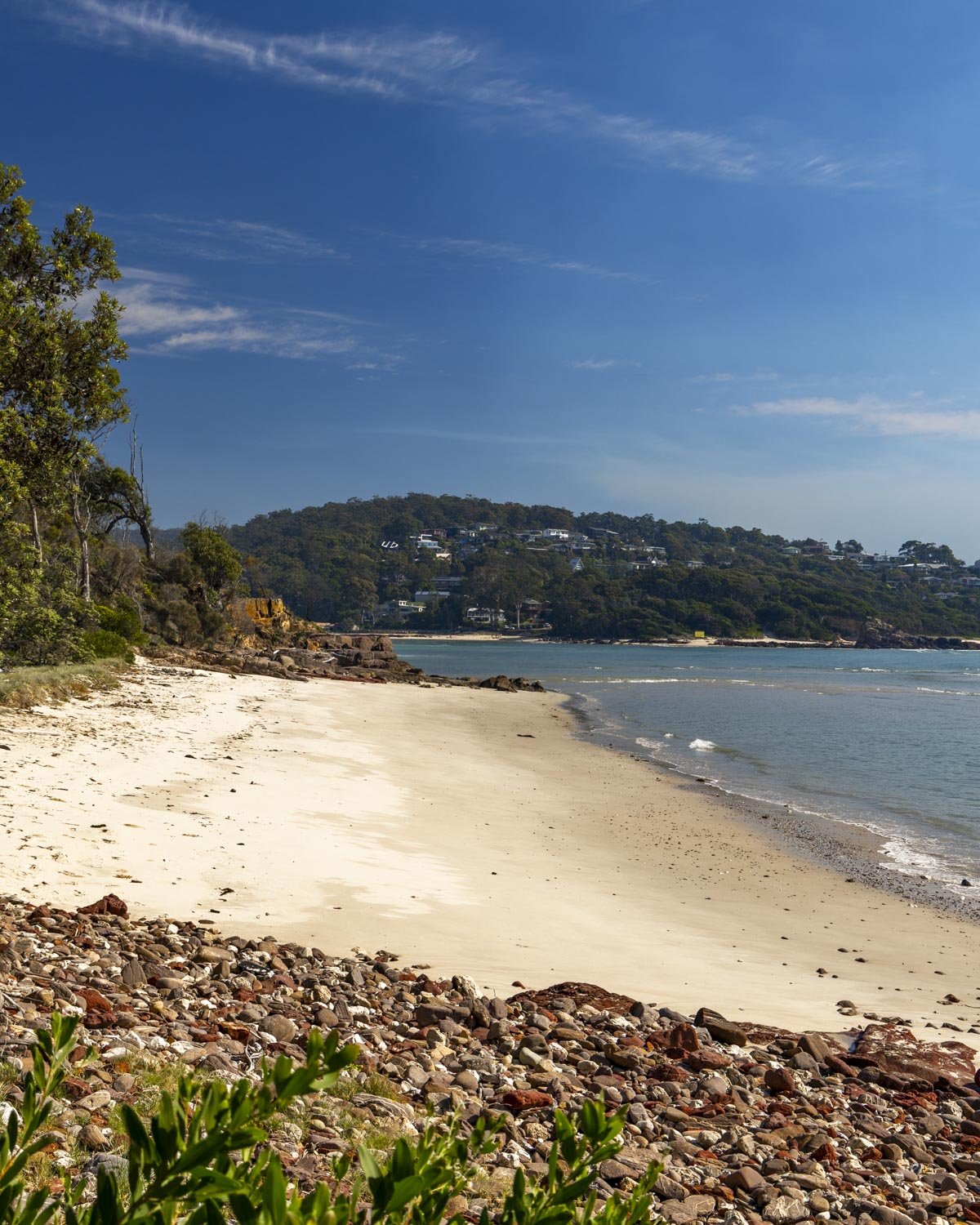
This section of the river is a one minute walk from the end of Coraki Drive (full parking details are at the end of this post). There’s a nice sandy beach and ridiculously easy access to that dazzling blue water.
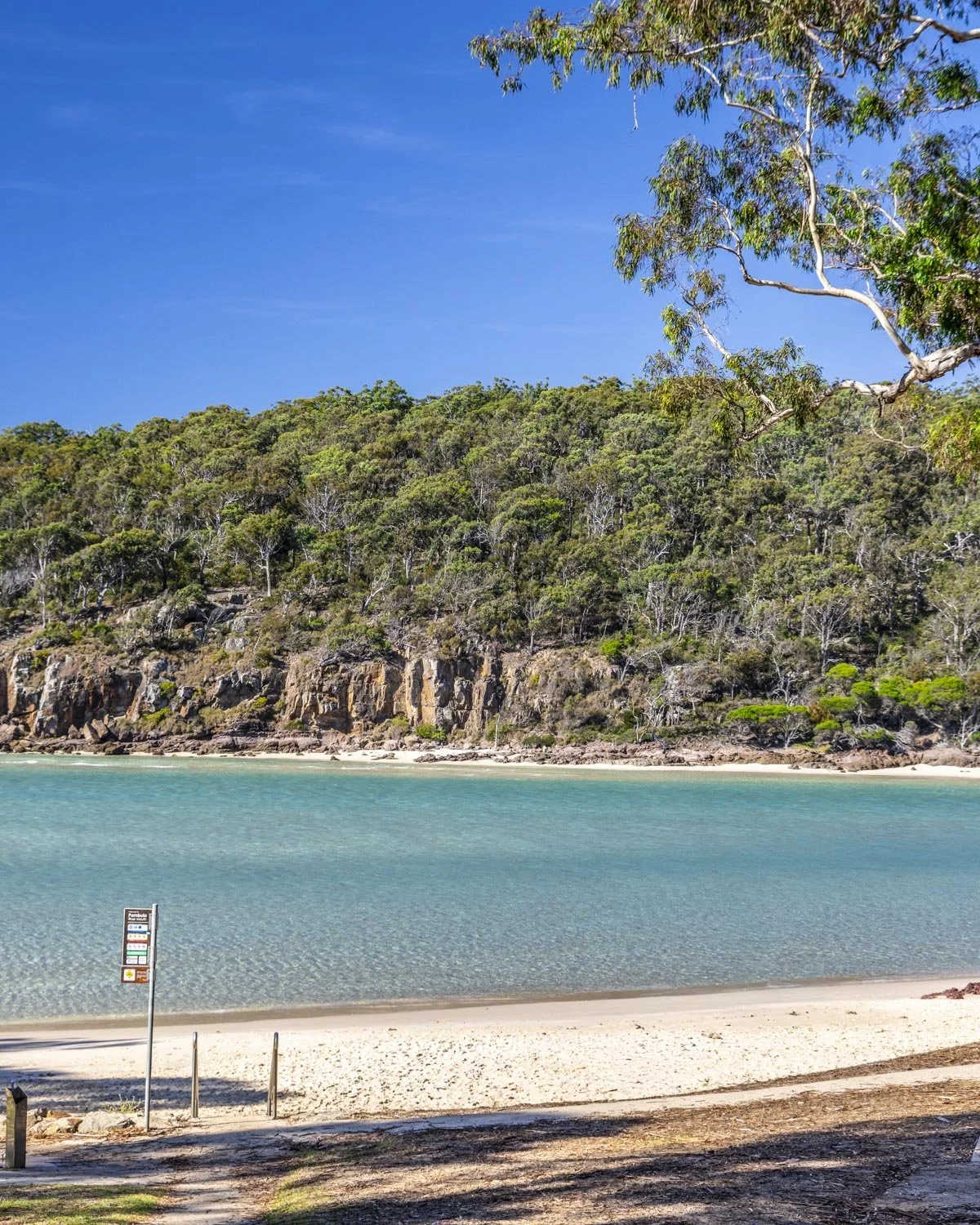
As a result it does see a lot of visitors in the school holidays and summer time generally. We skipped this area on our first visit in February but enjoyed it a lot in April when there were just a handful of people on the beach (If you prefer your spots a little quieter we have you covered in the next section).
It’s easy to see why it’s so popular, that water is as glorious as you’ll find in Jervis Bay and it’s just a few short strides from the car park.
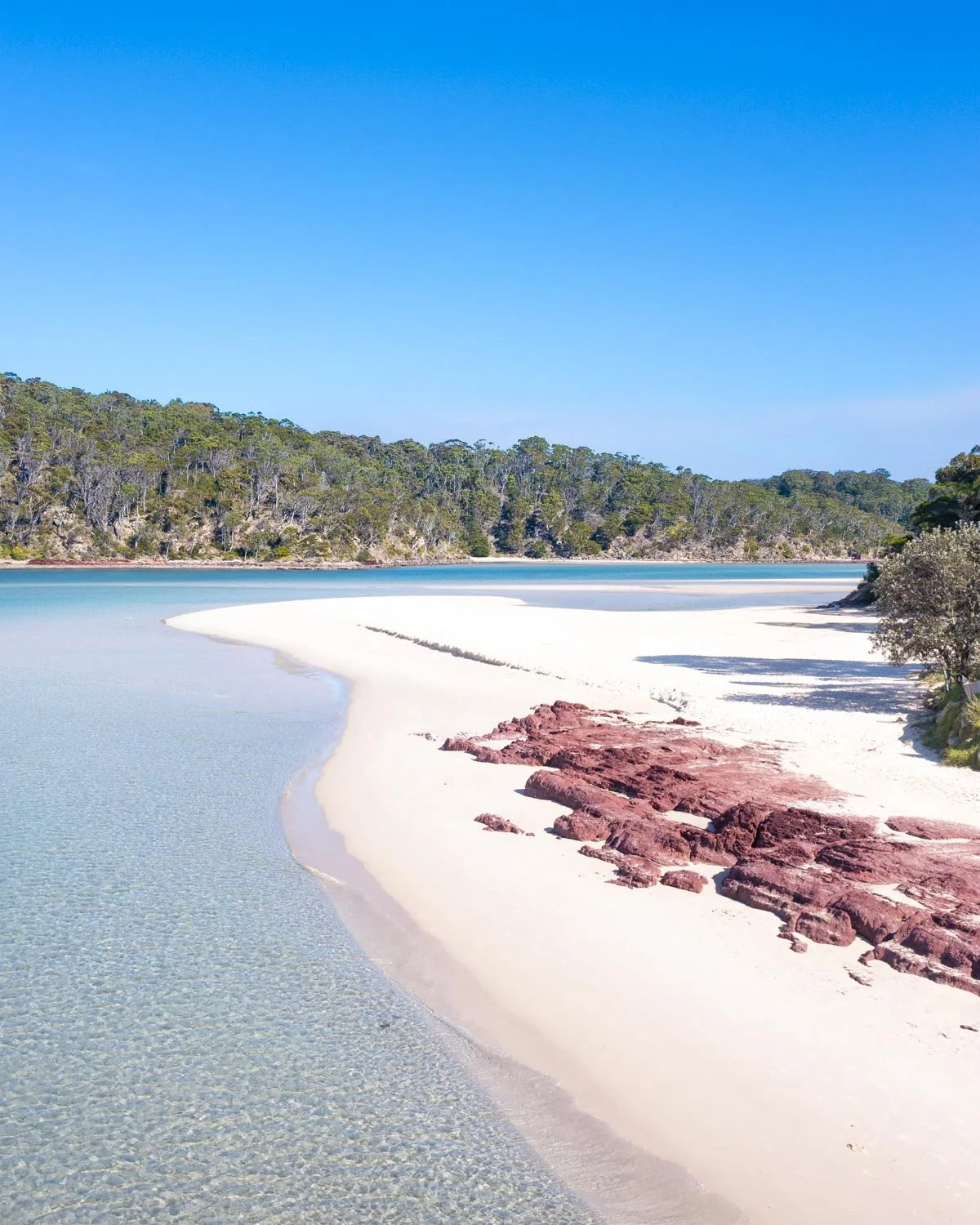
If you visit a couple of hours either side of low tide the water is shallow for some distance and you need to go further out to be able to swim.
There is a very strong current in the river so only venture further out if you’re a confident swimmer and even then I would be wary.
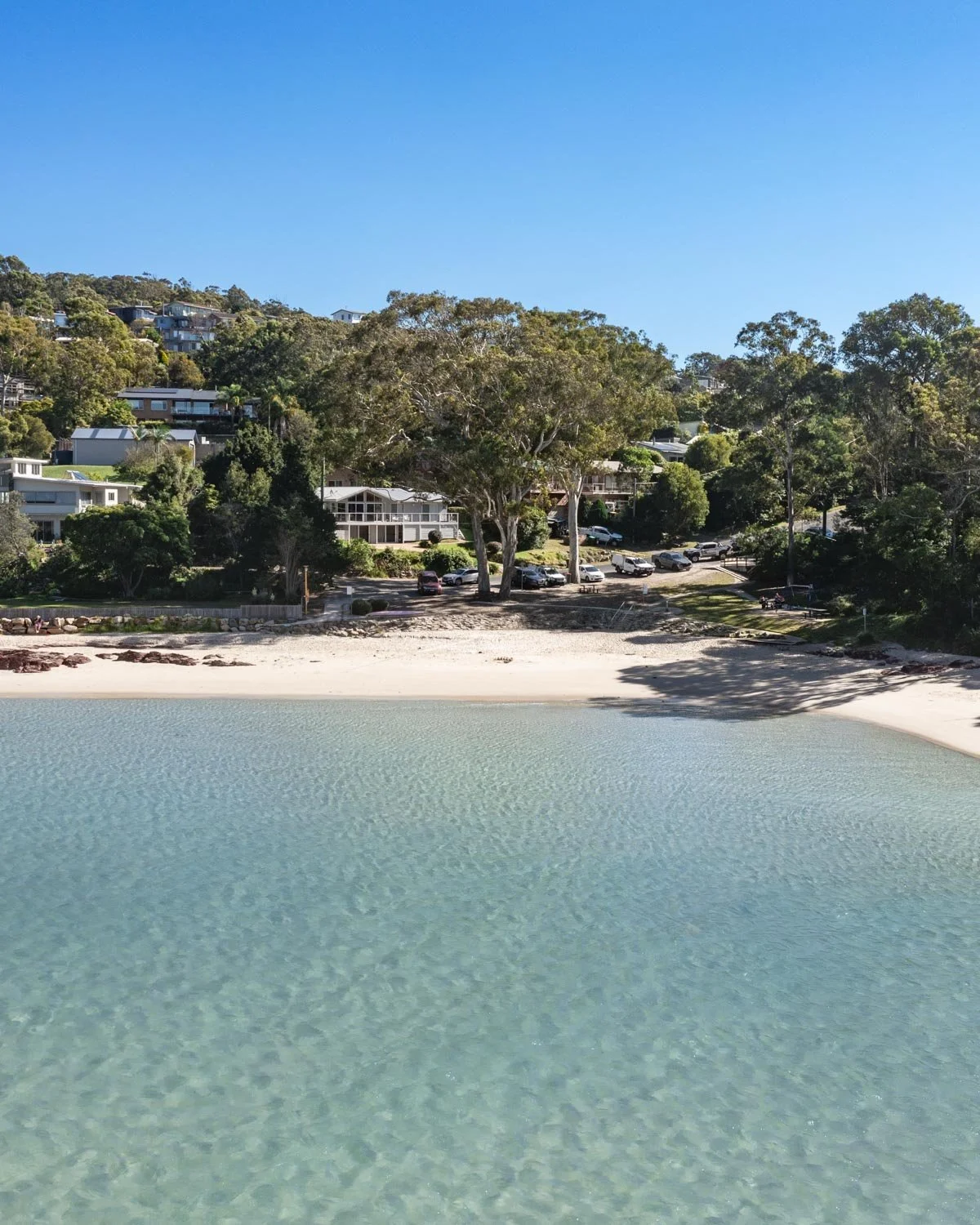
It gets stronger the closer you get to the ocean so I would recommend keeping a way back from that area. Generally speaking it’s somewhat sheltered from the waves though and I found swimming here on a slight and moderate swell to be the same, so it’s more about being mindful of the current than the swell unless it’s a really rough day.
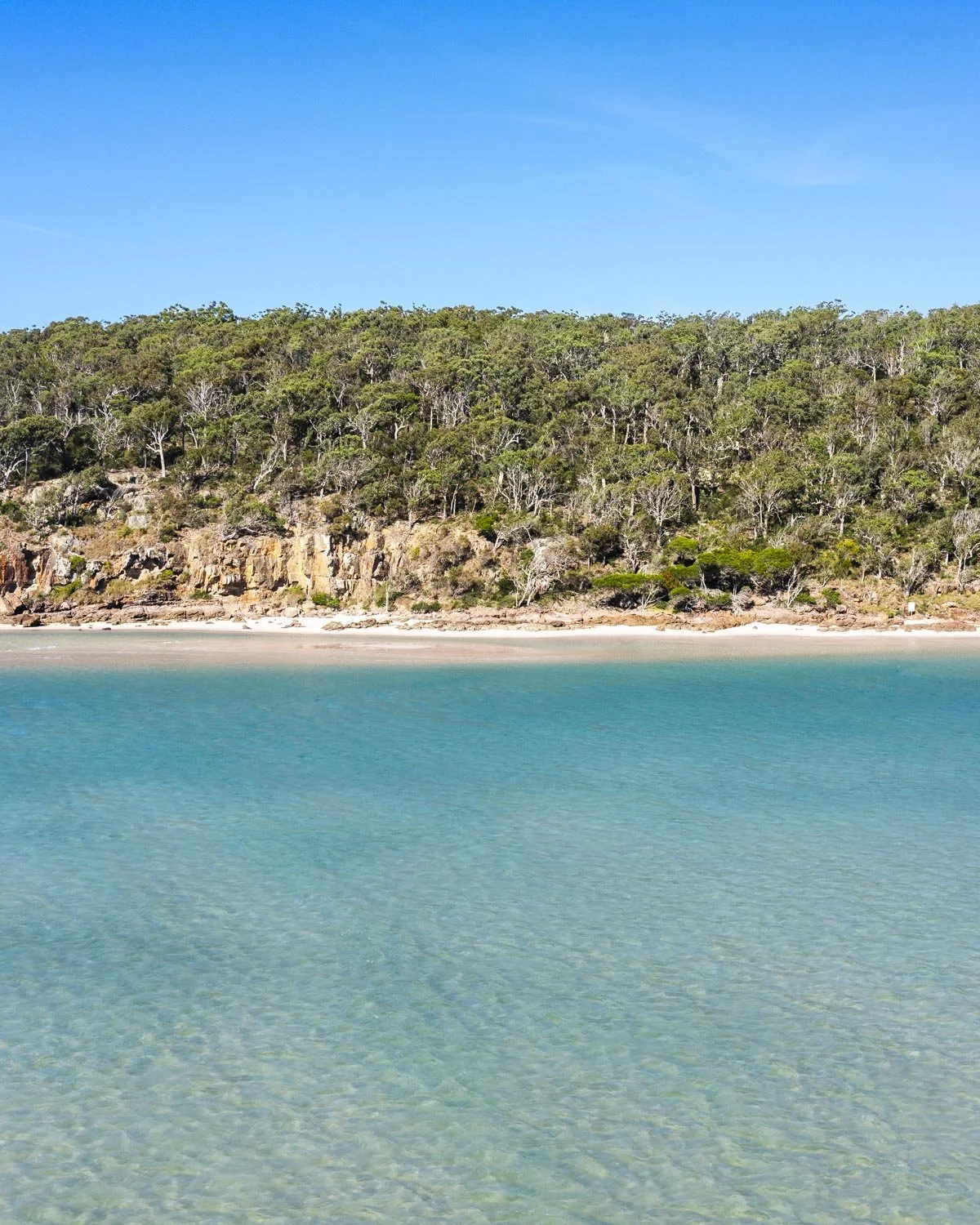
Spectacular as this area is, it is right by a residential road so it doesn’t exactly feel wild, which is why we decided to explore a little further.
The quieter parts of the river
On our most recent visit to the river we decided to explore the Pambula River Walking Track. I thought it was going to give us some lovely river views, but it offers so much more than that. If the tide is up it’s your only access to other small beaches along the river (if it’s low tide you can follow the sand the whole way).
The track begins to the right of the point at which you enter the beach beside the rivermouth, you’ll see a signpost for it leading into the bush, 125m away.
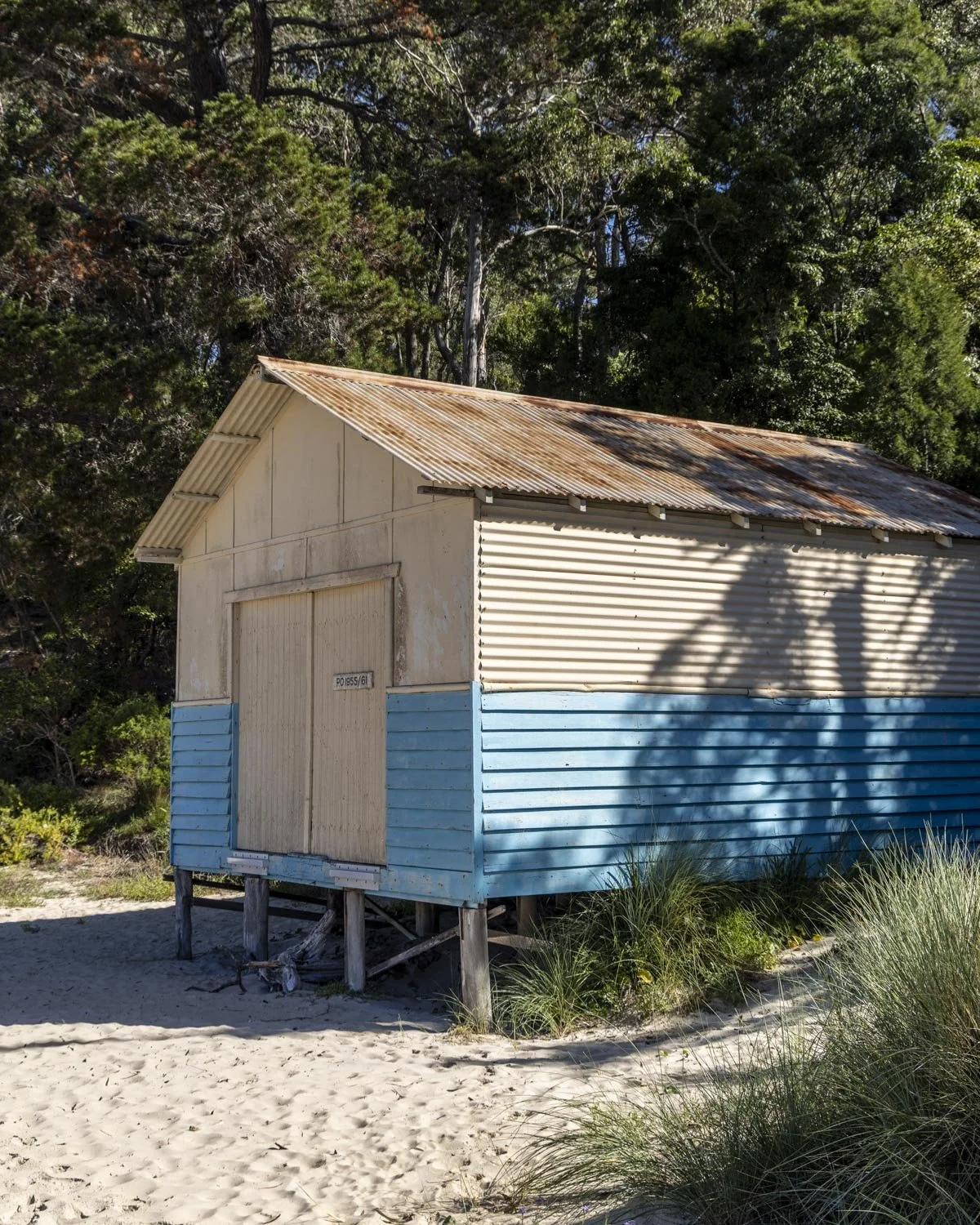
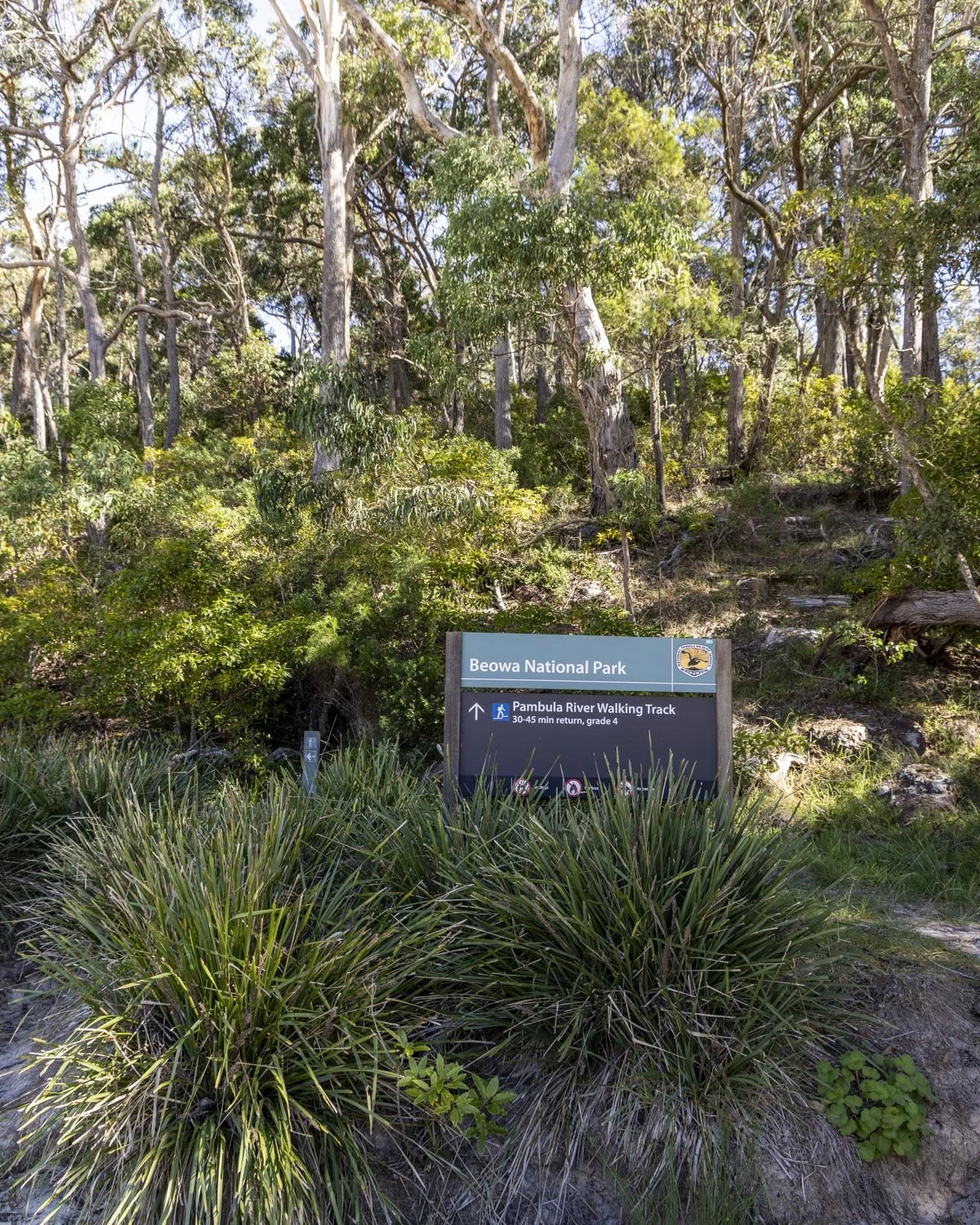
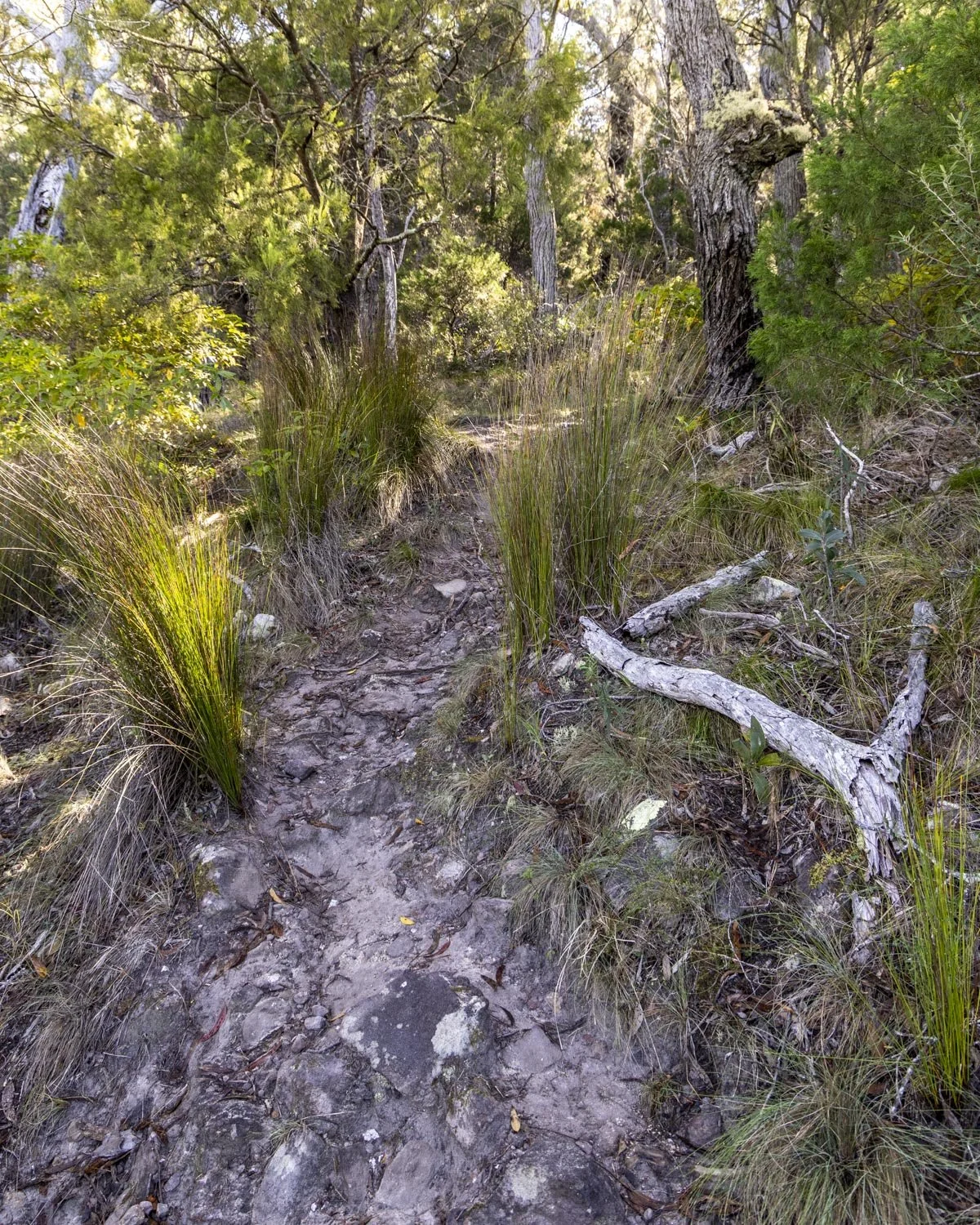
It’s a dirt path with some rocks and tree roots but generally easy enough. The intermittent views to the river were as gorgeous as I’d hoped for, but it was at the 475m mark when we saw a cut down to a section of the river, with, if it’s possible, even bluer water than the earlier part of the rivermouth.
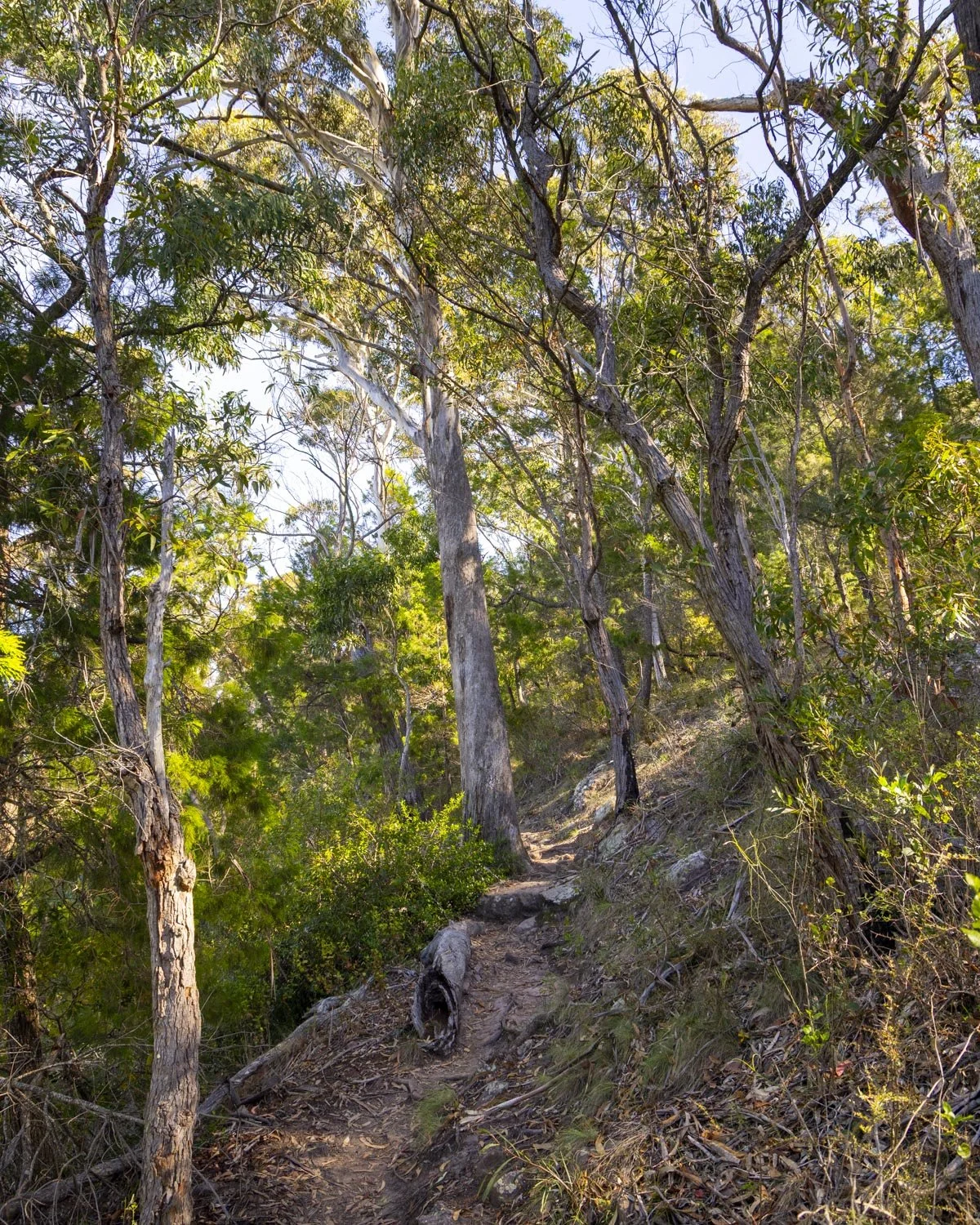
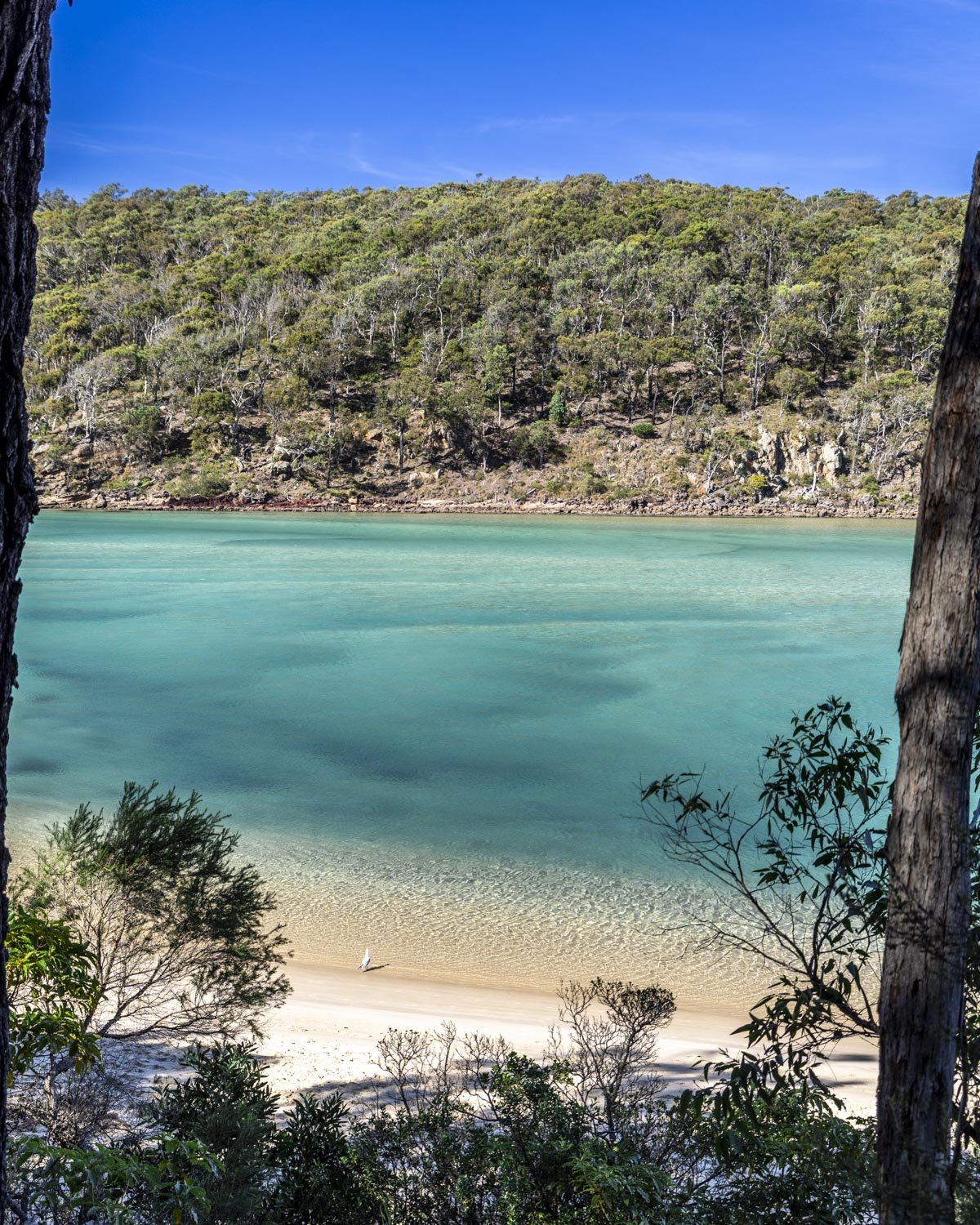
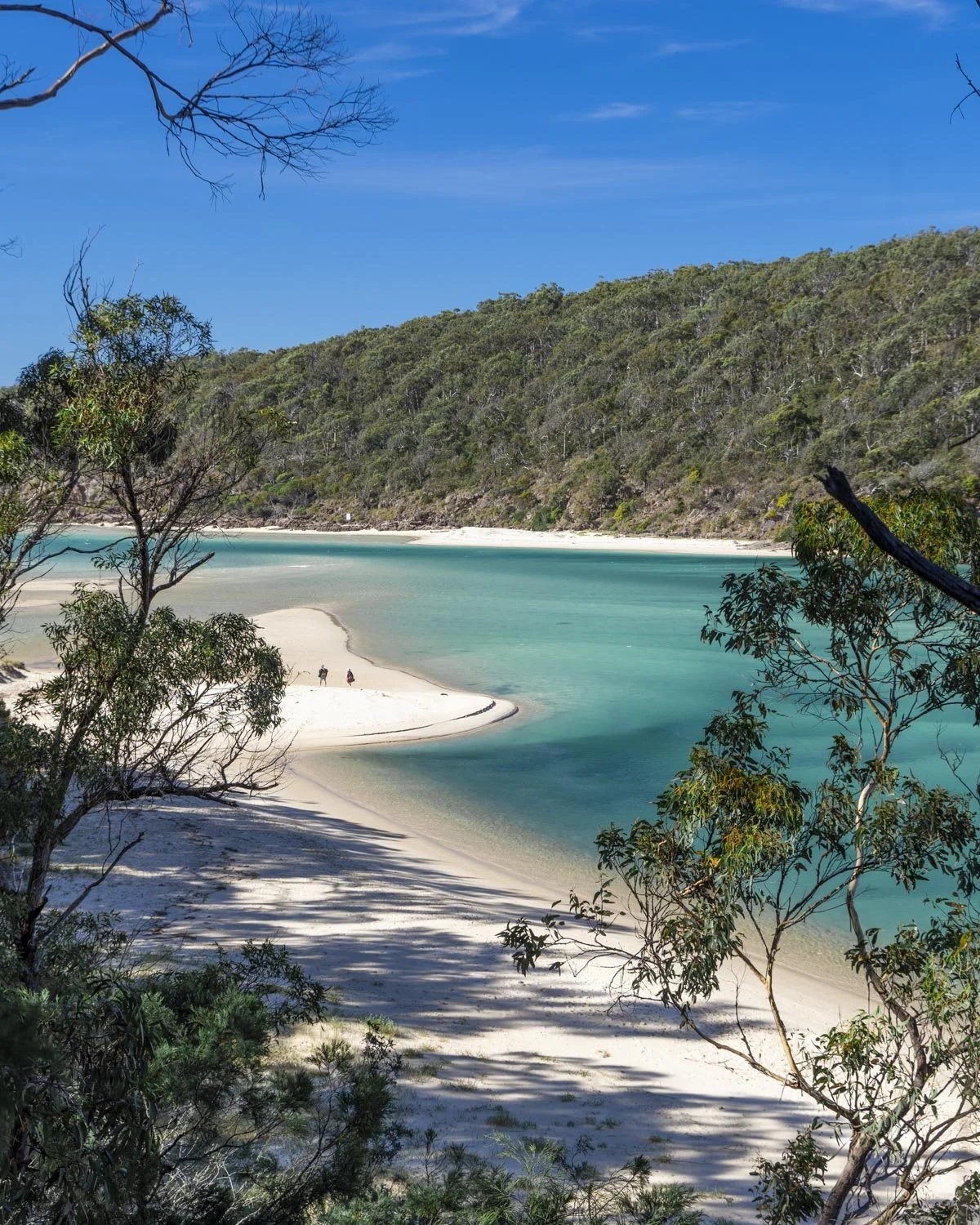
Naturally we took the track down (35m and a touch rocky but easy enough) and came out at a stretch of sand beside a much deeper part of the river and this was at low tide.
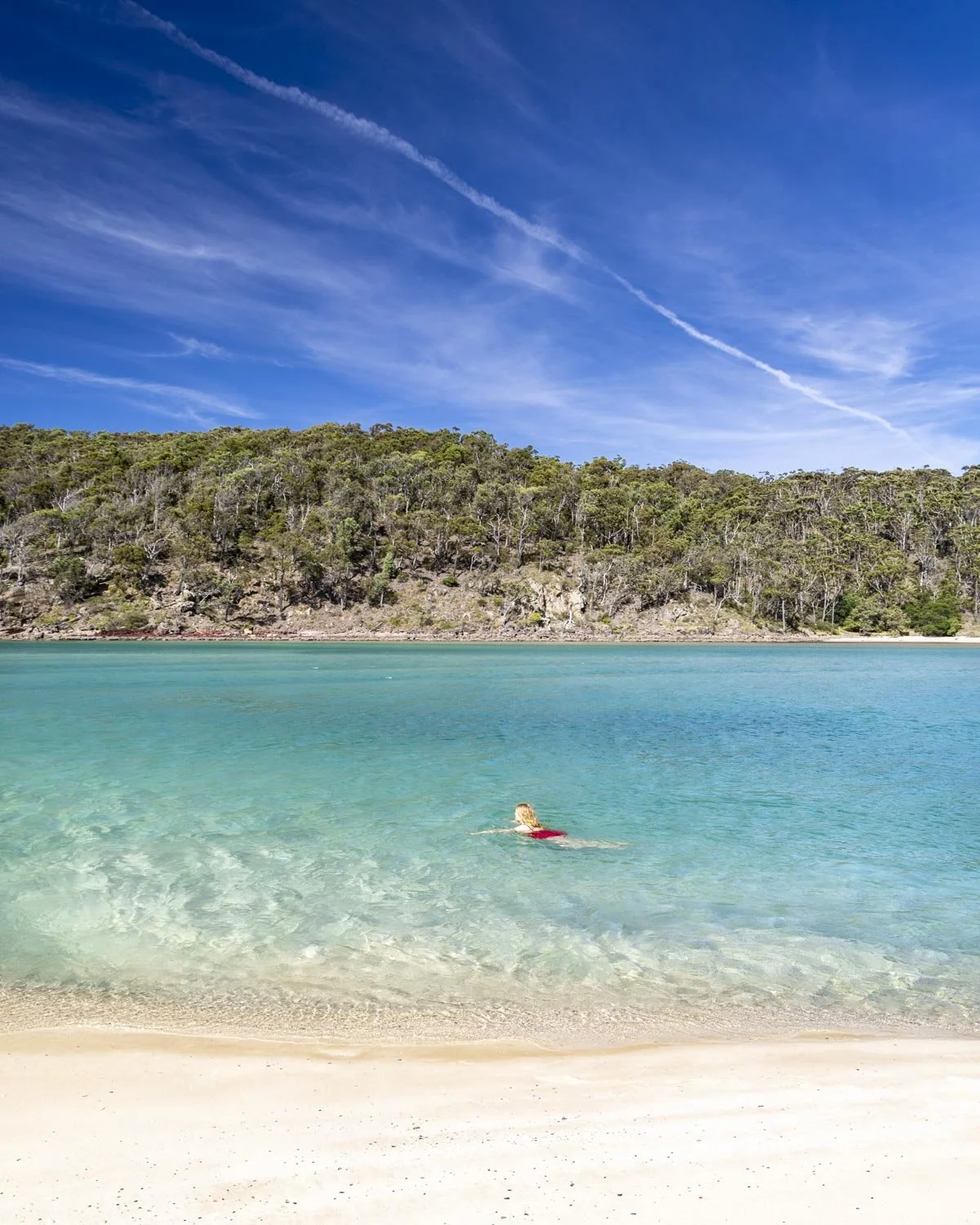
I didn’t need to go out any distance at all to swim and the water was exquisite.
Dare I say the current was even stronger than by the rivermouth which at first was a bit disappointing until I realised you could treat it like a lazy river.
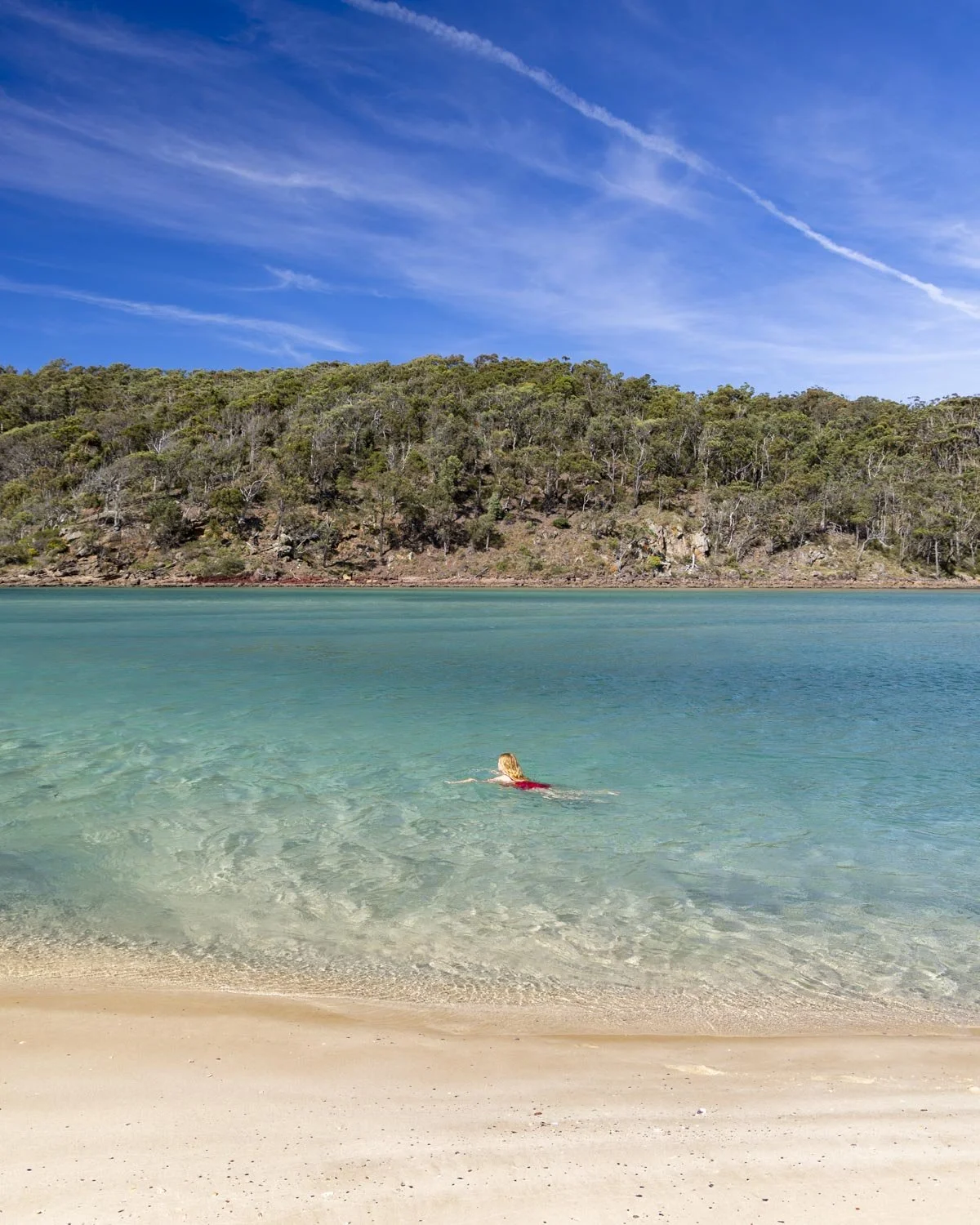
Swim or let it carry you briefly downstream, hop out, cross the sand and do it all again! Swimming upstream would have been futile but this system provided a lot of fun - though I stuck very close to the shore where I could still stand up as I wasn’t taking any chances with that current.
This part of the river sees a lot less people, though we were rarely completely alone. You’re well away from the houses and road though and it’s simply idyllic whether you manage to get it to yourself or not.
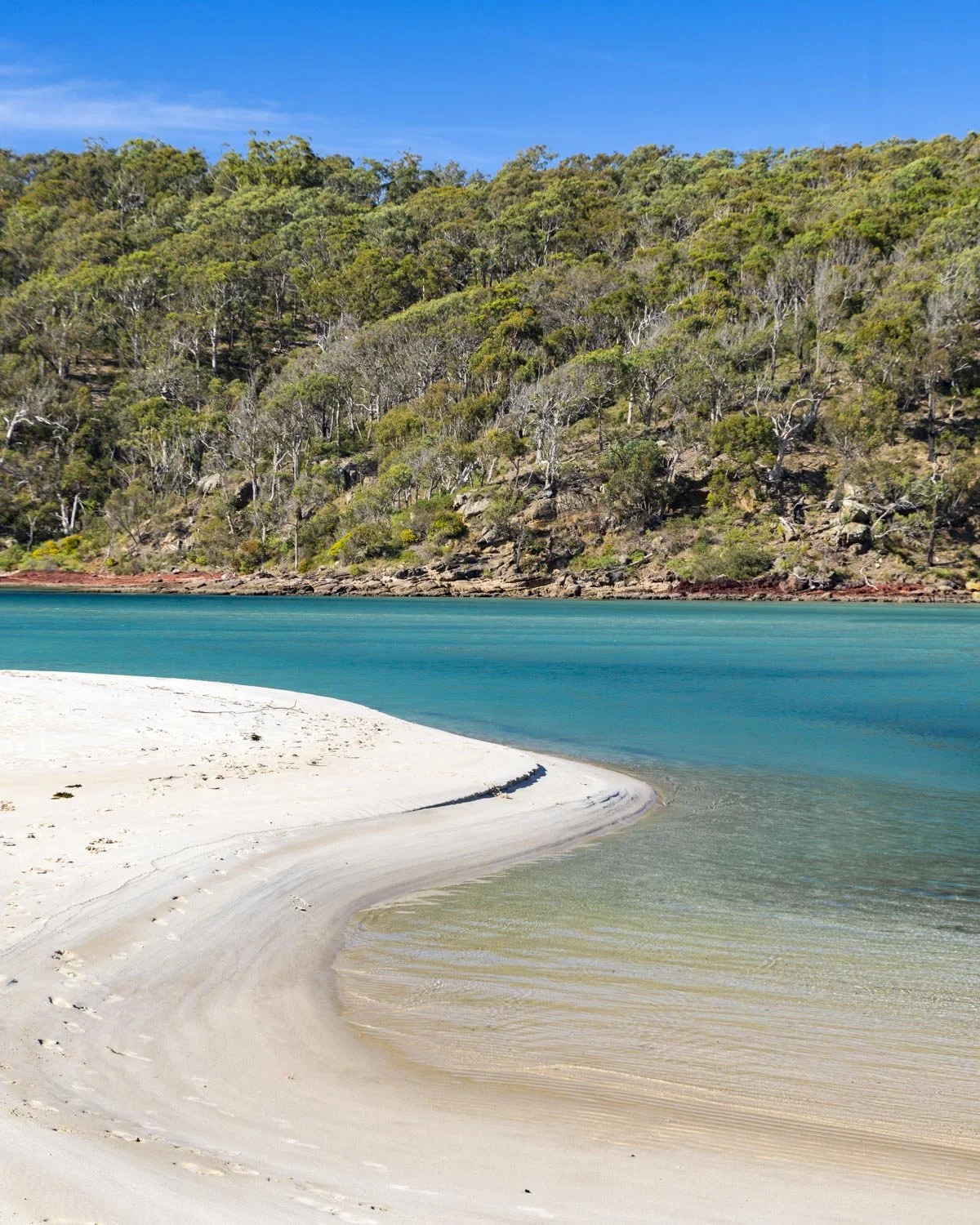
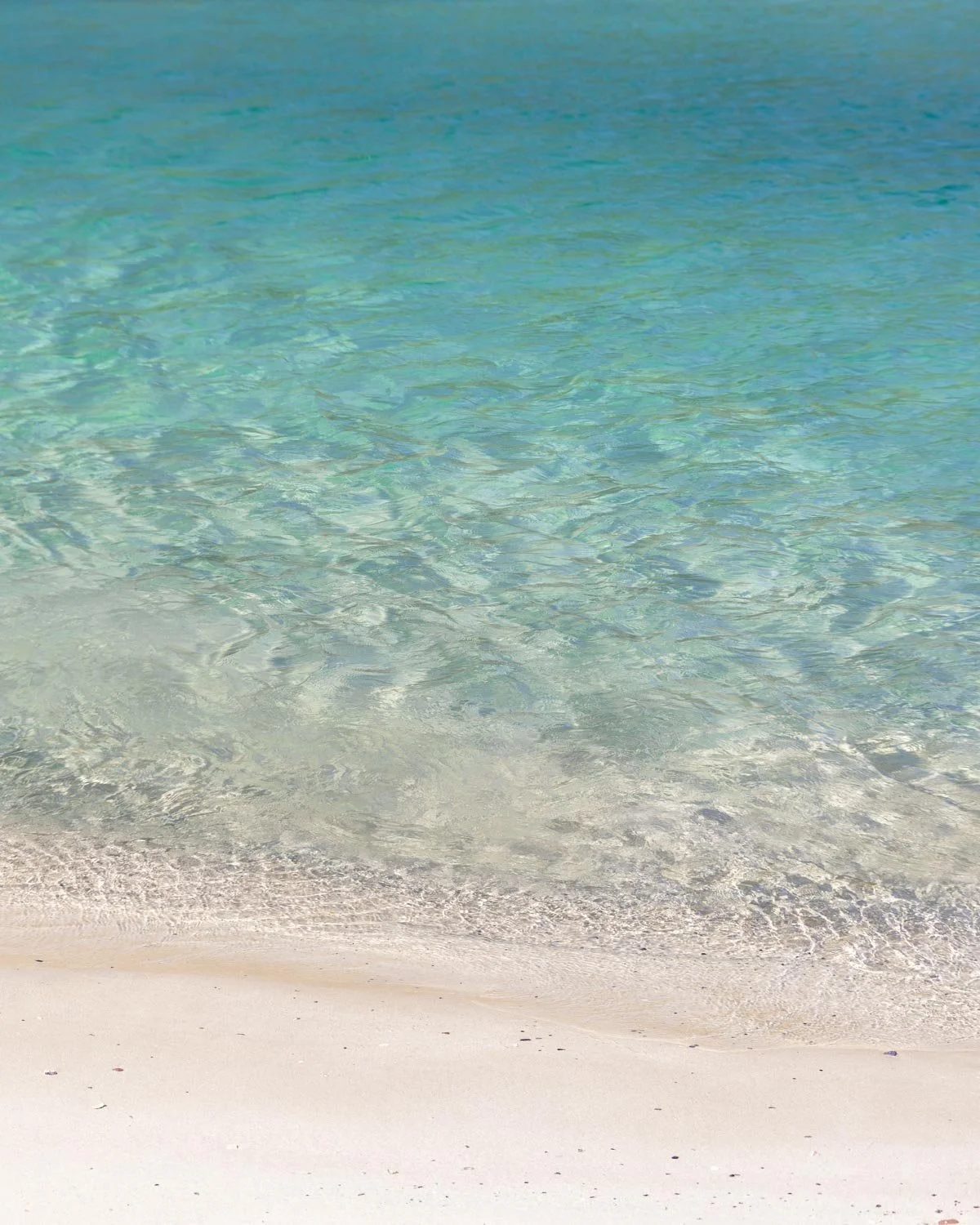
We realised that you could walk back along the sand a couple of hours either side of low tide and this makes a fabulous circuit walk of just over 1km.
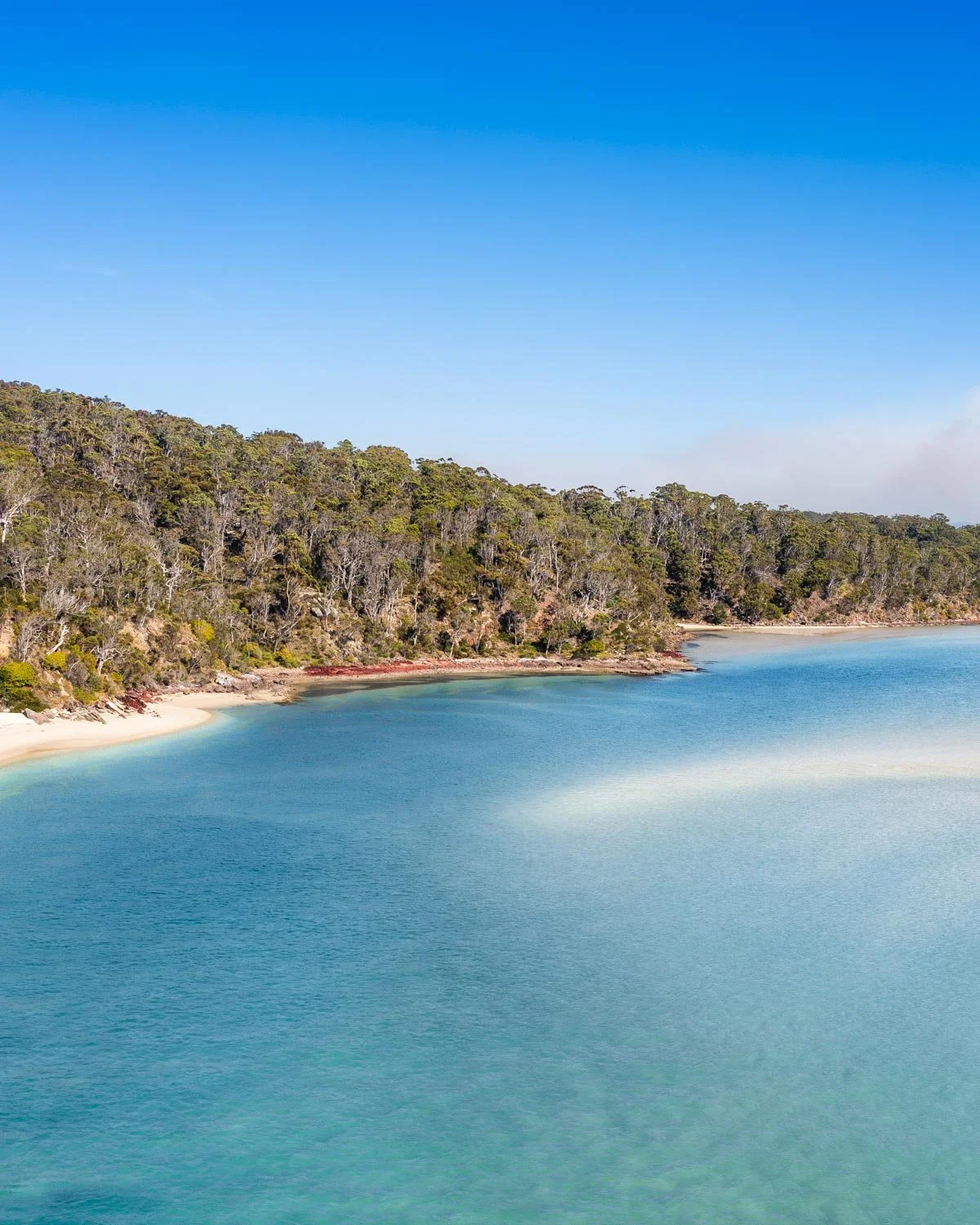
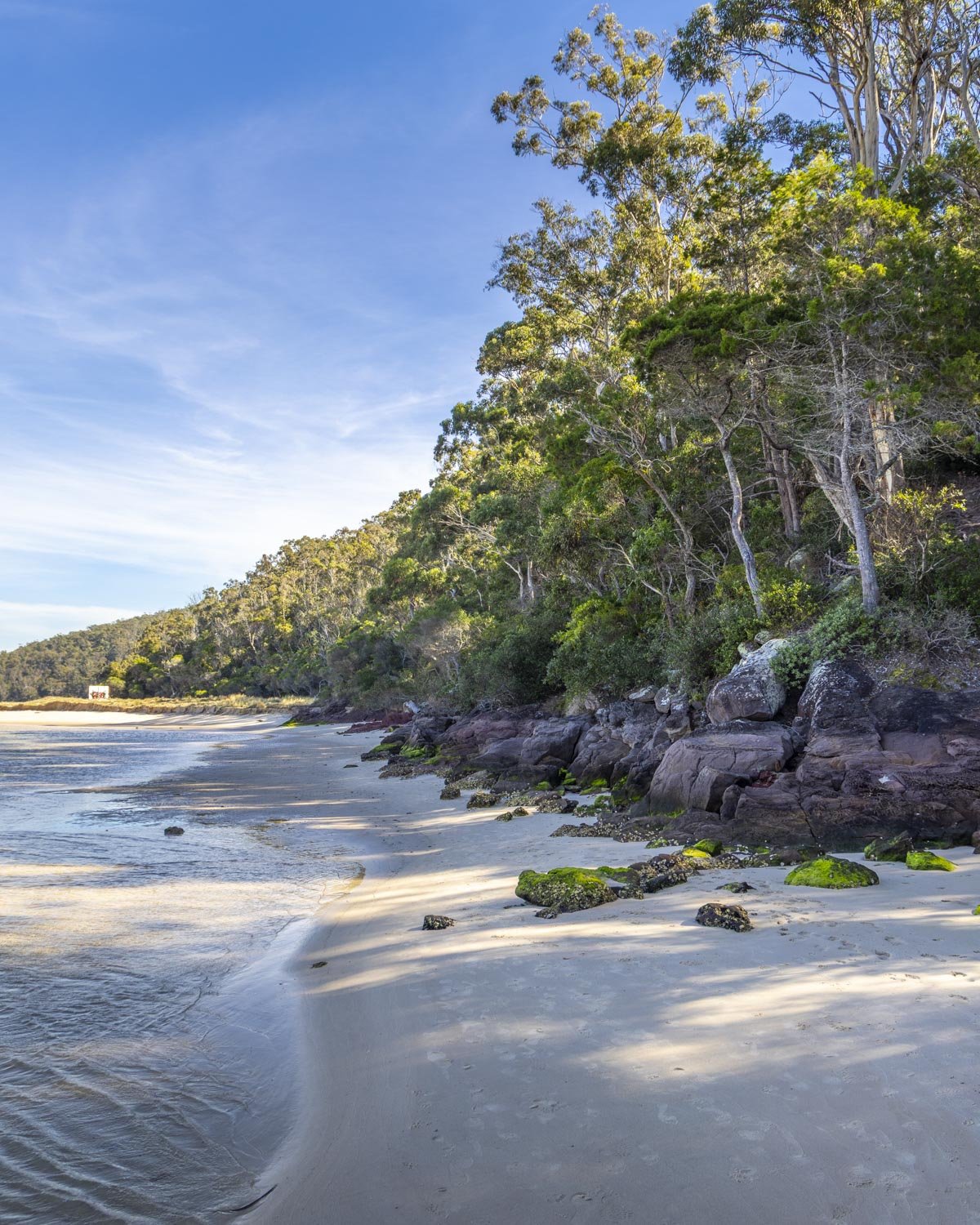
We did continue a little further on the bush track (about 400-500m) before we headed back along the beach but there weren’t any more beaches by this point. One day we will be back to explore further no doubt.
Kayaking the Pambula River
Kayaking and taking a SUP on the river is another popular way to explore and you could go much further and access more beaches on the southern side of the river (though some of these are also accessible via walking tracks from Beowa National Park).
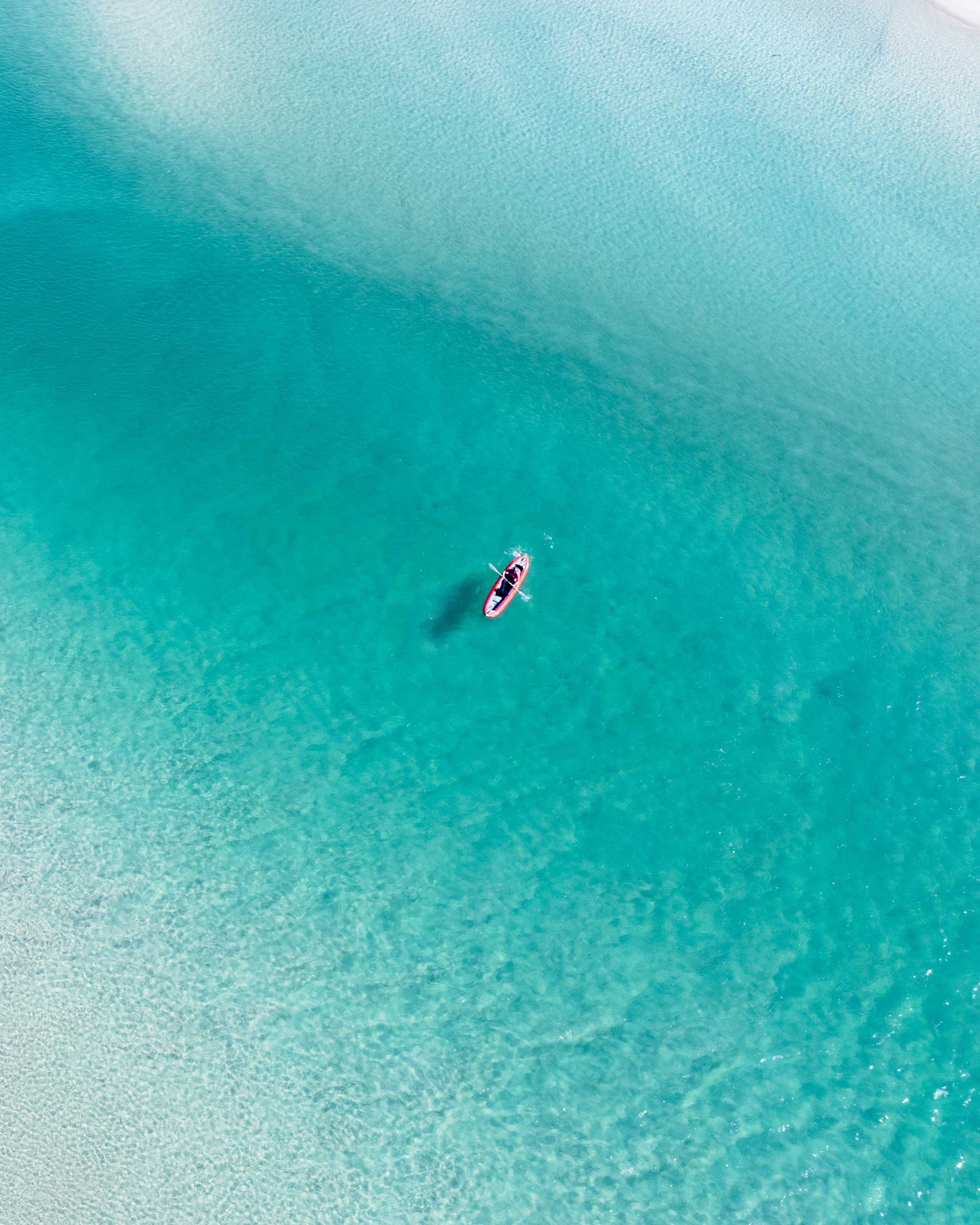
We gave it a go in our inflatable, but honestly the current was really strong when trying to head upstream and we didn’t get very far!
We saw other no doubt infinitely more experienced people heading off into the distance though and I’m sure it would be an amazing paddle if you’re ok with the currents.
Beaches on the southern side of the Pambula River
From the rivermouth and the beach beyond you will see lots of small beaches dotted along the southern side of the river. The main ones are Barmouth Beach and Severs Beach, both of which are accessible via short walking tracks. We opted for Barmouth Beach and it’s a beauty.
It’s accessed from the Barmouth Beach car park, which is a 30 minute drive from the Pambula Rivermouth (20 minutes from Pambula) and accessed via a 7km dirt road. At time of writing, the road is in decent condition and you will be fine in a 2WD.
From the car park you take the 200m walking track down to the beach. It’s short, but it’s basically stairs all the way down, so it’s not as easy to reach as the rivermouth.
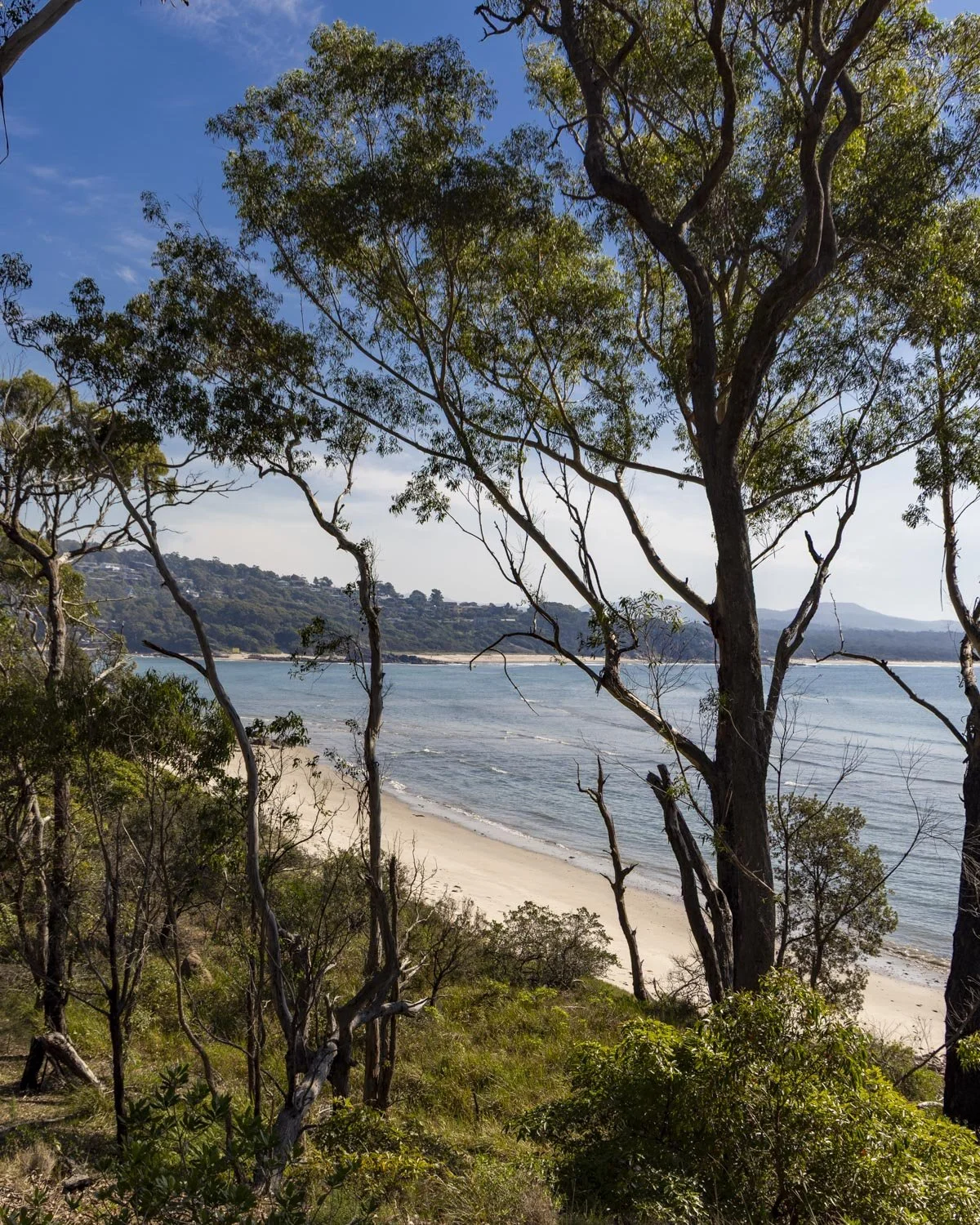
We visited on a hazy day when back burning was in full swing so we didn’t exactly see it at its very best. The water was nowhere near as clear and blue as the northern side of the river which may have been partially due to the haze, but I’m still not sure it would be quite the same.
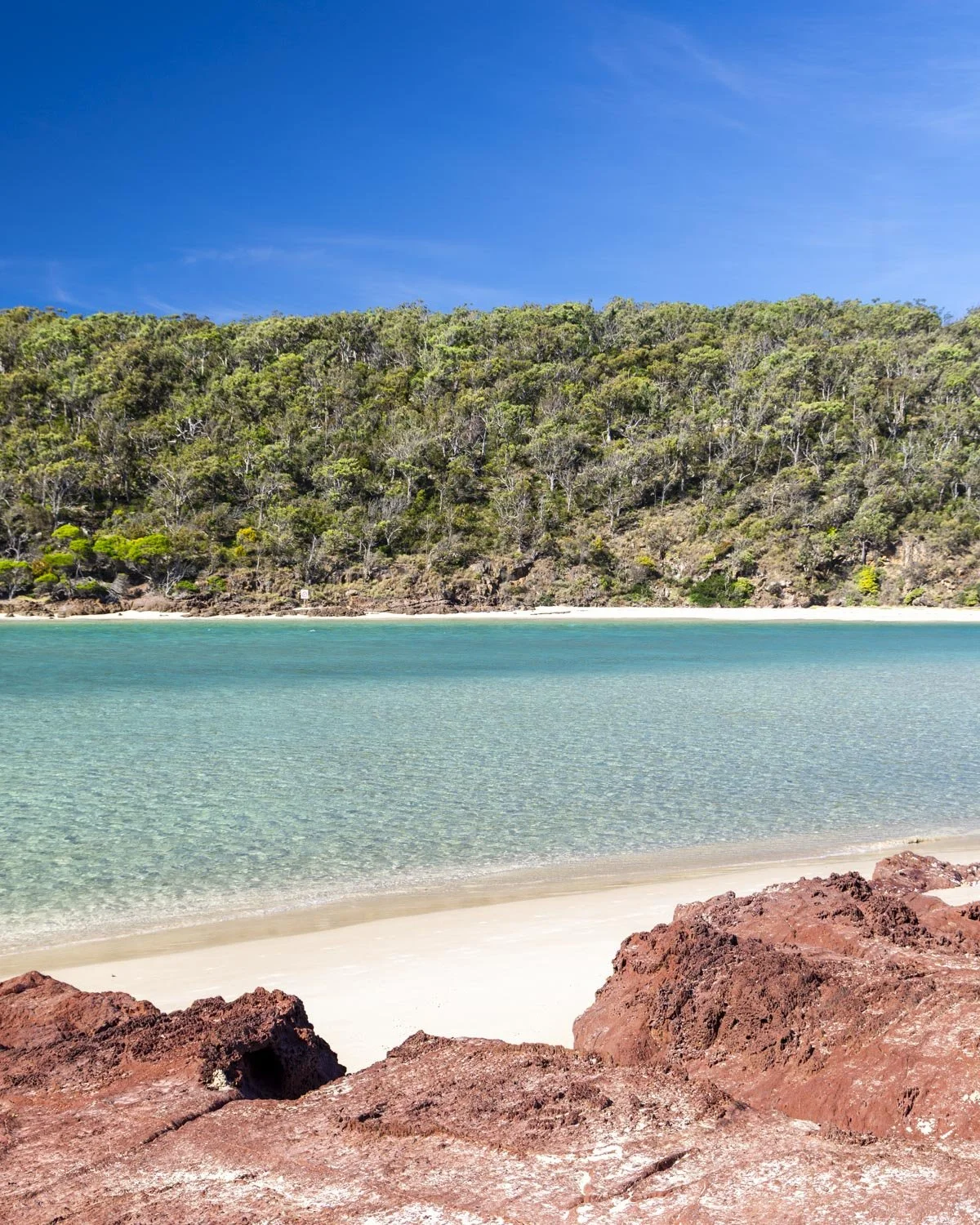
What it did have was a lovely stretch of sand and striking deep red and purple rocks which gave it a sort of Robinson Crusoe vibe - that is if you didn’t look across the water and see the houses on the other side!
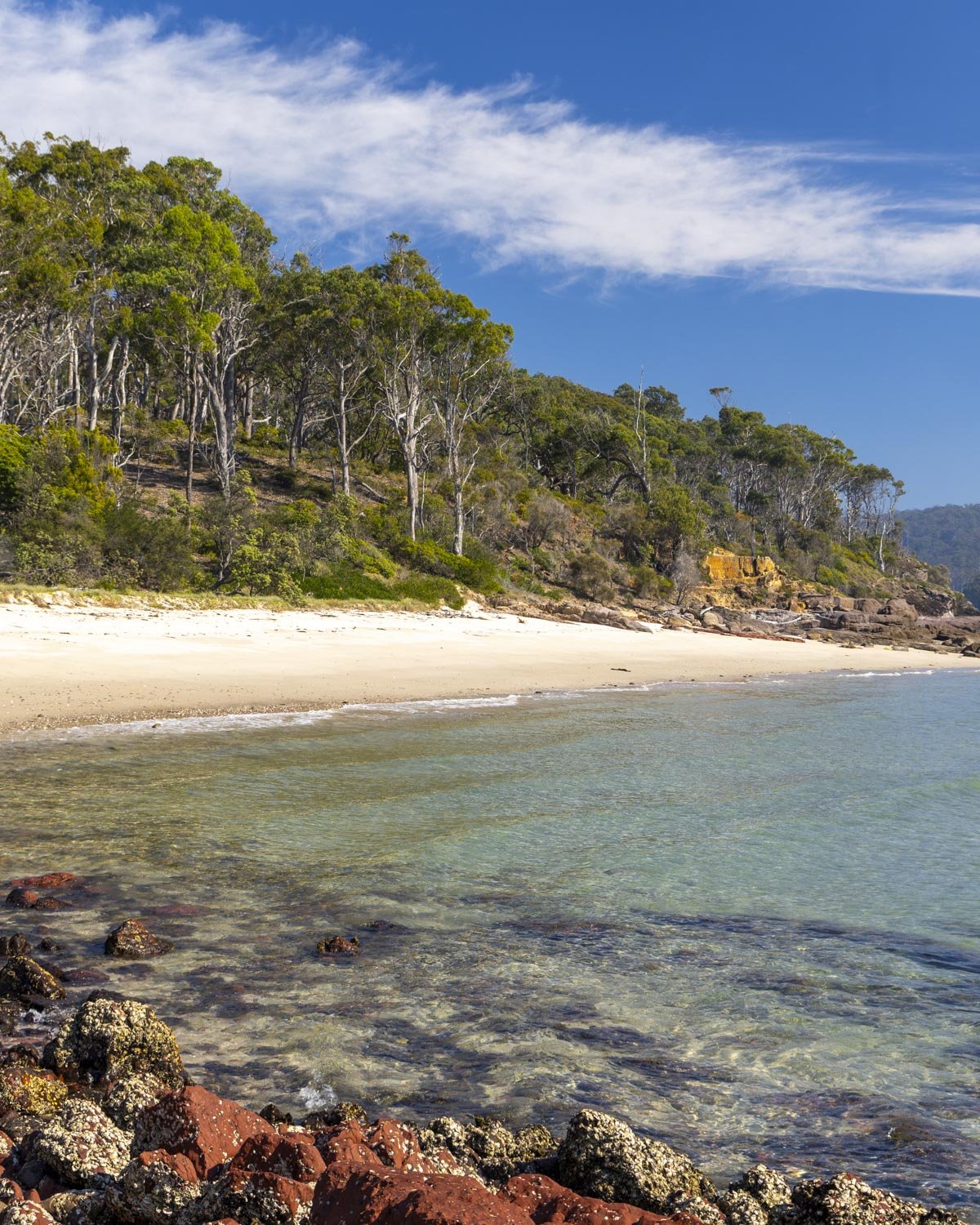
The water was nice and calm and there was no one on the beach at all despite us visiting on the ANZAC public holiday weekend with fabulous weather.
I really liked the beach but can’t deny that gatorade blue water on the northern side of the river stole my heart.
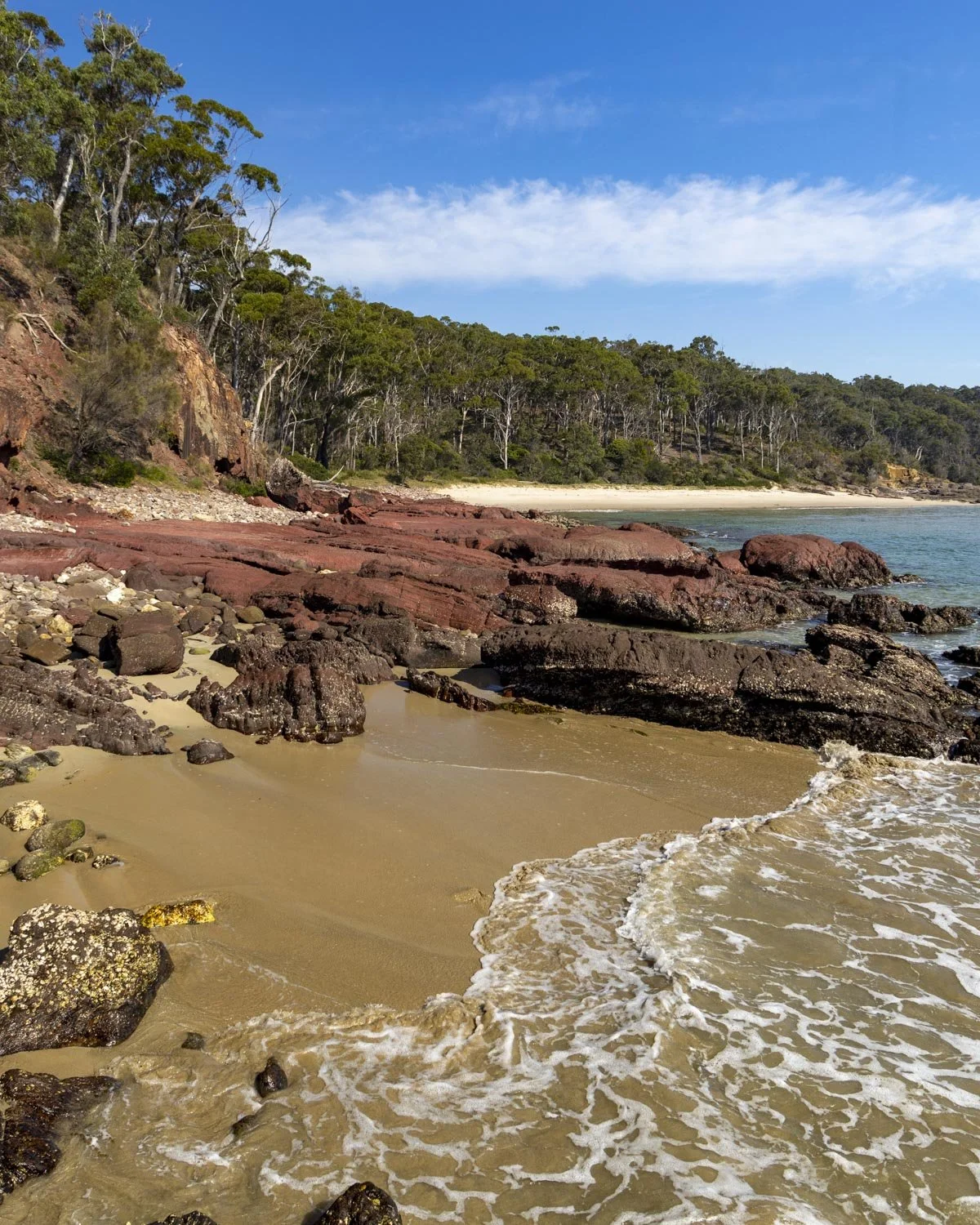
If the tide is out you can walk to several more small beaches from Barmouth and these were also very pretty.
In short, you can’t really go wrong with the Pambula River, it’s a spectacular place with lots and lots of beaches and coves, so even in summer if you try hard enough I am sure you would get a secluded spot to yourself!
Keep them wild
Please remember to take all rubbish with you and keep these places wild and pristine - as with anywhere in the outdoors. It’s important to leave them exactly as you found them so they will remain beautiful for generations to come.
Litter tends to breed litter, so if you do spot any and are able to pick it up and dispose of it outside the area, it will go a long way to keeping the area clean.
Please remember to wear reef safe sunscreen to protect the marine life inside the water.
Getting to the Pambula Rivermouth
The closest parking area to the rivermouth can be found just outside the town of Pambula, you can see the exact location on Google maps here. Spaces are limited and it’s just off a residential street so please park respectfully and know that a space here might not be possible in the busier months unless you go early or late.
There is a toilet and somewhere to wash off on the grassy area behind the beach.
The Pambula Rivermouth is located around a 15 minute drive from Merimbula and 20 minutes from Eden on the NSW Far South Coast.
This post may contain affiliate links, meaning at no additional cost to you, that we will earn a small commission if you click through and decide to make a purchase. This helps towards the costs of running our website. Thanks for your support.
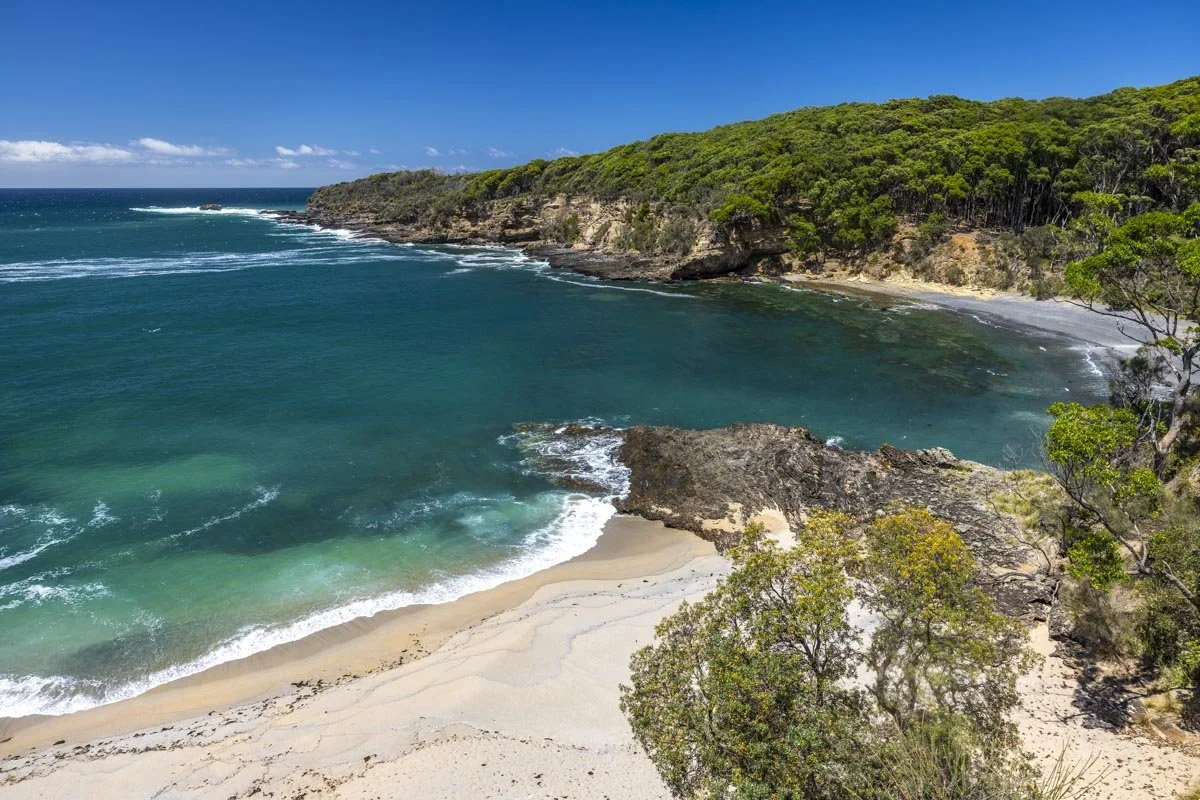
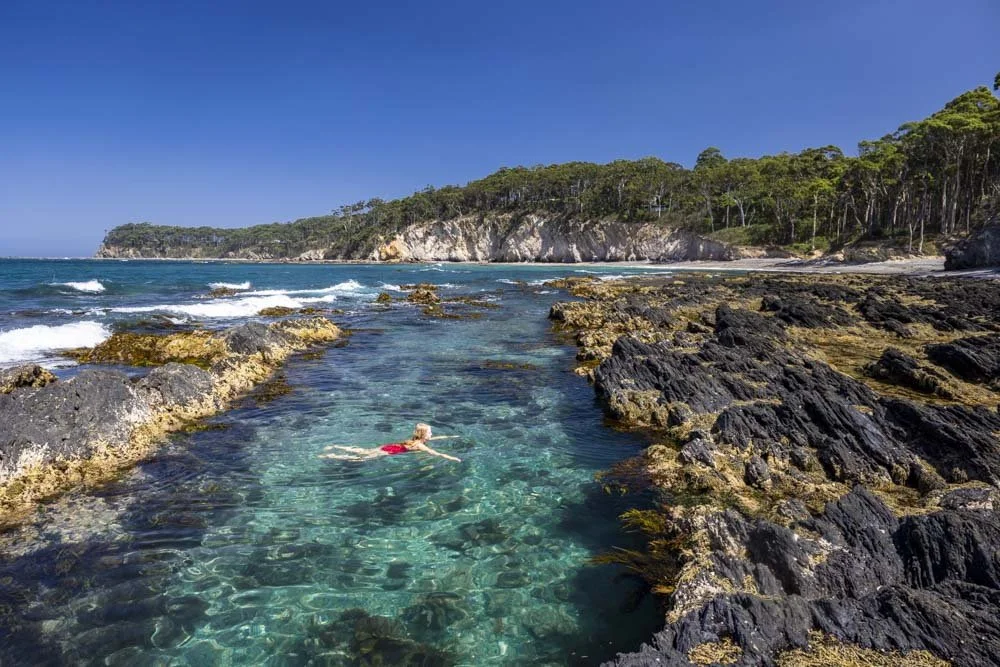
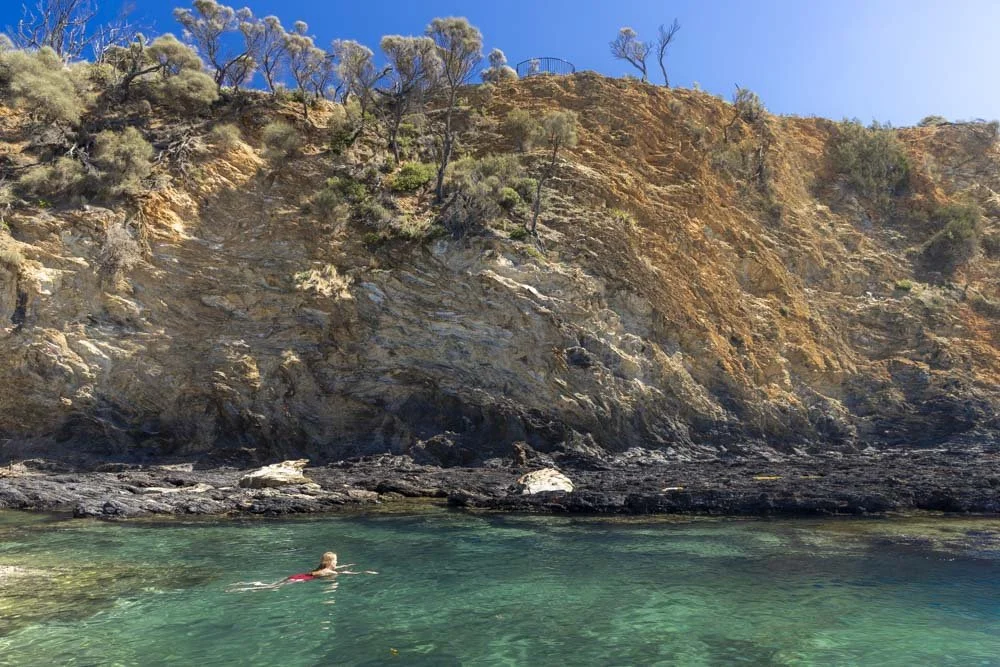
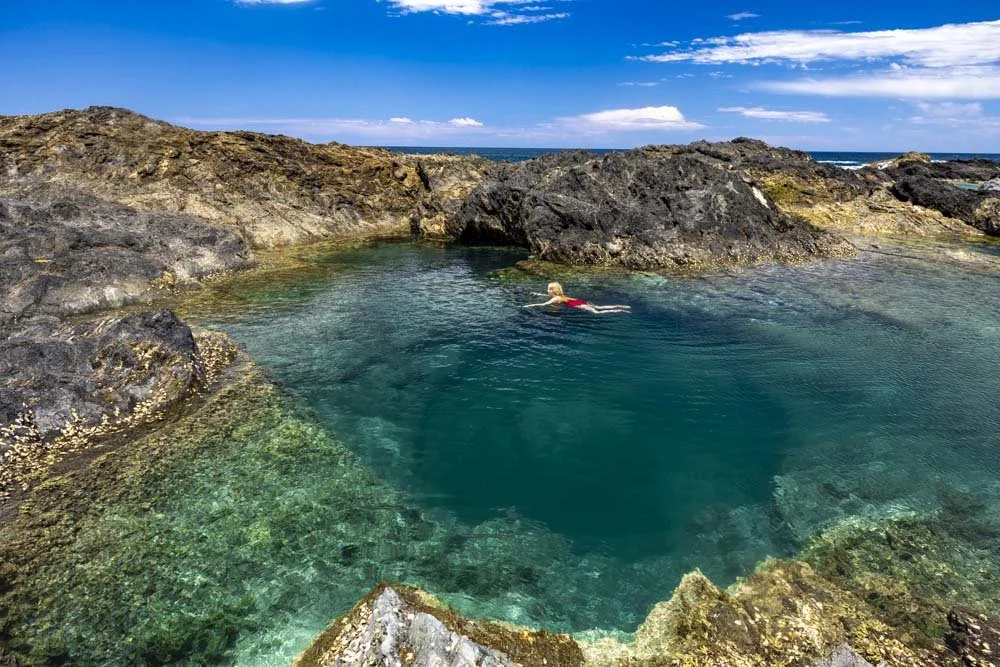
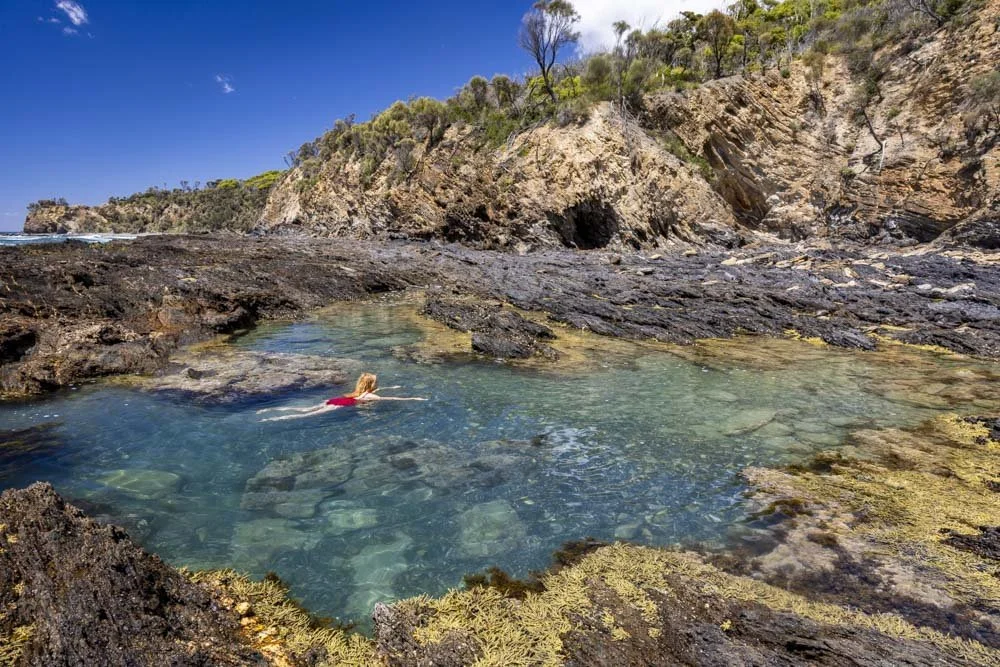
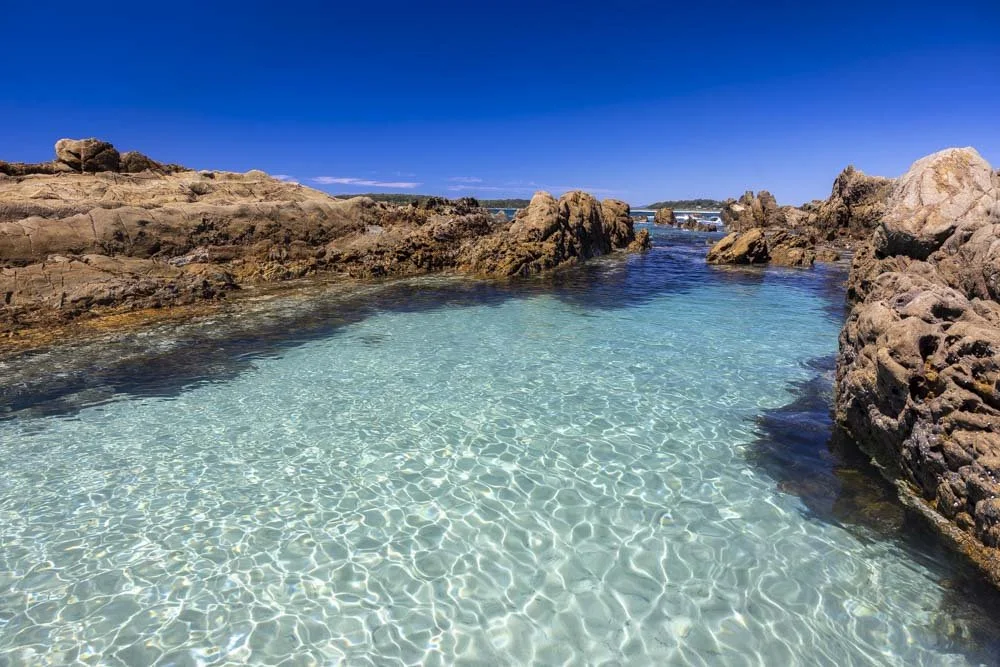
Some places just have that special aura about them and Merrica River is one of those places. With a gorgeous remote sandy beach, crystal clear river for swimming and stunning oceans views it’s a magical place to visit. We’re sharing what the walking trail is like and how the tide effects the river for swimming.