
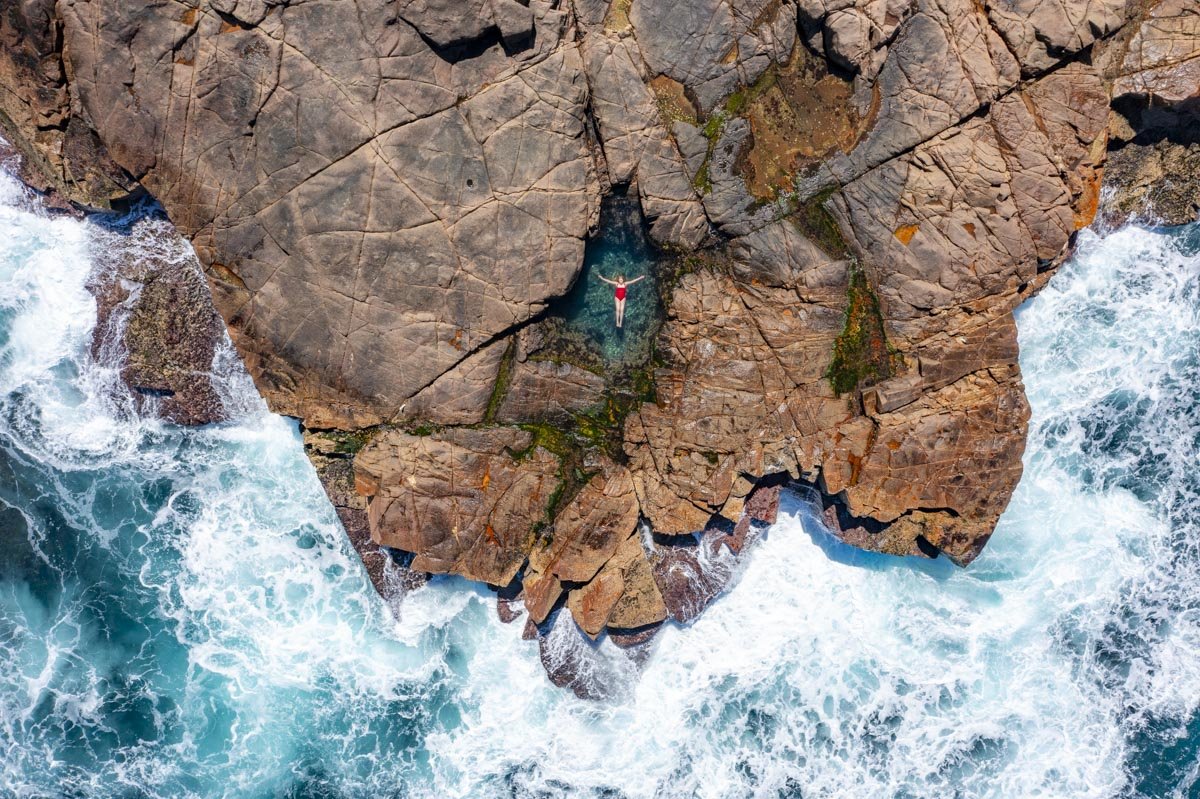
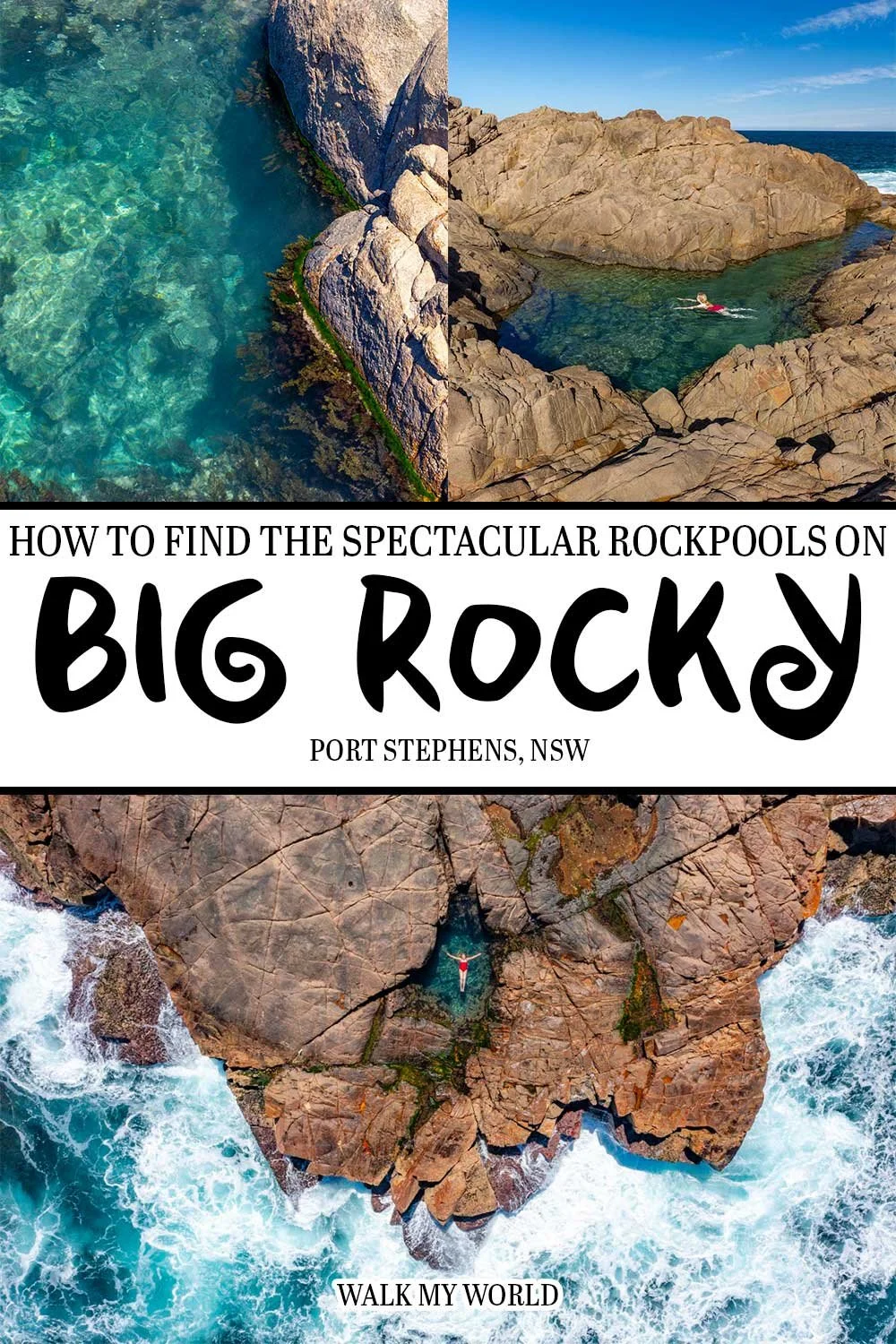
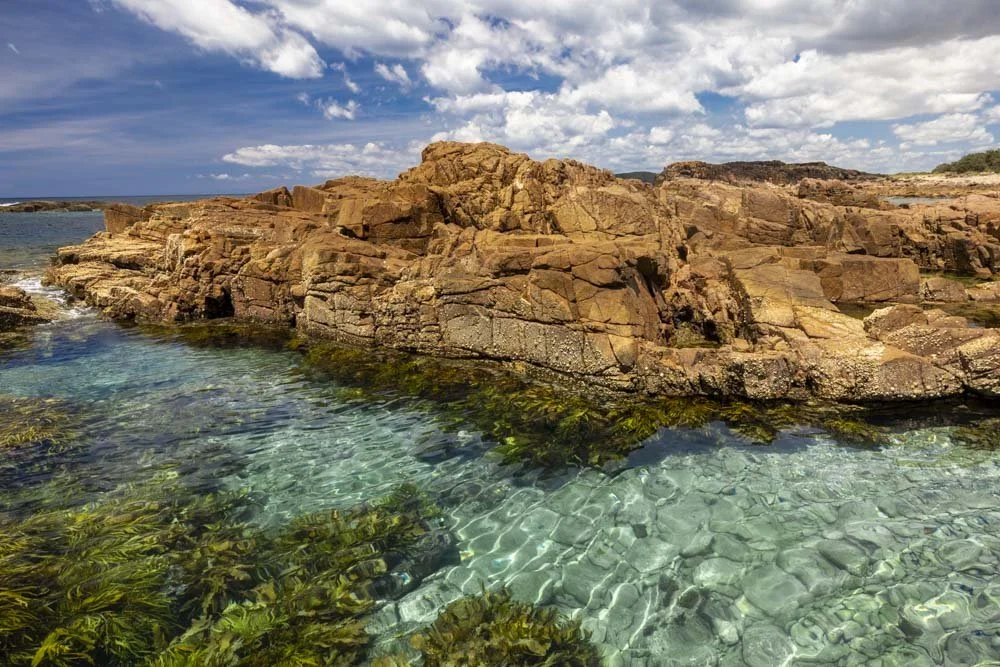
Shielded from view by a fortress of rock walls lie some of the best rockpools in Port Stephens. With an iridescent blue plunge pool perched on the edge of the rock shelf and a larger sheltered pool big enough to swim in, it’s a rockpool lovers dream.
The fact they are on their own little island makes it all the more enticing.
Accessing Big Rocky’s treasures involves a slightly more adventurous walk than most, with a mandatory water crossing and a bit of light rock scrambling. But I think all who make the effort will agree that it is more than worth it.
Here’s how to find them.
Safety info: tide & swell
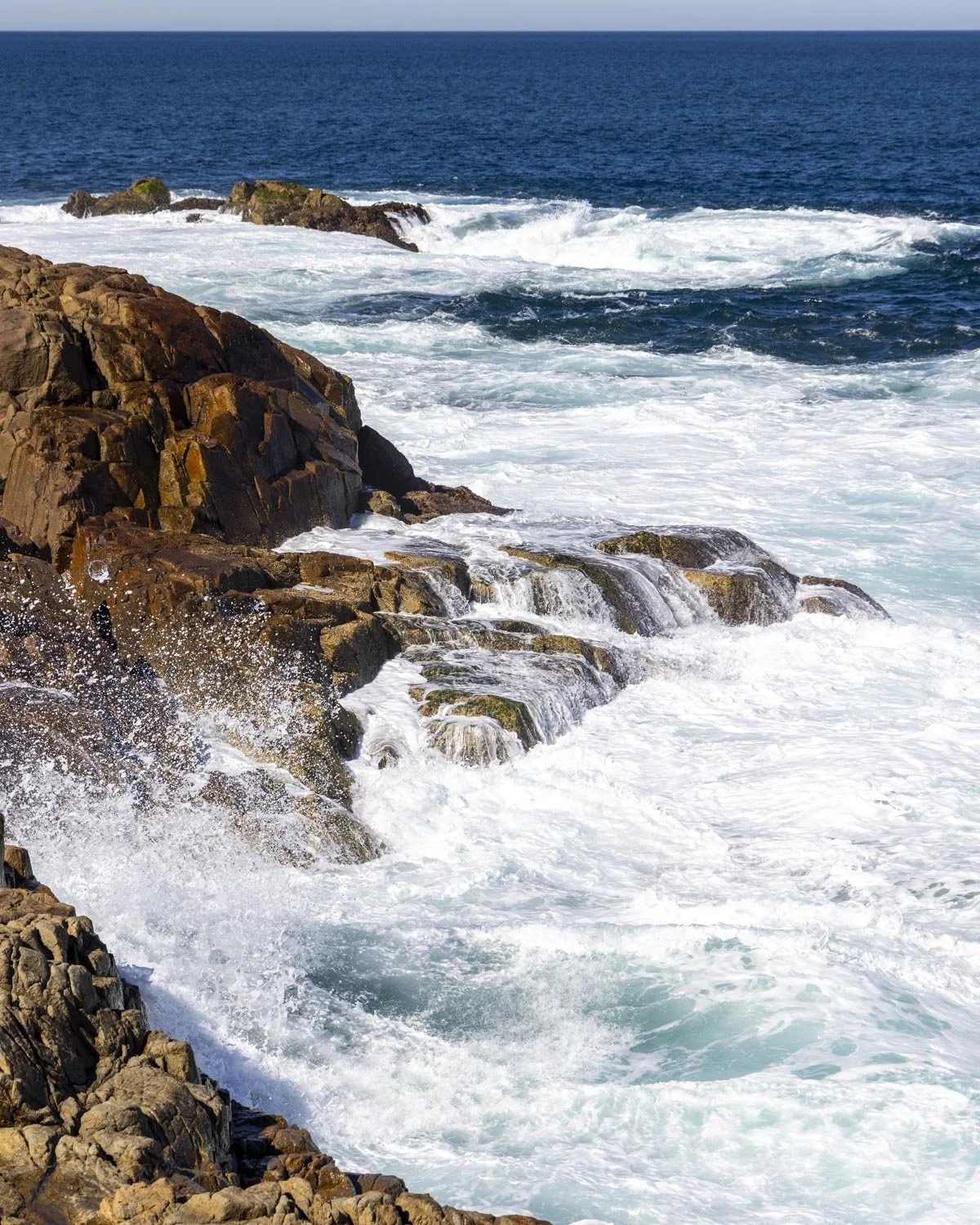
The rockpools are best visited on a low to mid tide, with low tide being the easiest time to cross the small channel of water to the island. The swell is exceptionally important for the Blue Hole as it’s highly exposed and the southern side of the island is very prone to large waves.
The swell reading must be “slight” and ideally you want a wave height below 1m. Even then, your chances of rogue waves entering the pool are higher than at most rockpools.
However, during low tide with a wave height below 1m (the lower the better), your risk of large waves is reduced. You can see the tide and swell forecast here.
The Big Rocky Rockpool is set back from the shore and sits on the western side of the island, which makes it more sheltered from the swell than the Blue Hole. This makes it a much better option for most people and on a slight swell you are unlikely to encounter any large waves inside the pool.
There is a third rockpool on the island, between the two mentioned above. However, this rockpool is dangerous and would require unicorn conditions to enter.
Even if it looks calm for a significant period of time it is subject to gigantic wipe out waves the likes of which I have never seen anywhere else in NSW (on a slight swell). Don’t be lured in by its beauty because it really isn’t worth the risk.
The walk to Big Rocky Island
The stats
Distance: 700m each way
Elevation gain: 20m
Difficulty: Moderate and involves a water crossing
Trailhead: Big Rocky Trail Car Park
Summary: Don’t be deceived by the short walking distance to reach the rockpools, as the terrain makes accessing these pools tricker than most in the area. If you’re looking for an easy family friendly option, try this one at nearby Little Rocky.
To access Big Rocky Island you will need to cross a small channel of water between the mainland and the island and this will be a wet crossing on any tide. Depending on the line you take it will be between knee and hip height, however, we have tips to make it an easy crossing in the notes below.
Once you reach the island there is no set track and you will need to climb up and then down some rocks/rock wall.
This is grippy when dry and has nice tiering and footholds, but care should be taken as it is a scramble. The larger more sheltered rockpool is much easier to access than the Blue Hole so if you’re only interested in that one the rocky section is easy.
The walk to Big Rocky Island: to Rocky Cauldron
From the car park at Big Rocky, you follow the signposted track, which begins as a flat gravel path. It will fork early on and you keep straight, heading for Big Rocky.
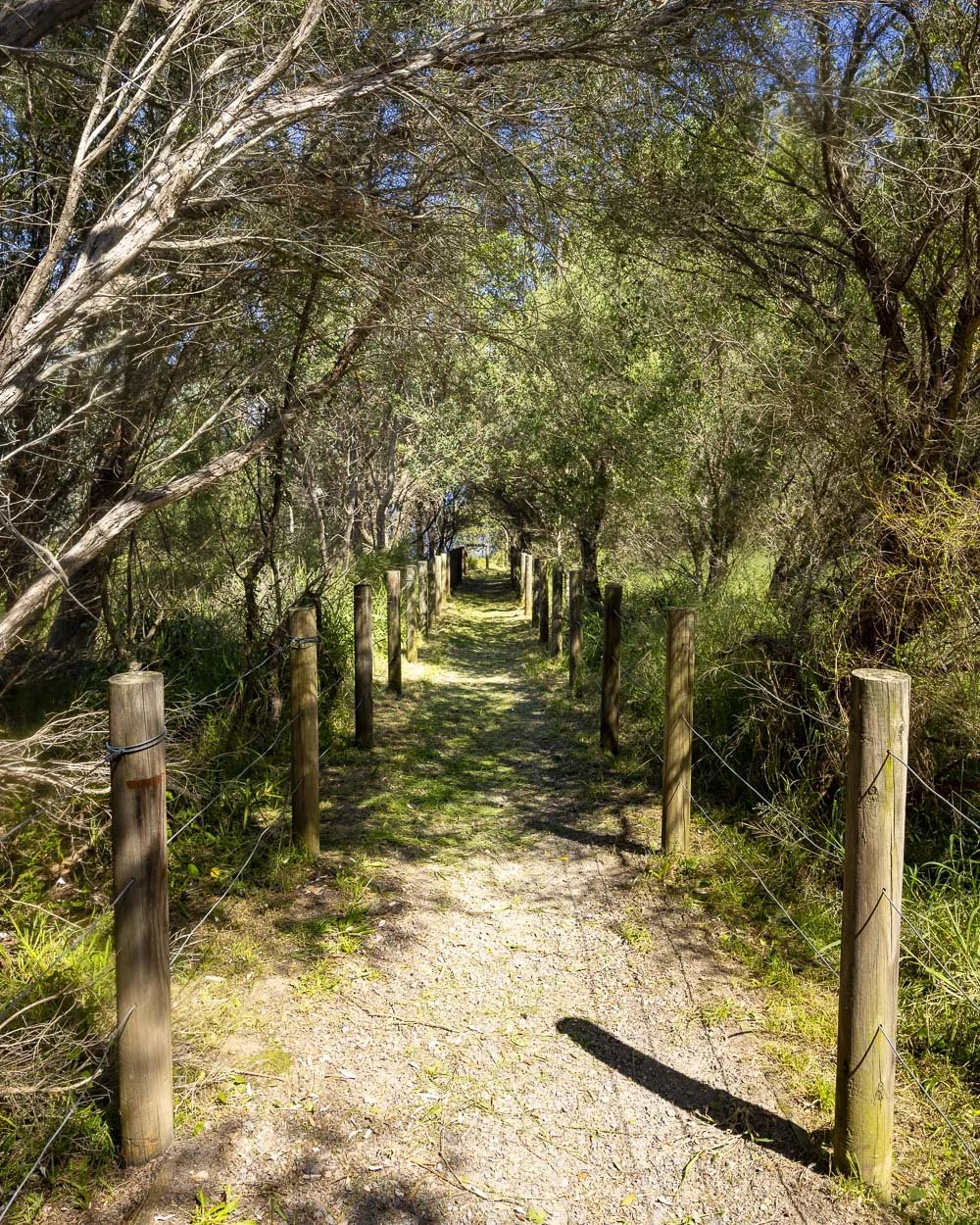
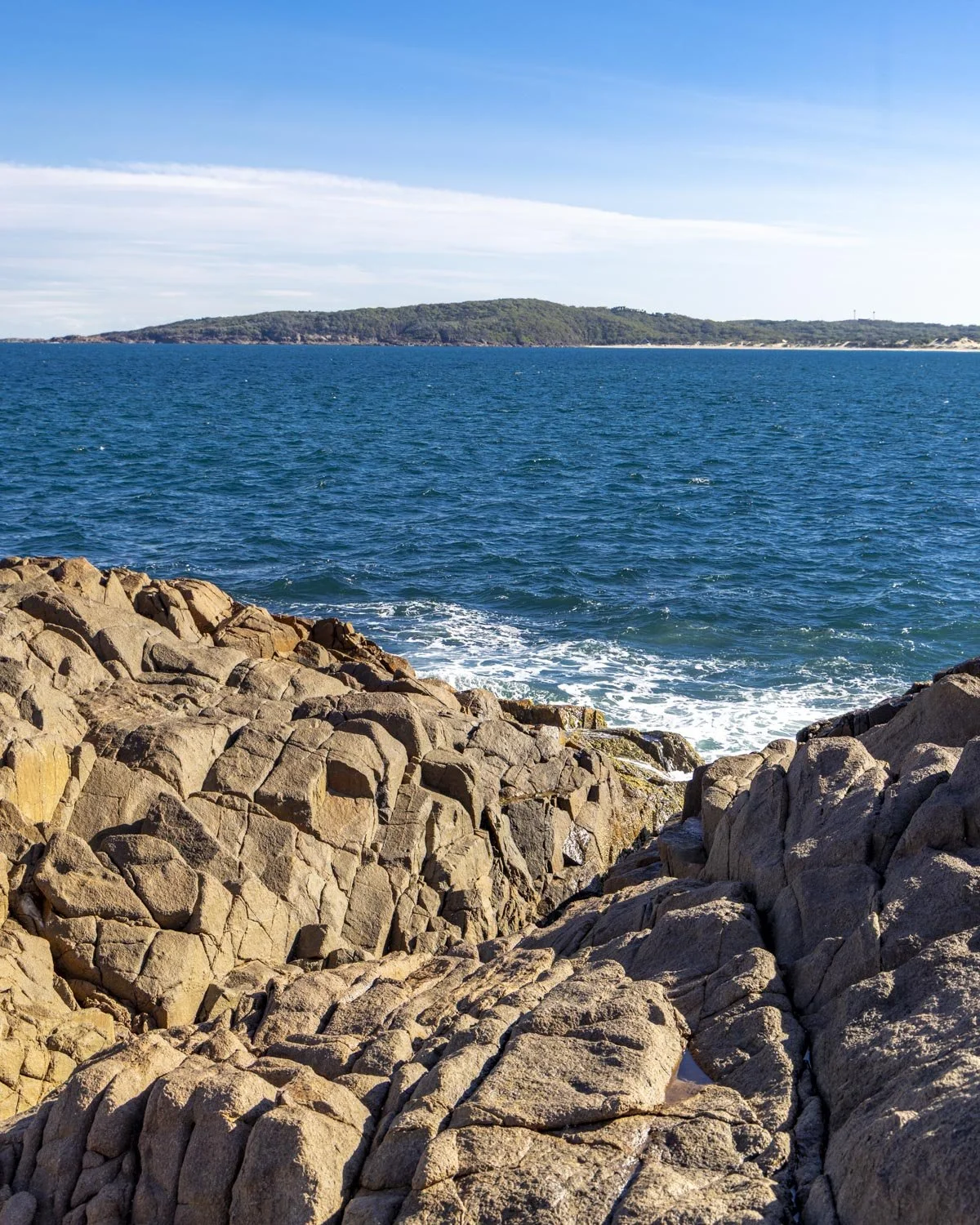
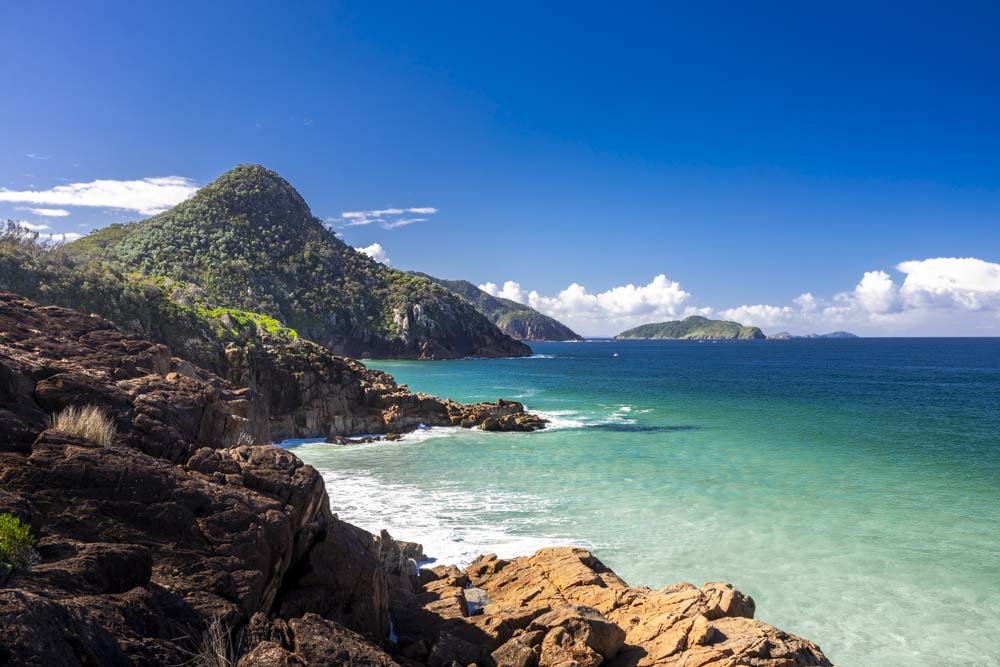
After 200m you’ll emerge from the bushy path to a picturesque bay, Big Rocky.
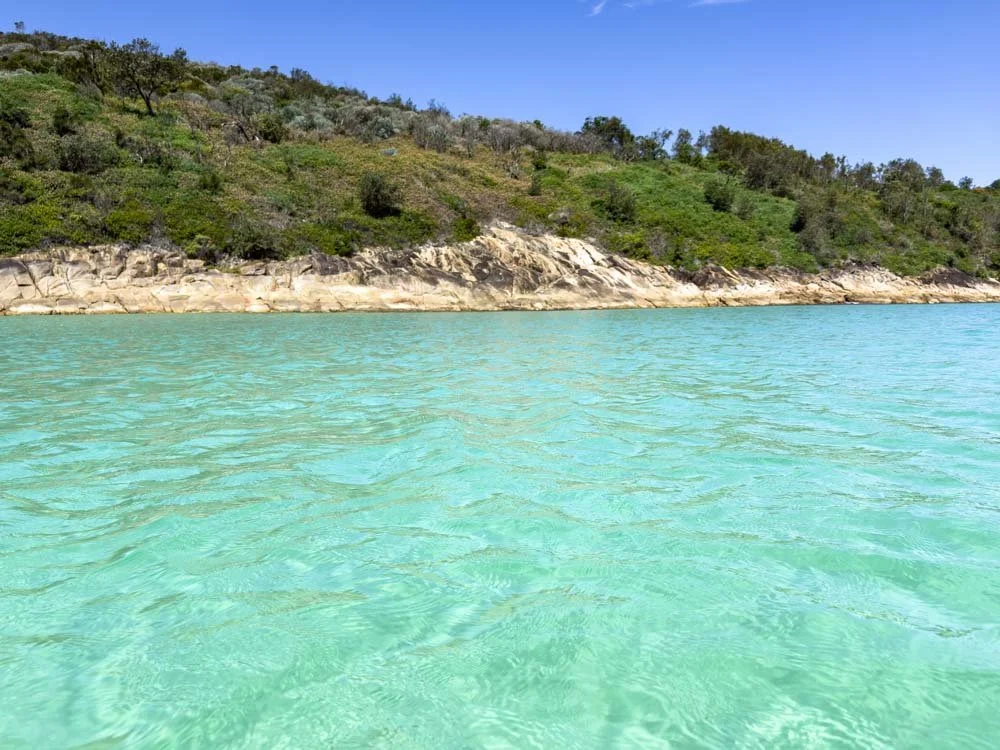
The water in the bay is very calm and the shallows are turquoise, but as it does live up to its name, I didn’t swim here - though you could definitely laze around in the water.
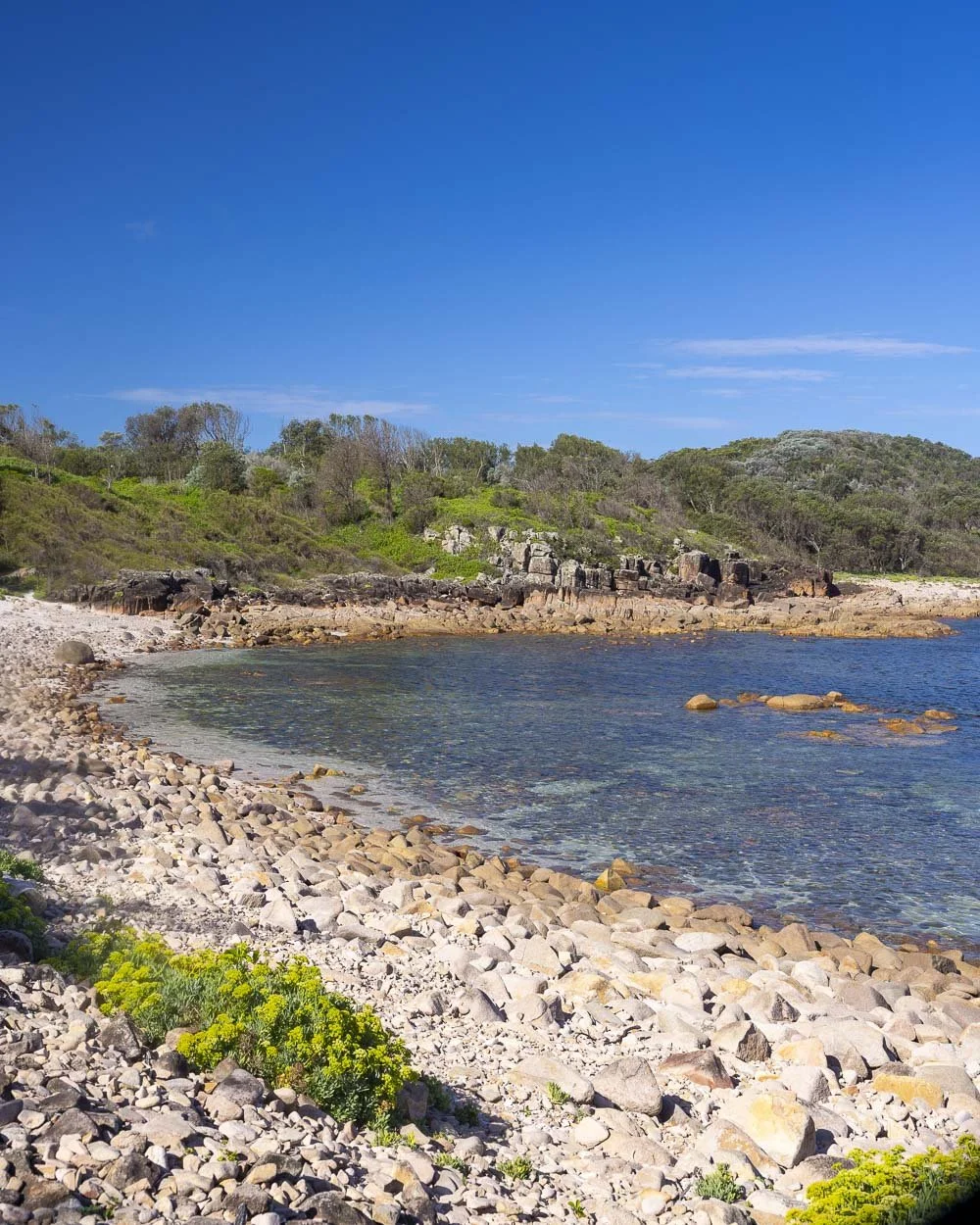
The track to Big Rocky Island continues straight, to the right of the bay and there are a few little rocky bits, but none of it is challenging in any way.
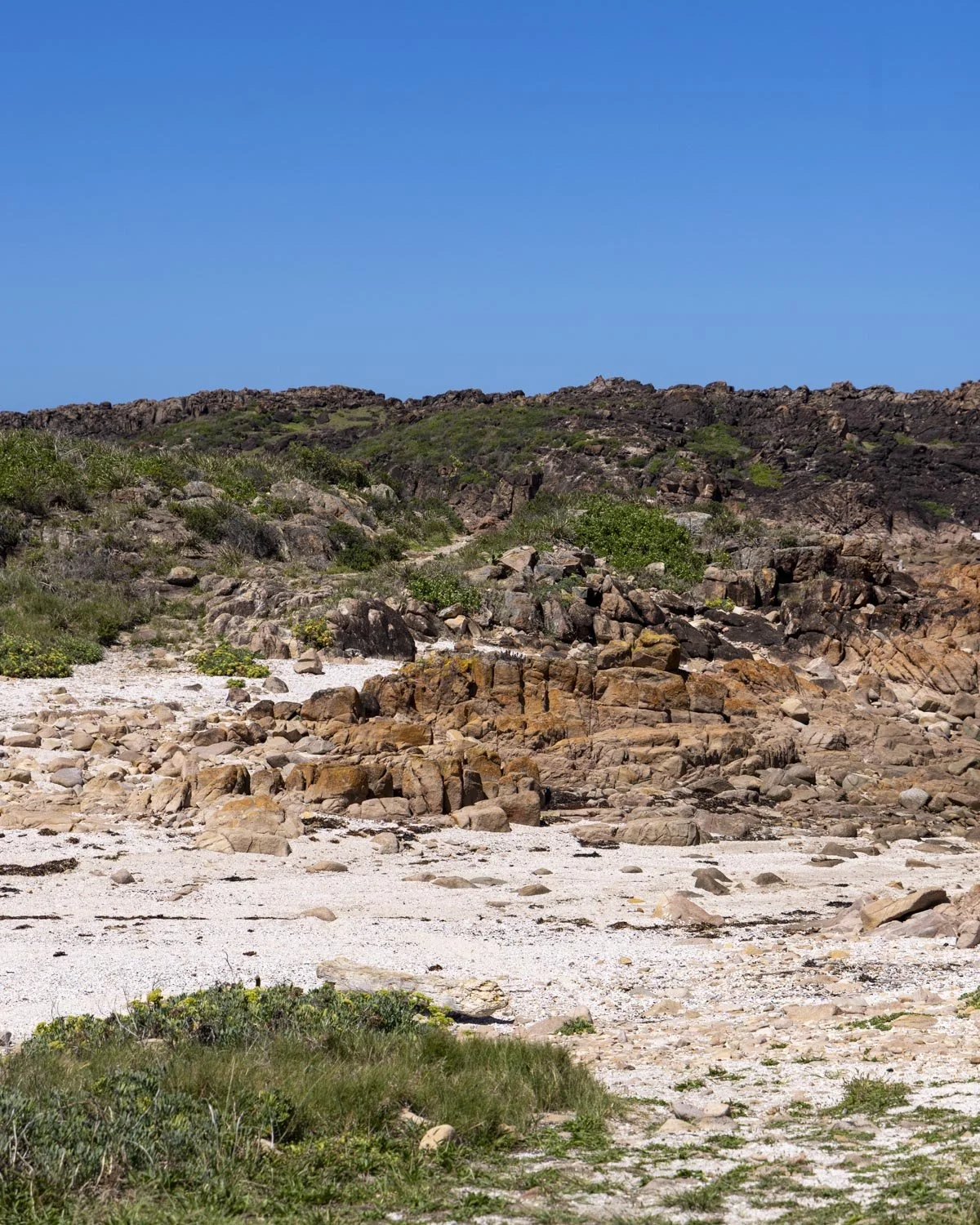
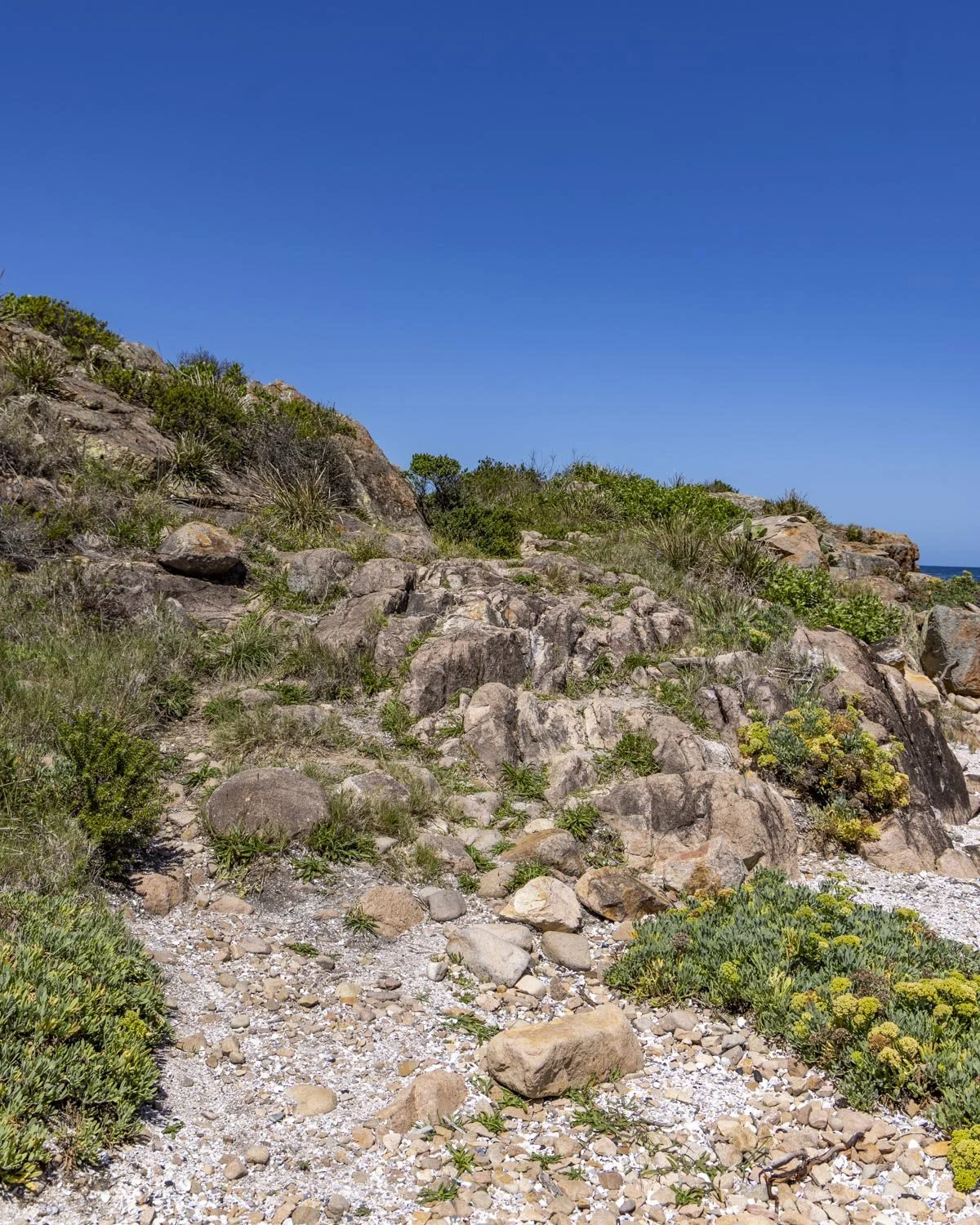
You will arrive at Rocky Cauldron 130m later (330m from the car park) and this is yet another great little pool. However, it’s better at mid to high tide, so it will be very shallow as you see it when heading over to the island on a lower tide.
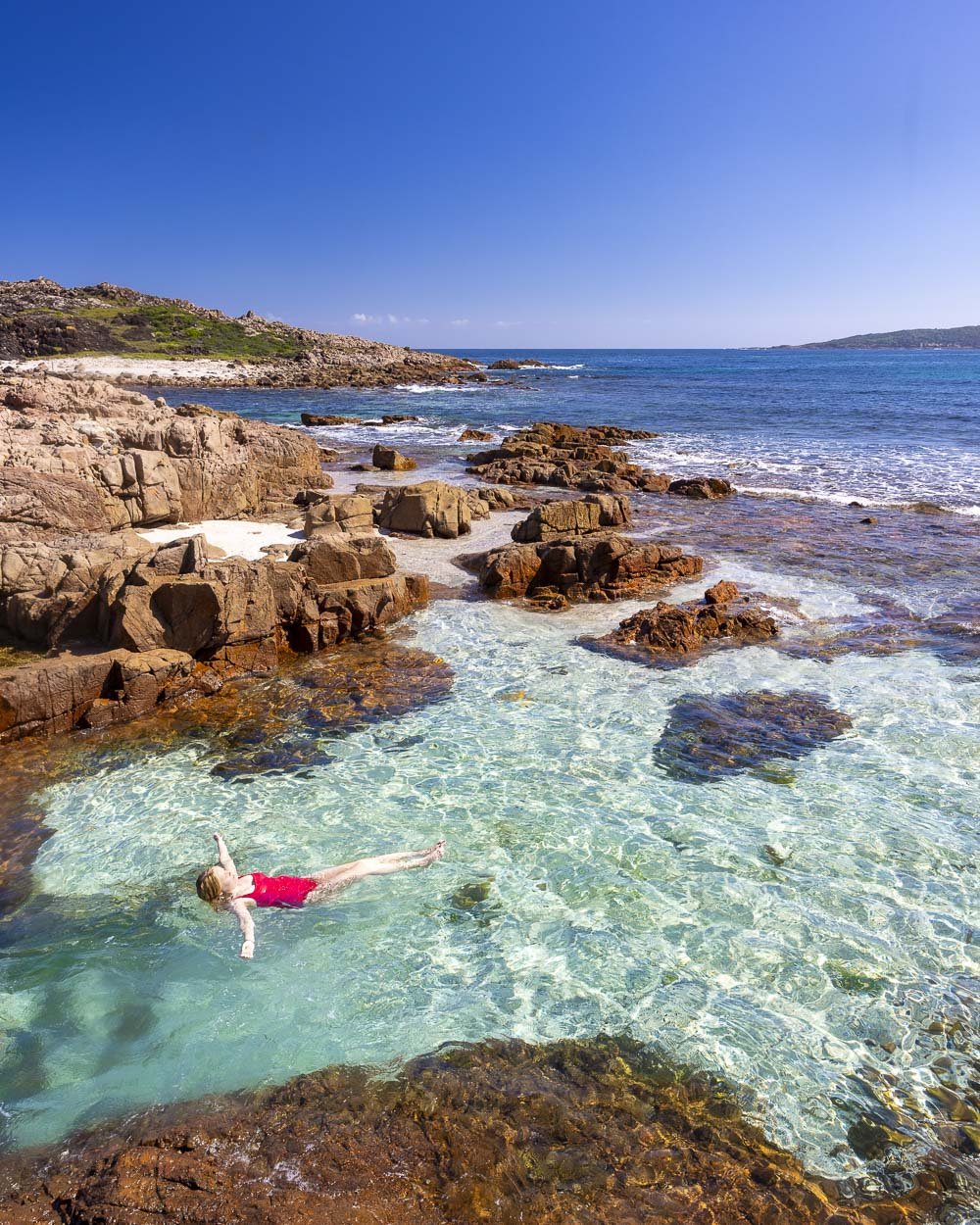
Rocky Cauldron at high tide
Crossing the channel to Big Rocky Island
Walk straight past Rocky Cauldron and after a minute you’ll come to the end of the rocks. Now there is just one channel of water between you and Big Rocky Island.
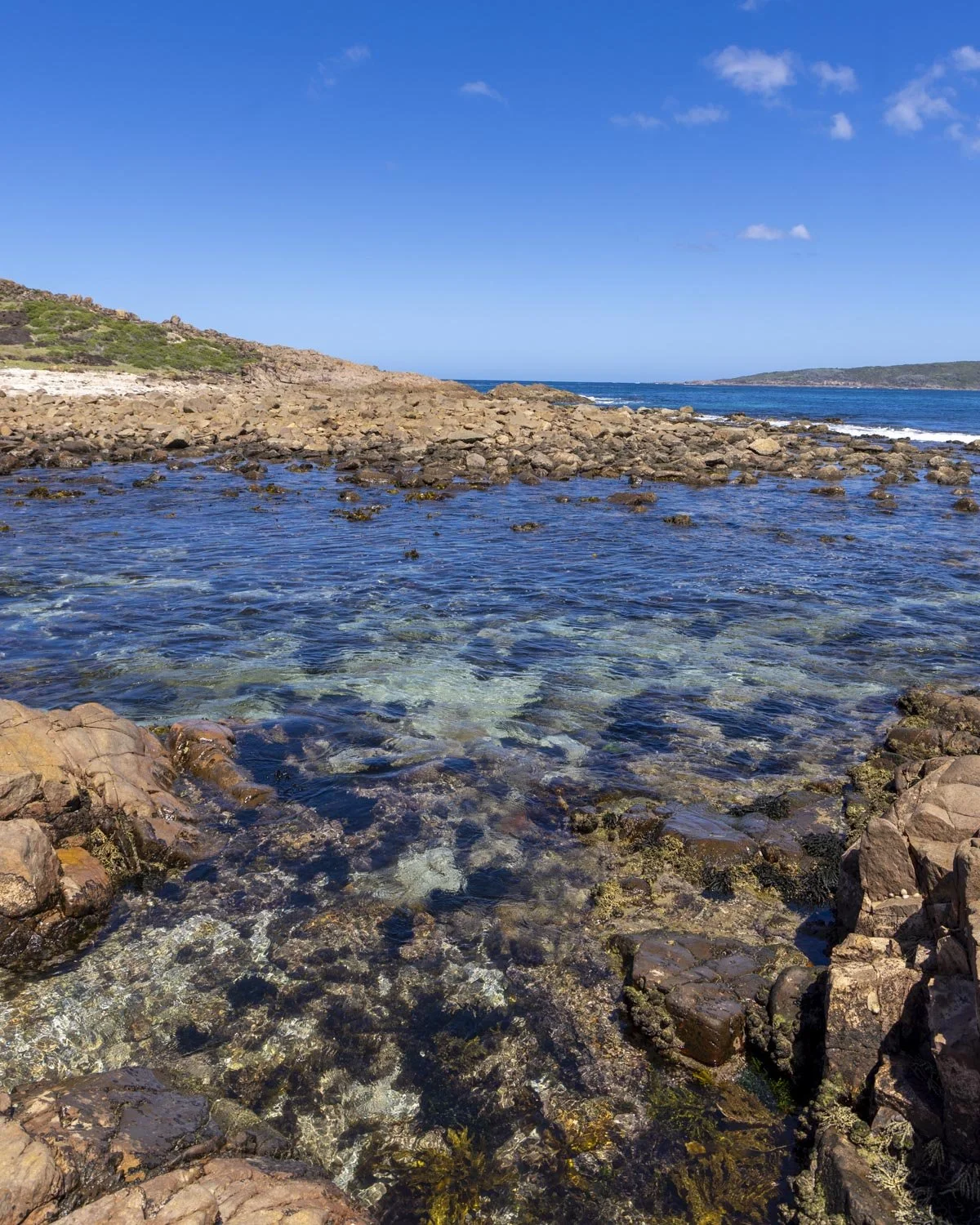
Assuming you’re visiting on a low to mid tide and when the swell is slight, crossing is a wade not a swim and any waves should be small. If it looks wavy and dodgy here, then abort.
We’ve crossed a few times now and have become much better at it with a little more thought!
My personal preference is not to cross at the shallowest point as I first did, but to take the deeper line that allows for a sandy crossing. The shallower area is to the right and very obviously more shallow, but the downside is that it’s very rocky.
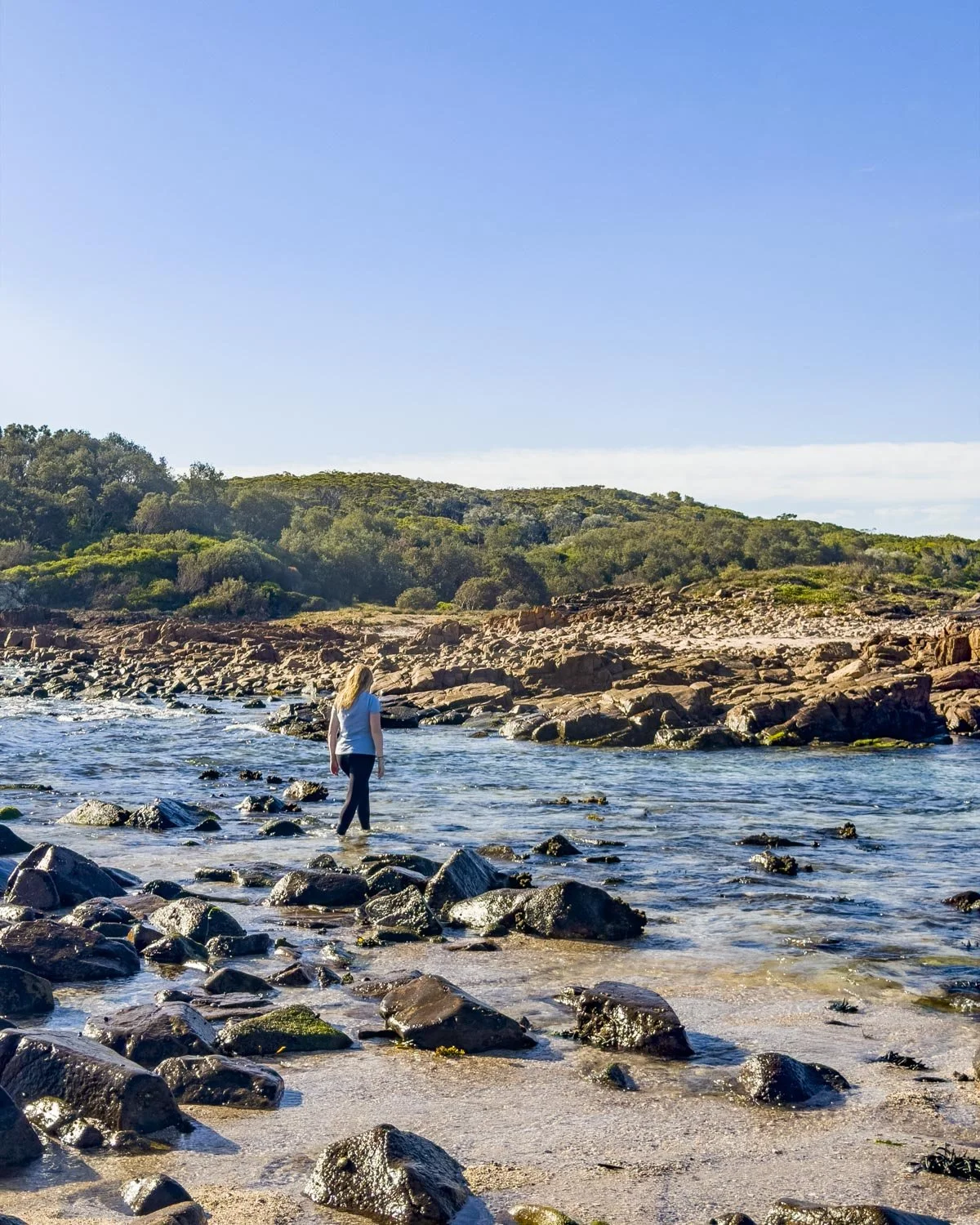
The crossing before the water deepens
I nearly went over a couple of times the first time we went to the island and now prefer to go waist deep but along the sand. It’s not all deep by any means, but there are pockets of deeper water.
Following the sandy route is not a straight line, but you can see plenty of sand the whole way to the island and this will mean you don’t need to worry about slipping, I’d personally take that above keeping drier.
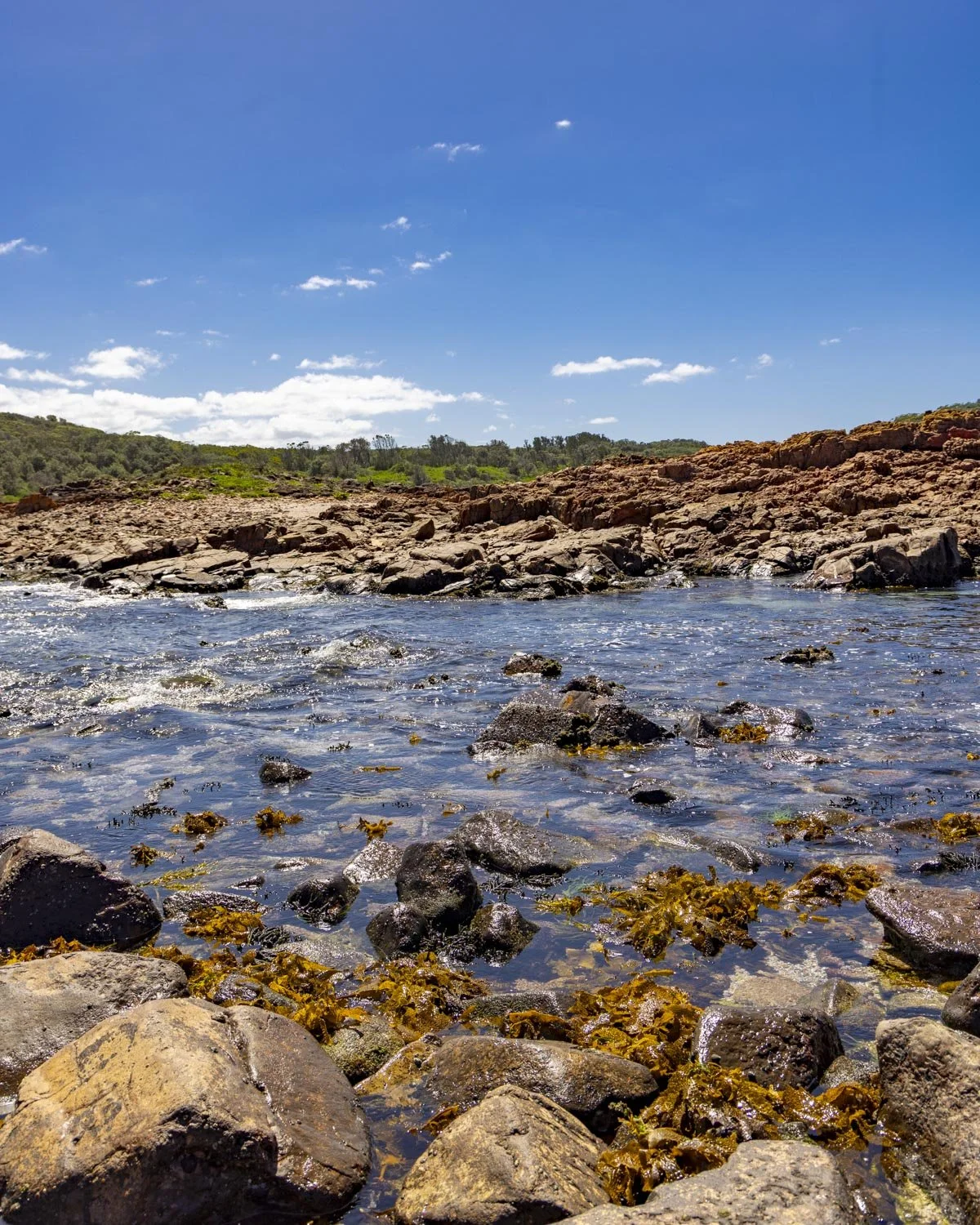
Joe likes the shallower route, which is rocky, but means there is less chance he might get any of the camera gear wet.
Whichever route you choose, crossing the channel takes just a few minutes (our watch measures it as 50m, but it’s probably less) but there are sometimes waves and it’s easier to stop and let them roll on by before continuing across.
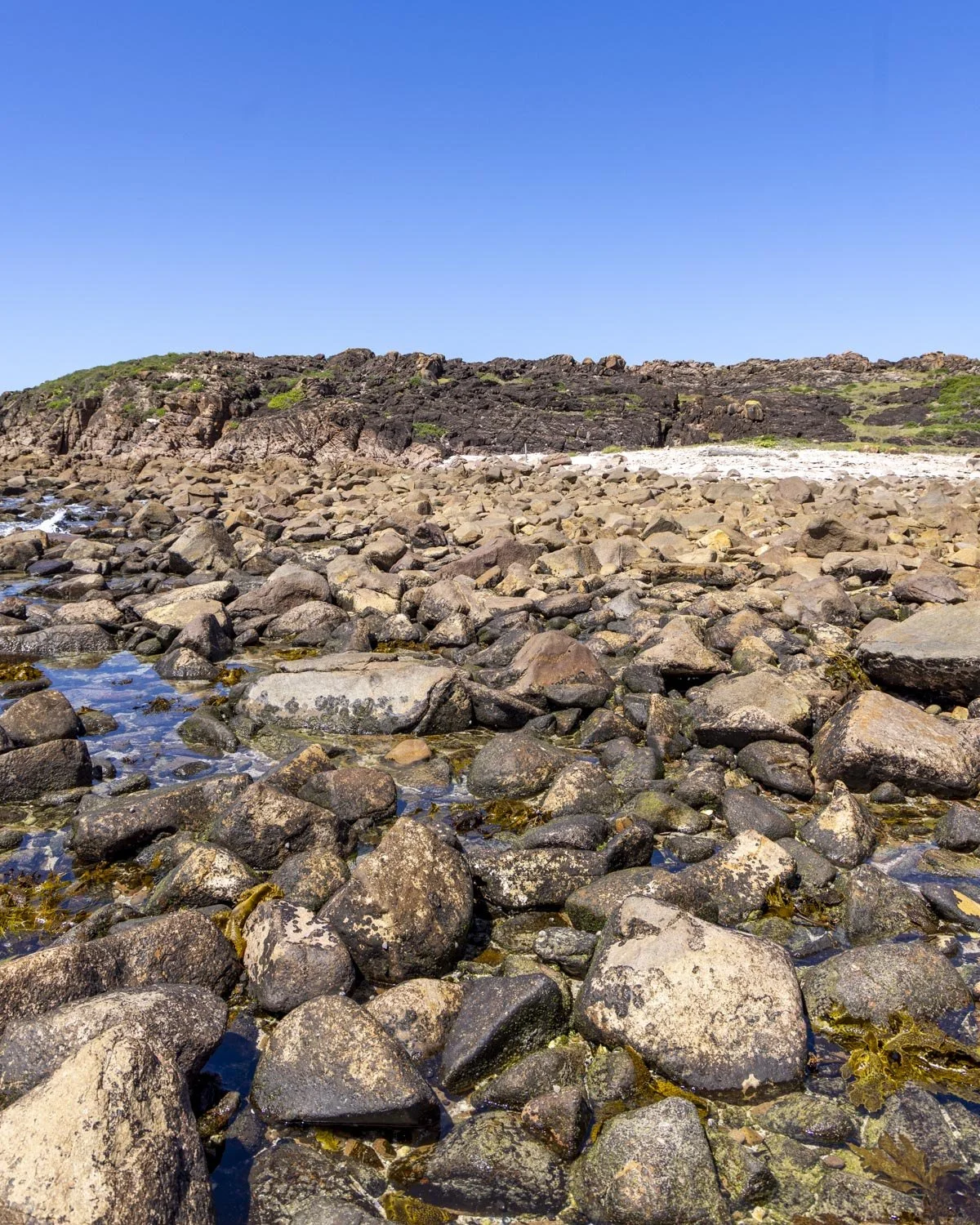
To the Blue Hole
We usually make a bit of a circuit round the island visiting the Blue Hole first, which is on the southern part of the island. It’s almost a direct line straight ahead from the crossing.
If you don’t want to visit the Blue Hole, you should skip this bit because it’s easier to approach Big Rocky Rockpool by heading right and walking around the western part of the island (it’s 130m away).
Once you’ve crossed the channel you’ll arrive onto the rocky shoreline and from here you want to head up the rocks you can see directly ahead of you.
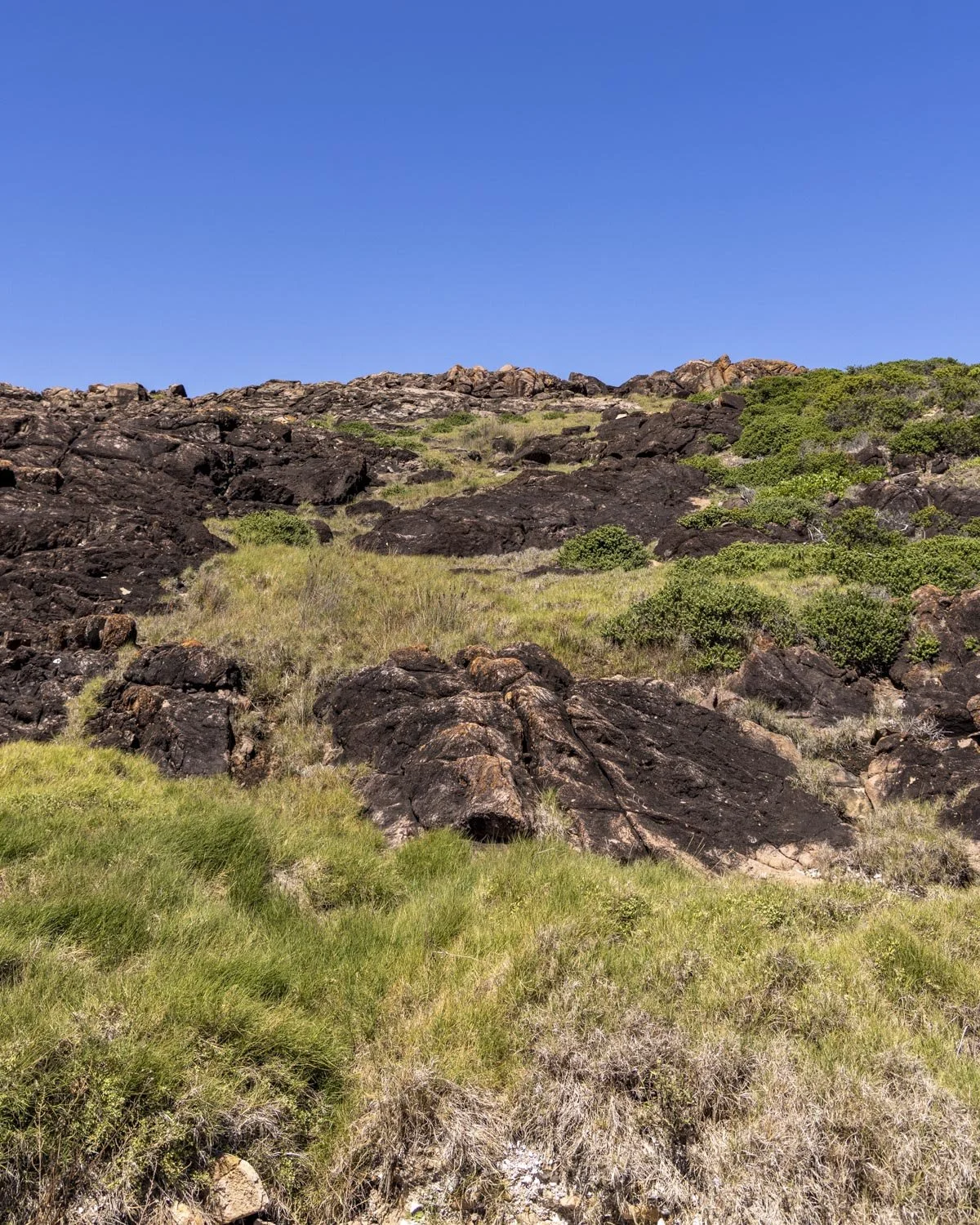
There’s a bit of a dirt path at times, but it’s mainly walking up the grippy rocks. It’s easy when dry and not very steep. From the beach it’s about 100m up to the top of the rocks.
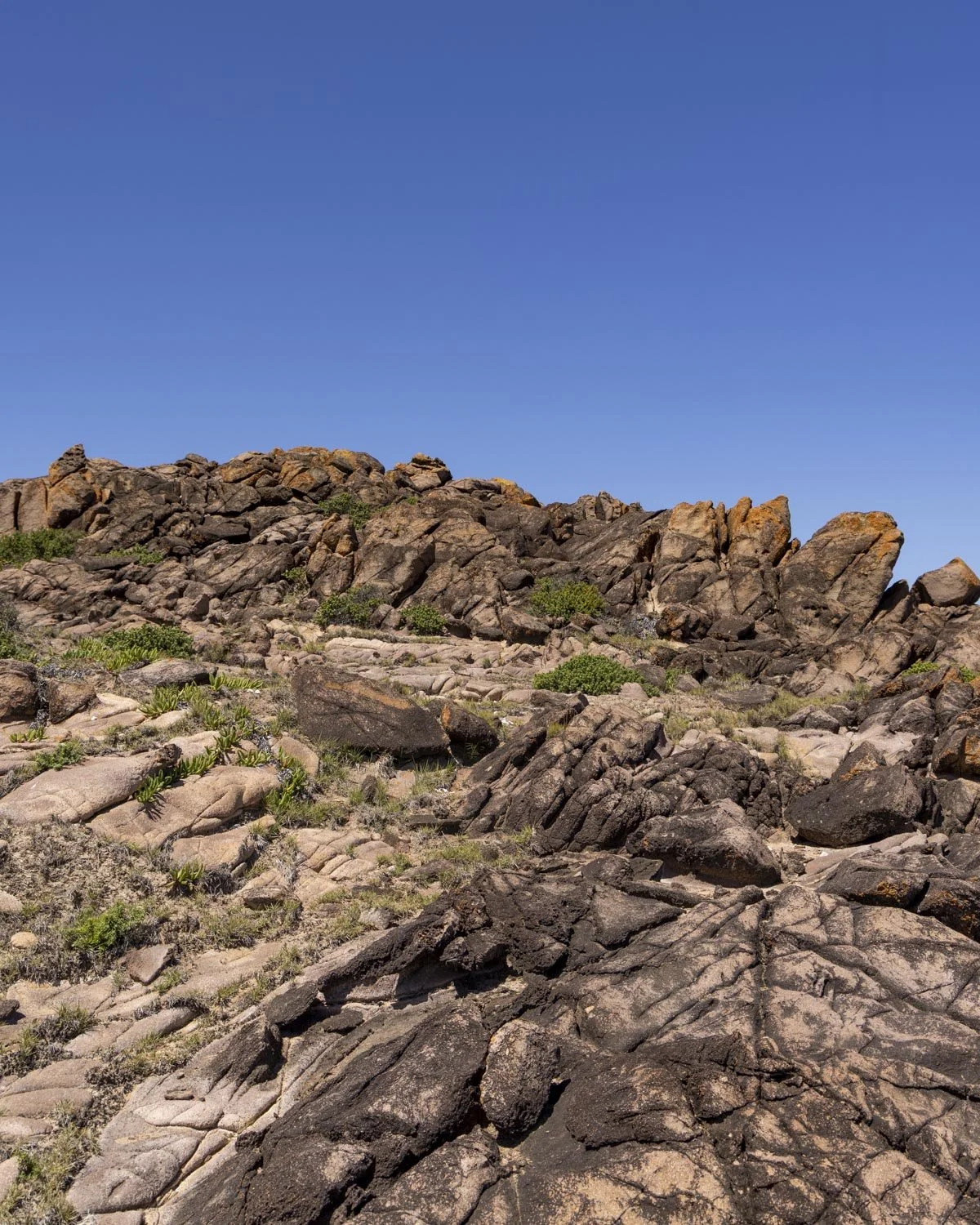
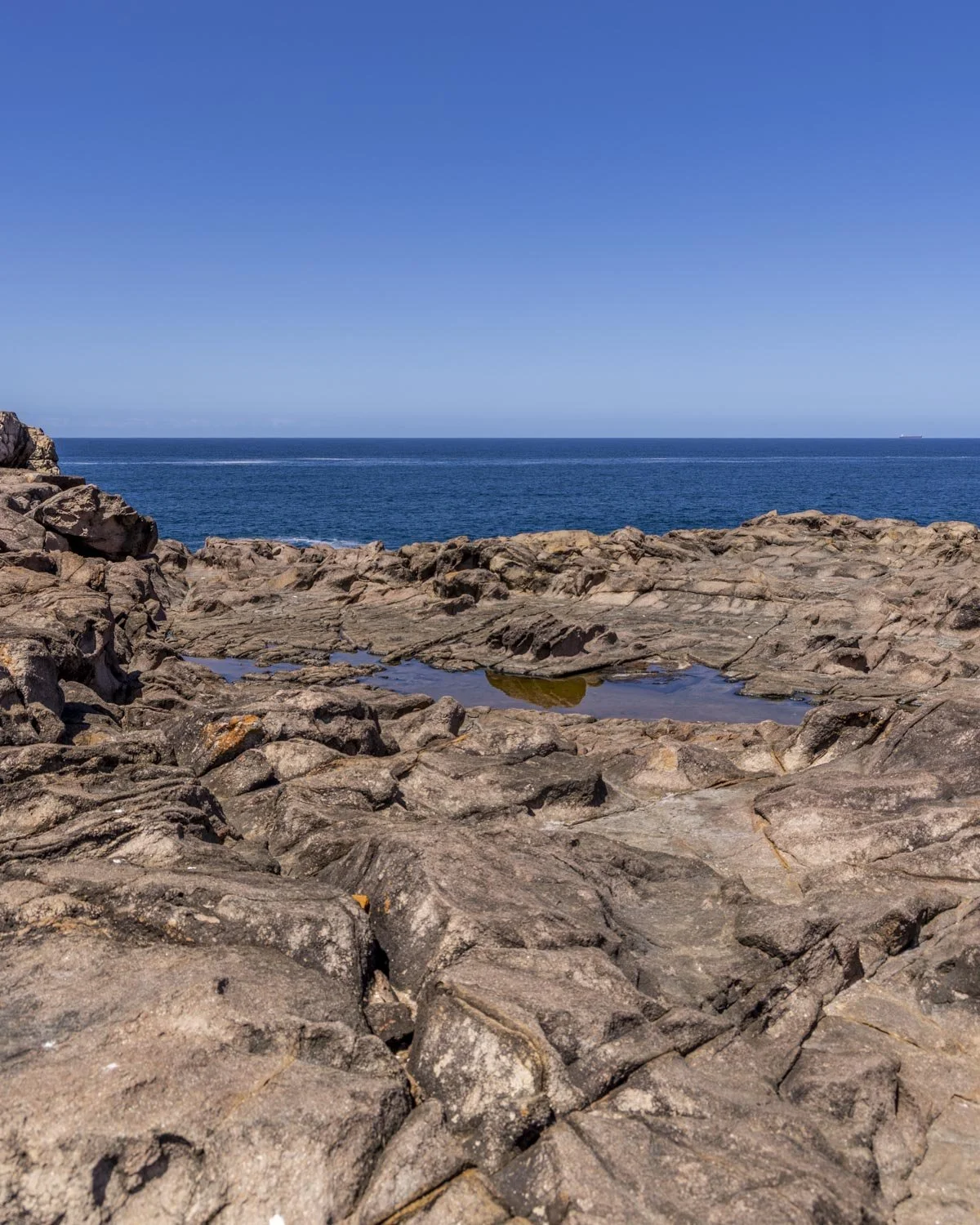
At this point you can see the Blue Hole ahead, it’s approximately 70m away. You’re quite high above it and from here the scramble begins.
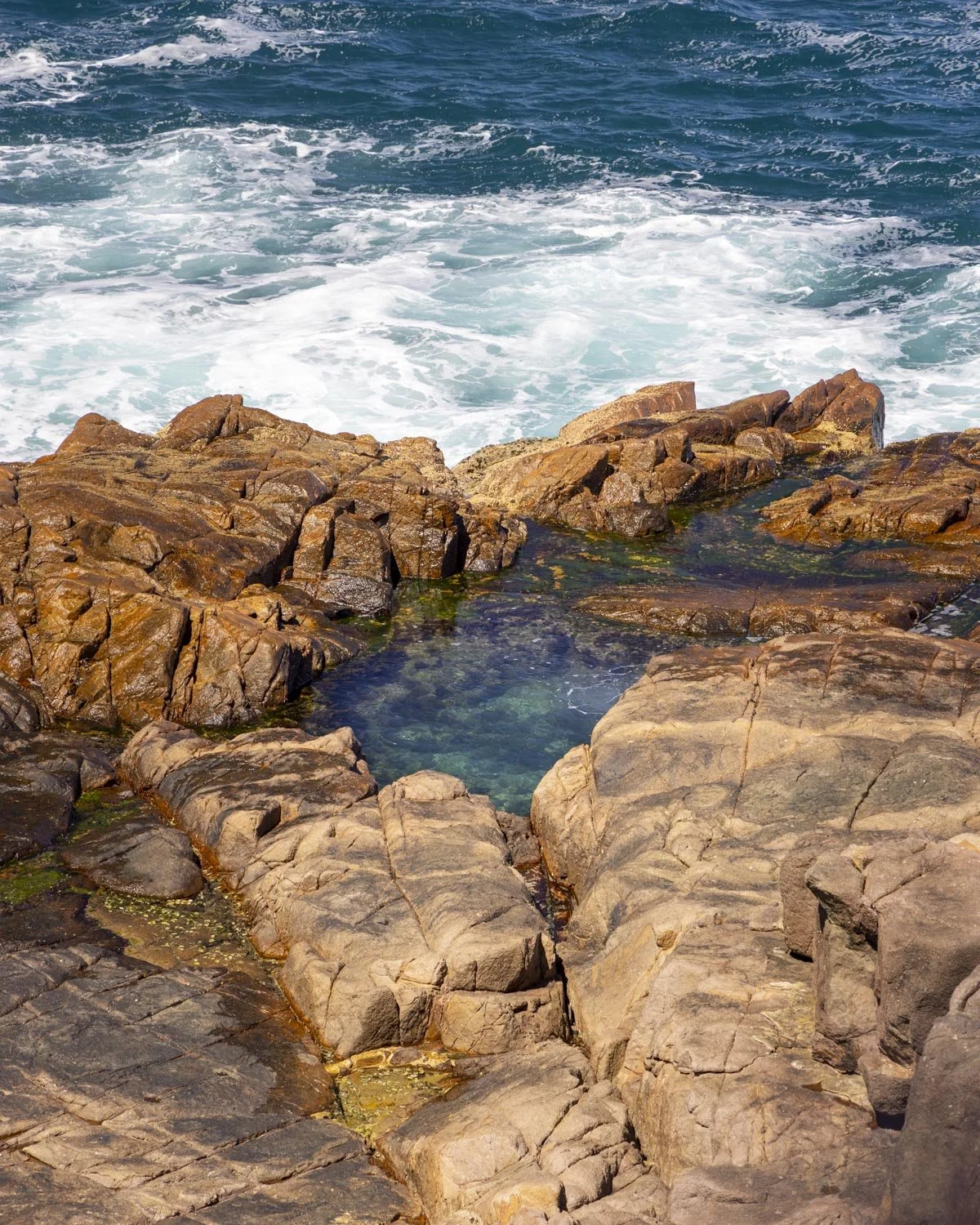
From the saddle, we recommend heading slightly east, as the route down is more gradual. There are always good ledges and tiers and the rocks are grippy when dry, but definitely go with care. You can take any route down, but we tend to head a little east until you’re at the same level as the Blue Hole.
I prefer to climb down on the gentler left side and then traverse right to reach the rock platform where the pool is situated.
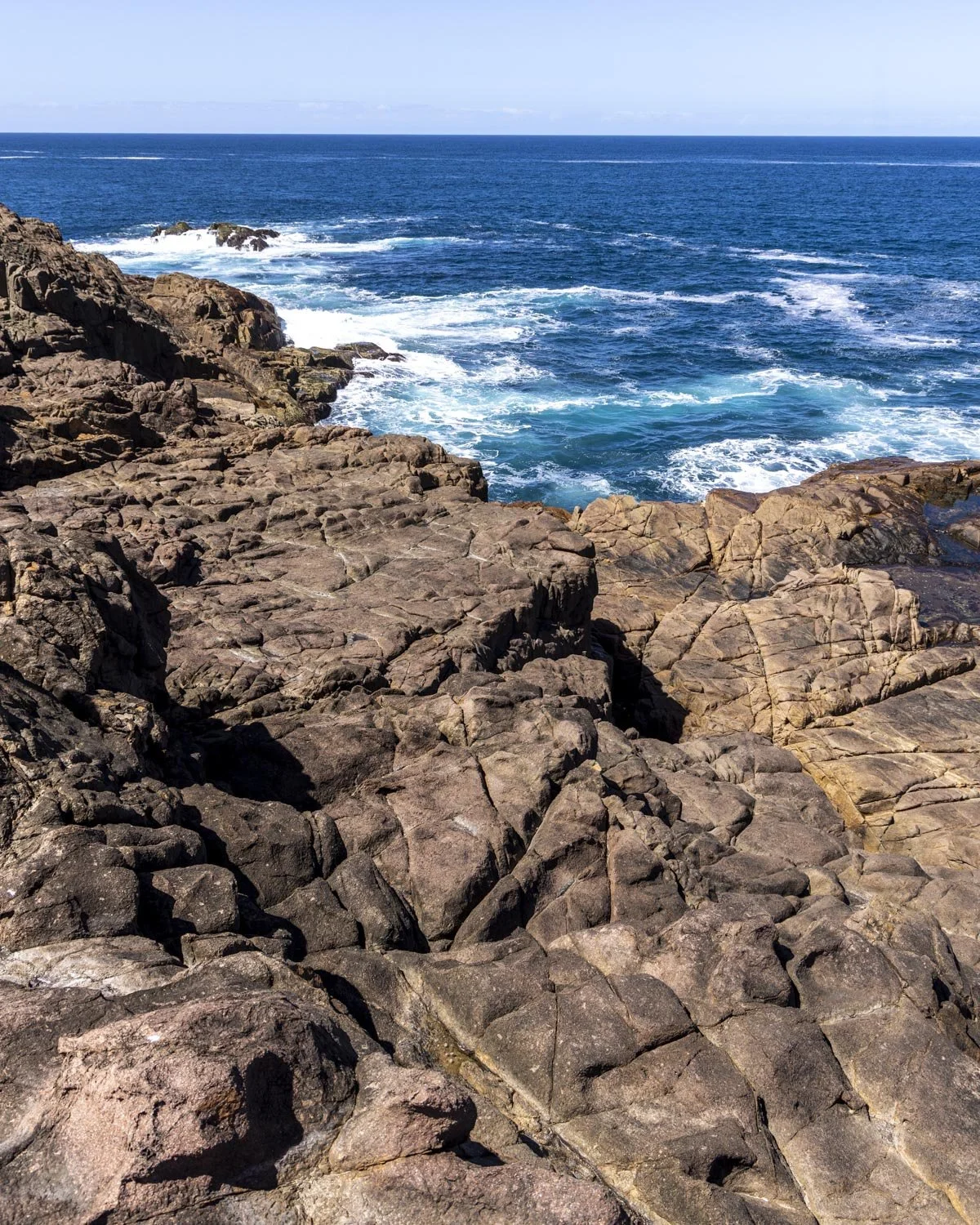
This route will take you close to a particularly wavy part of the ocean and therefore you should watch and make sure no waves are coming close to the route - you should also check that the rocks you are planning to walk on are dry which should indicate waves have not been coming up this high.
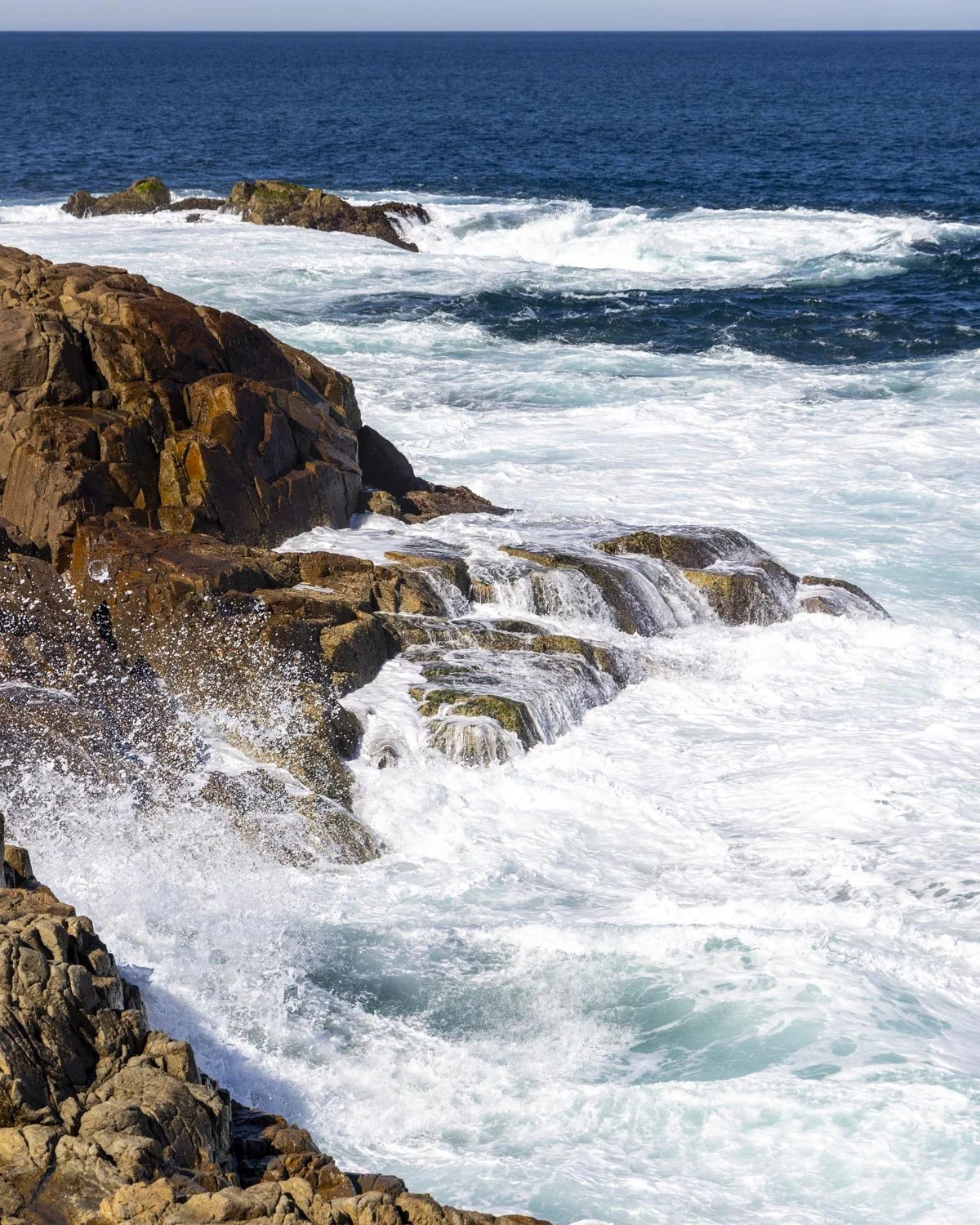
We’ve never had any waves come up to the route we use, or even close, but it’s important to check first. You’ll come down to a lower part of the rock shelf, traverse a couple of metres right and then climb up onto the rock shelf with the pool on it.
Swimming at the Blue Hole
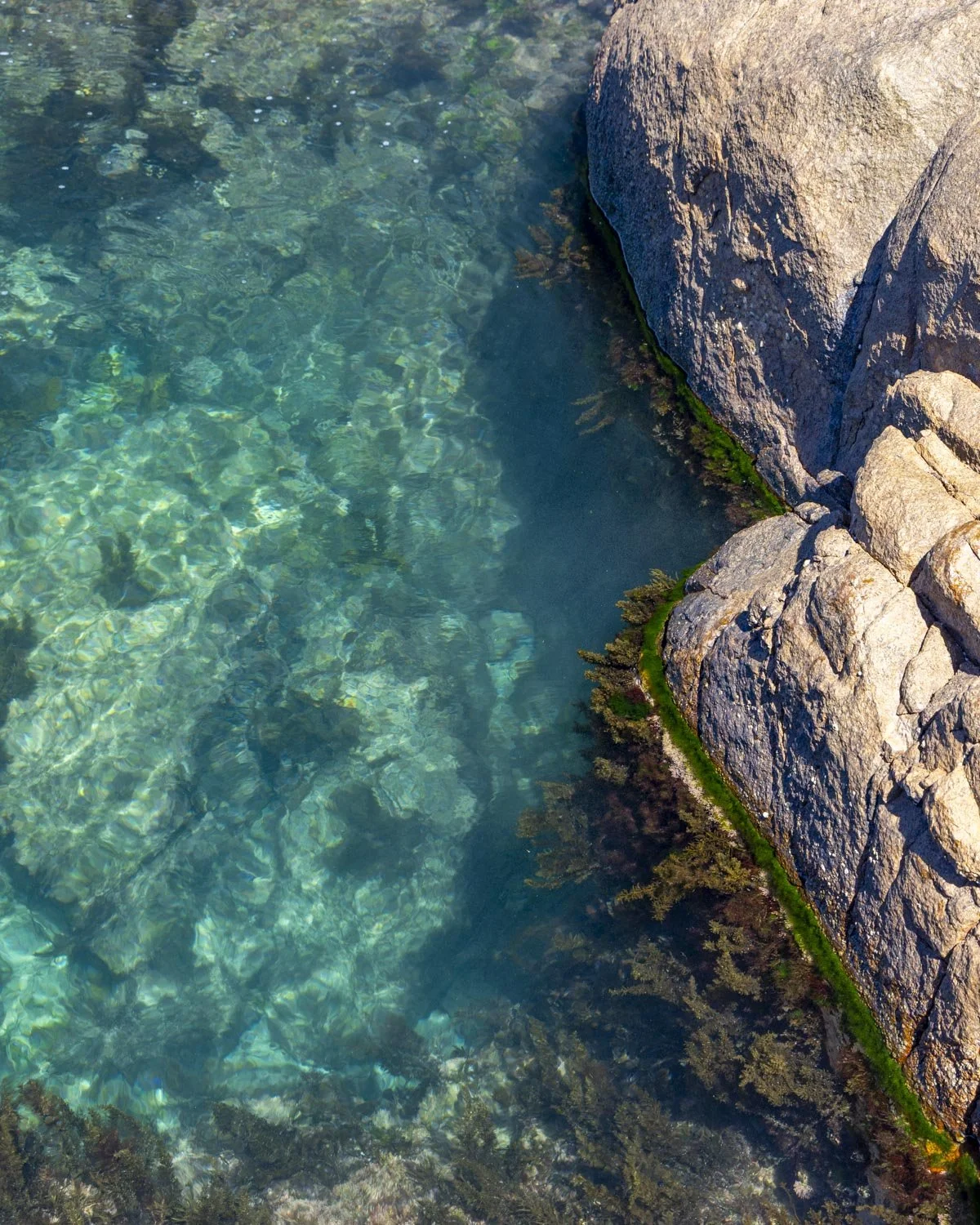
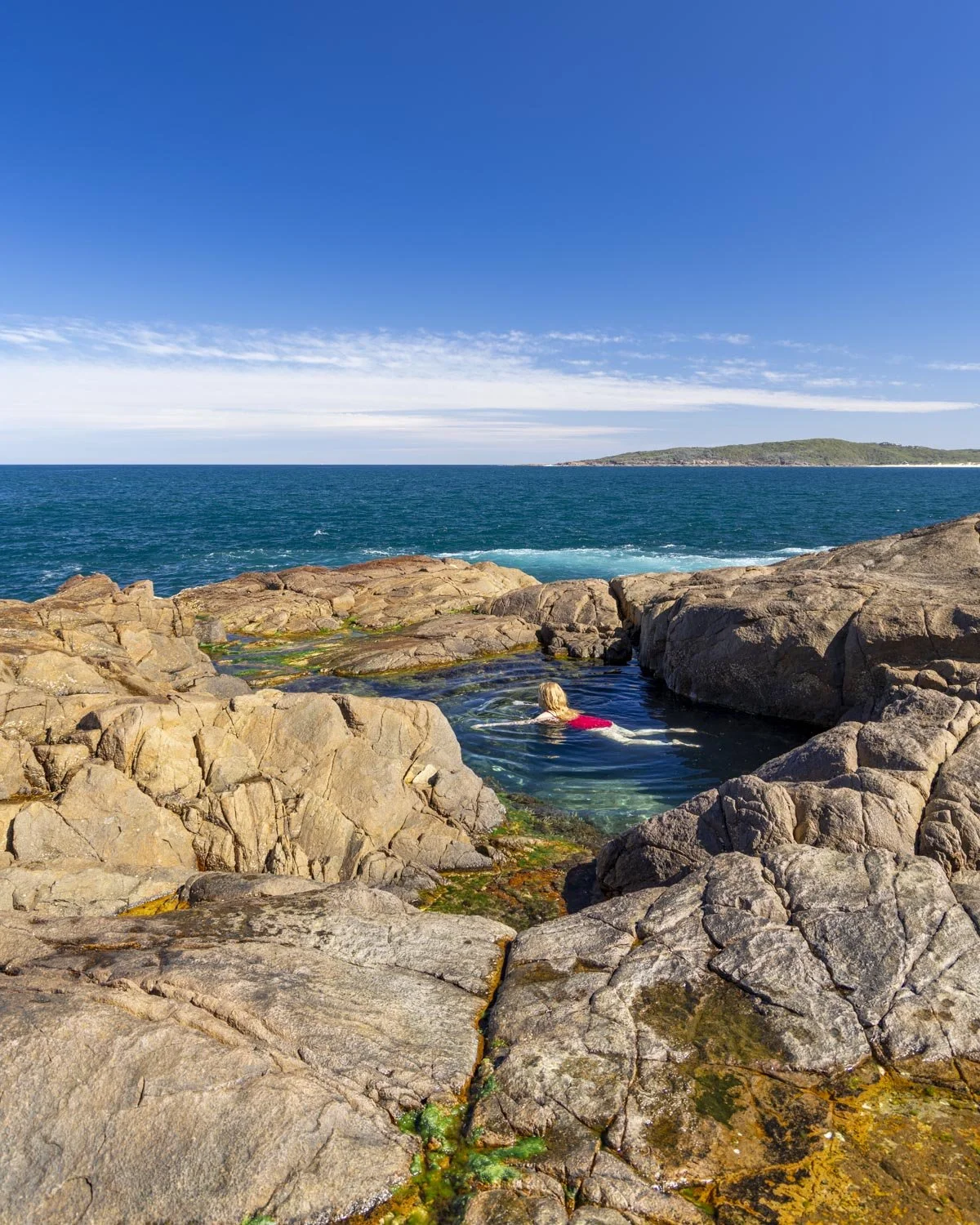
The Blue Hole is small, but absolutely beautiful. The water is so clear and shimmers a vibrant shade of blue in the sunshine.
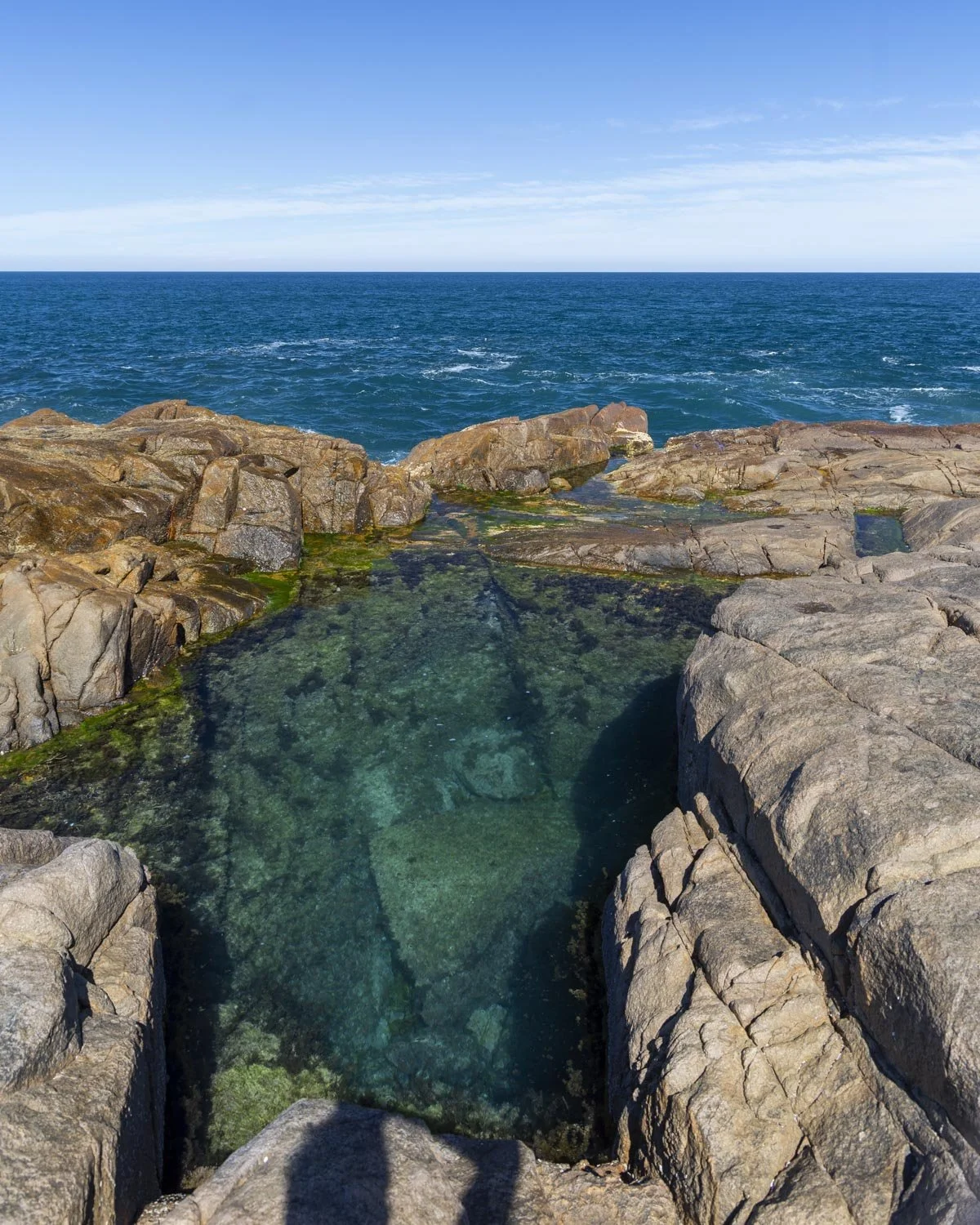
It’s very deep and very inviting. Though relatively high above the ocean large waves can easily reach the pool as it’s perched so close to the edge. We recommend sitting and watching the pool for a while before entering, and know that rogue waves could still happen, though your risk is mitigated by choosing a very slight swell.
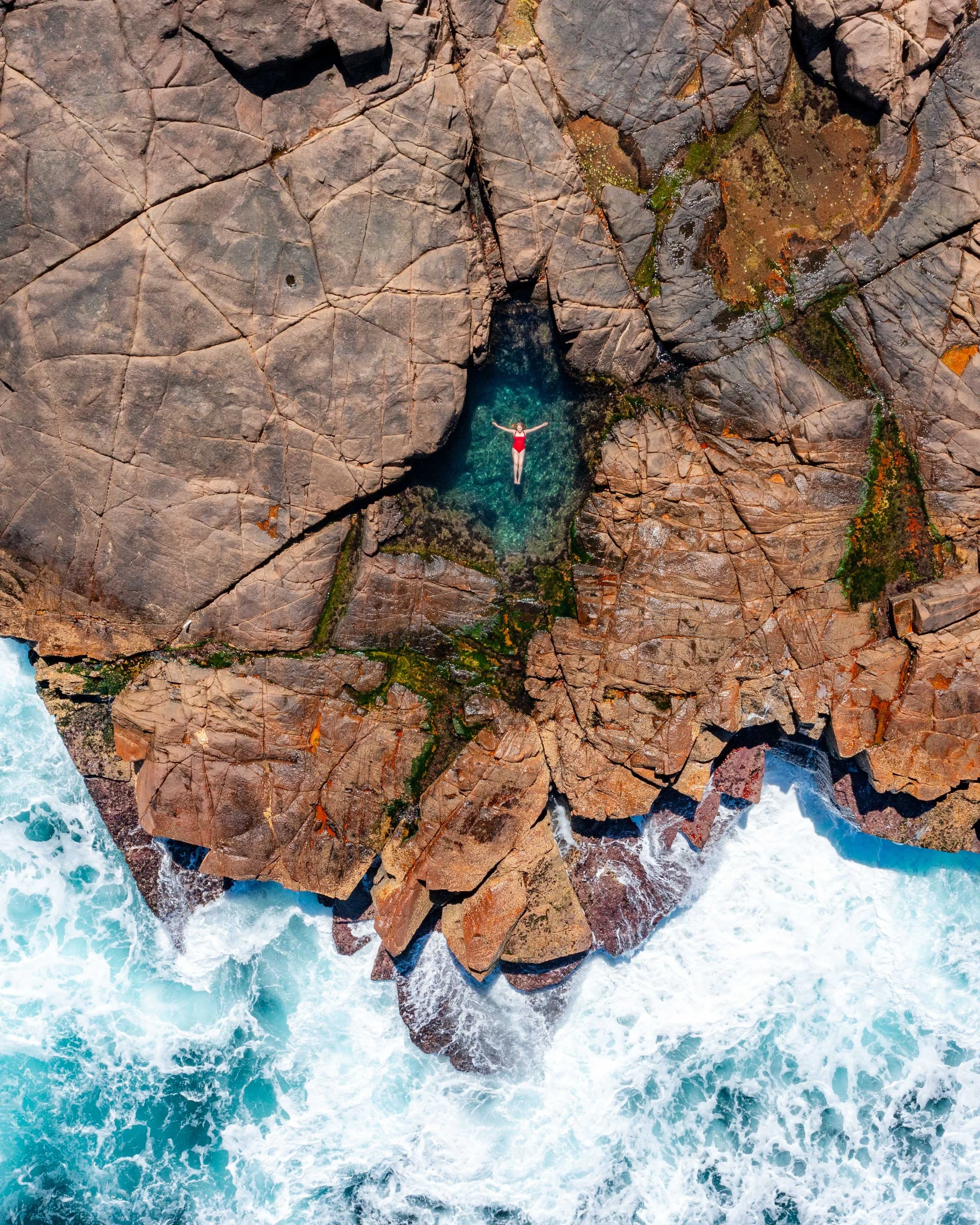
Getting into the pool is easy as there’s almost a natural step on the northern side (the side furthest from the sea) and then you can either swim straight off or step down onto the steep bank to ease in more gently.
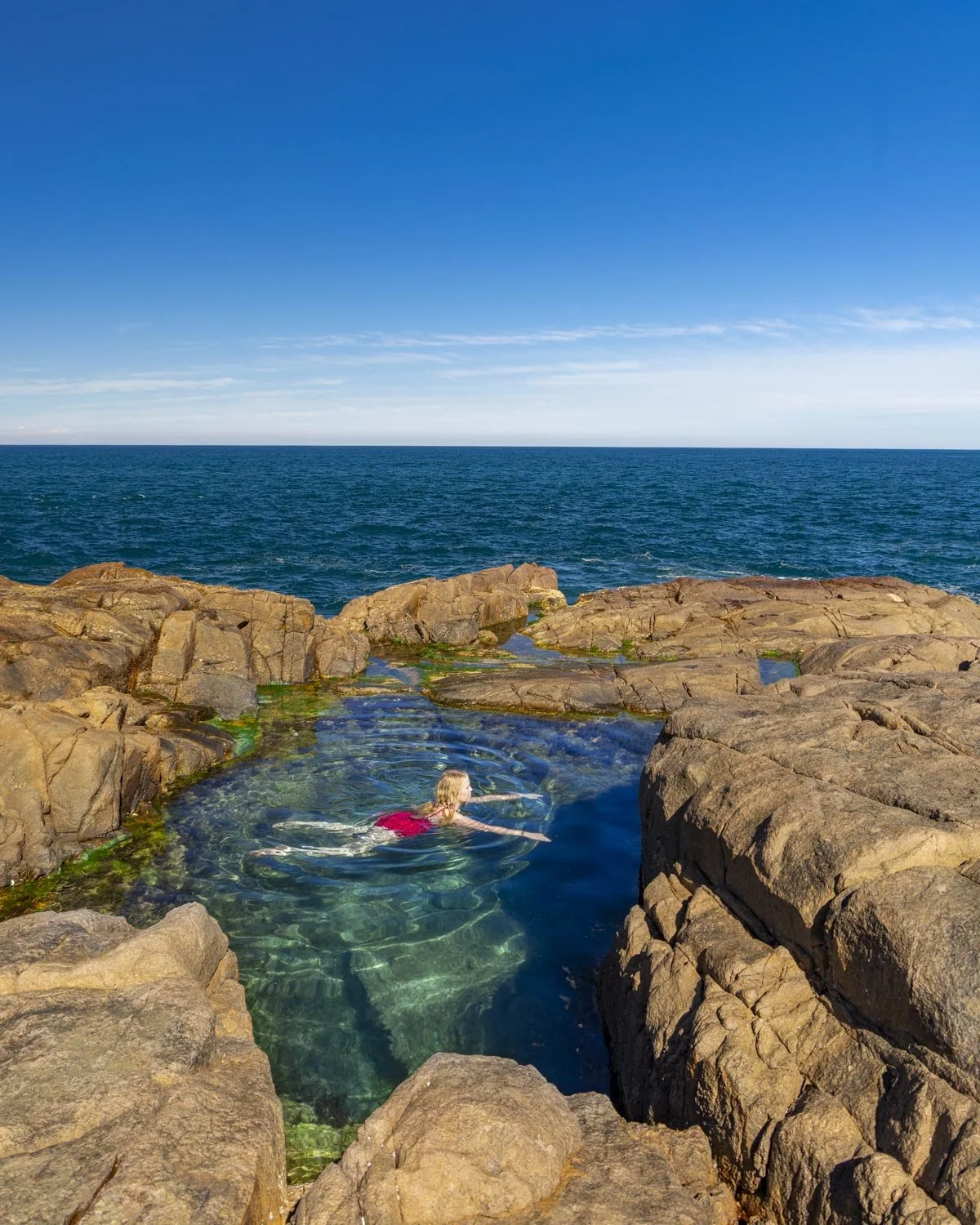
There are many good footholds on the steep bank into the pool if you don’t swim straight off, so entering and exiting is easy. Once inside the pool it’s really deep so you can have a little swim or just lay back and float in the sensational blue water.
It’s a little smaller but otherwise reminds me very much of Boat Harbour Rockpool, but a little more wild and adventurous!
Traversing the island to Big Rocky Rockpool
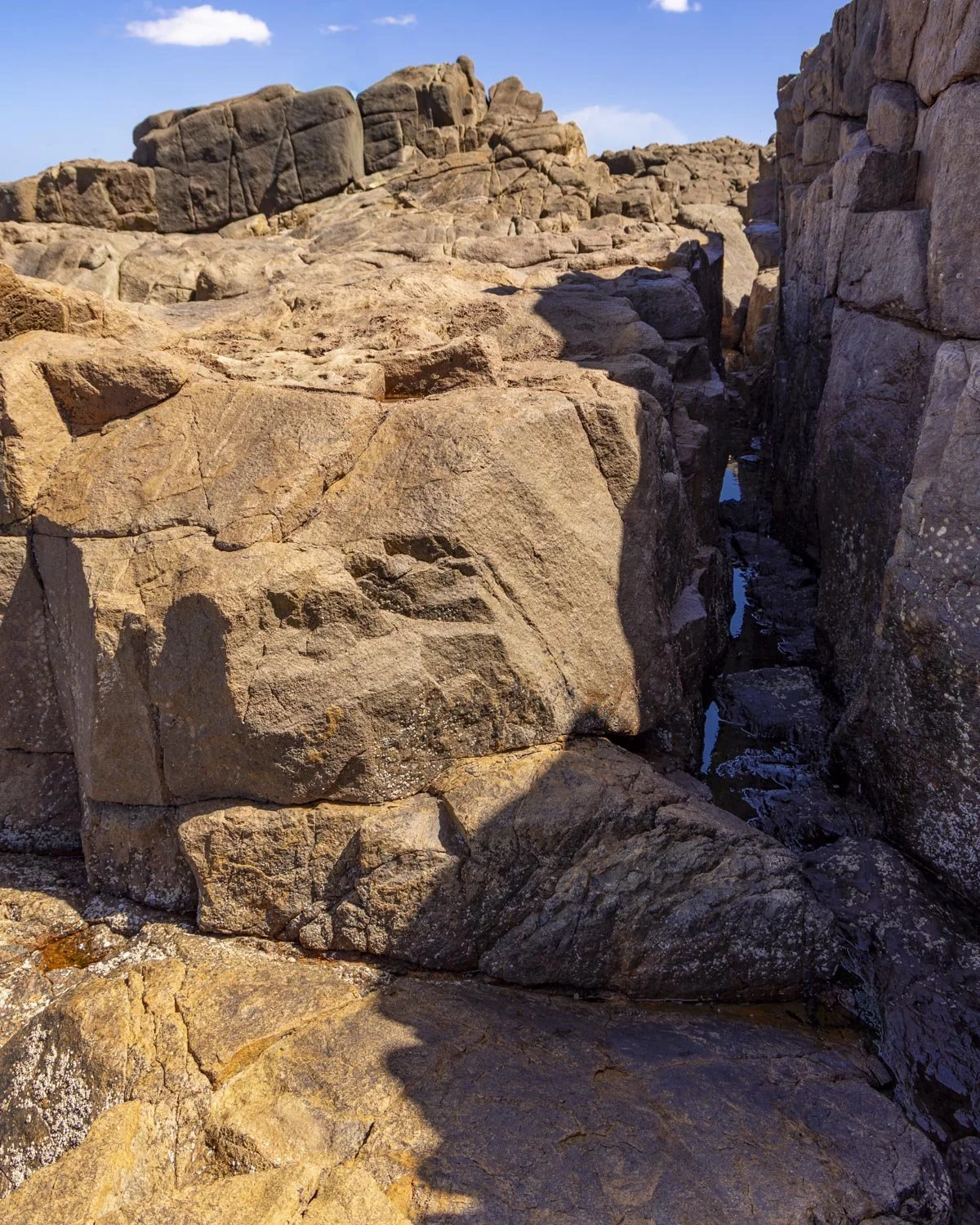
To find the second rockpool you need to head to the gap between the cliff walls. From the Blue Hole you head right and when you see some large rocks ahead of you, look right and you’ll see the gap.
Climb down the rocks and then head left, briefly traversing at the lower level .
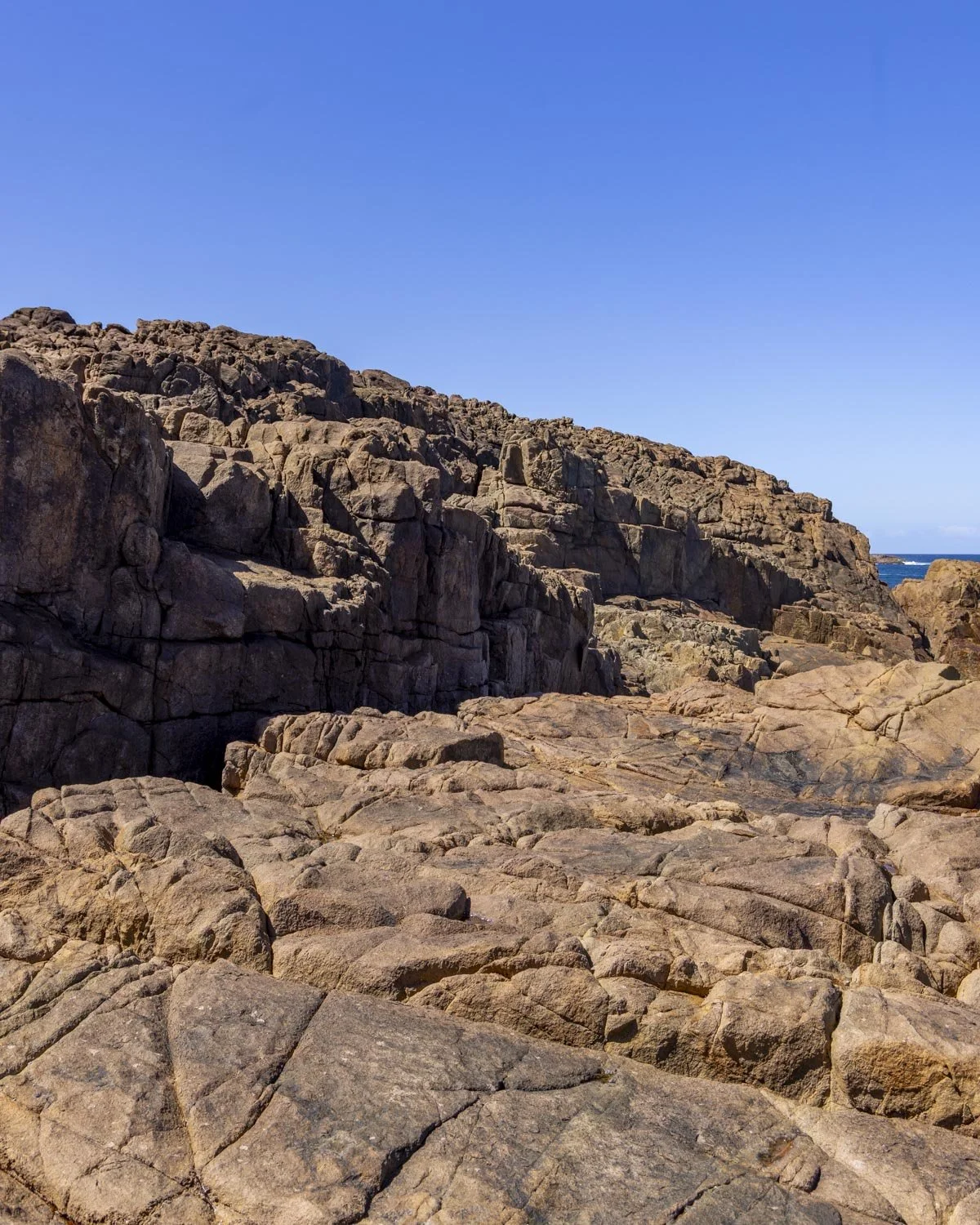
You’ll then see a set of rocks/rock wall you can climb up on the right side. There are various points you could climb up, but one is obviously less steep and has very good foot placements.
You’ll then continue straight and you will soon see the dangerous rockpool to the left.
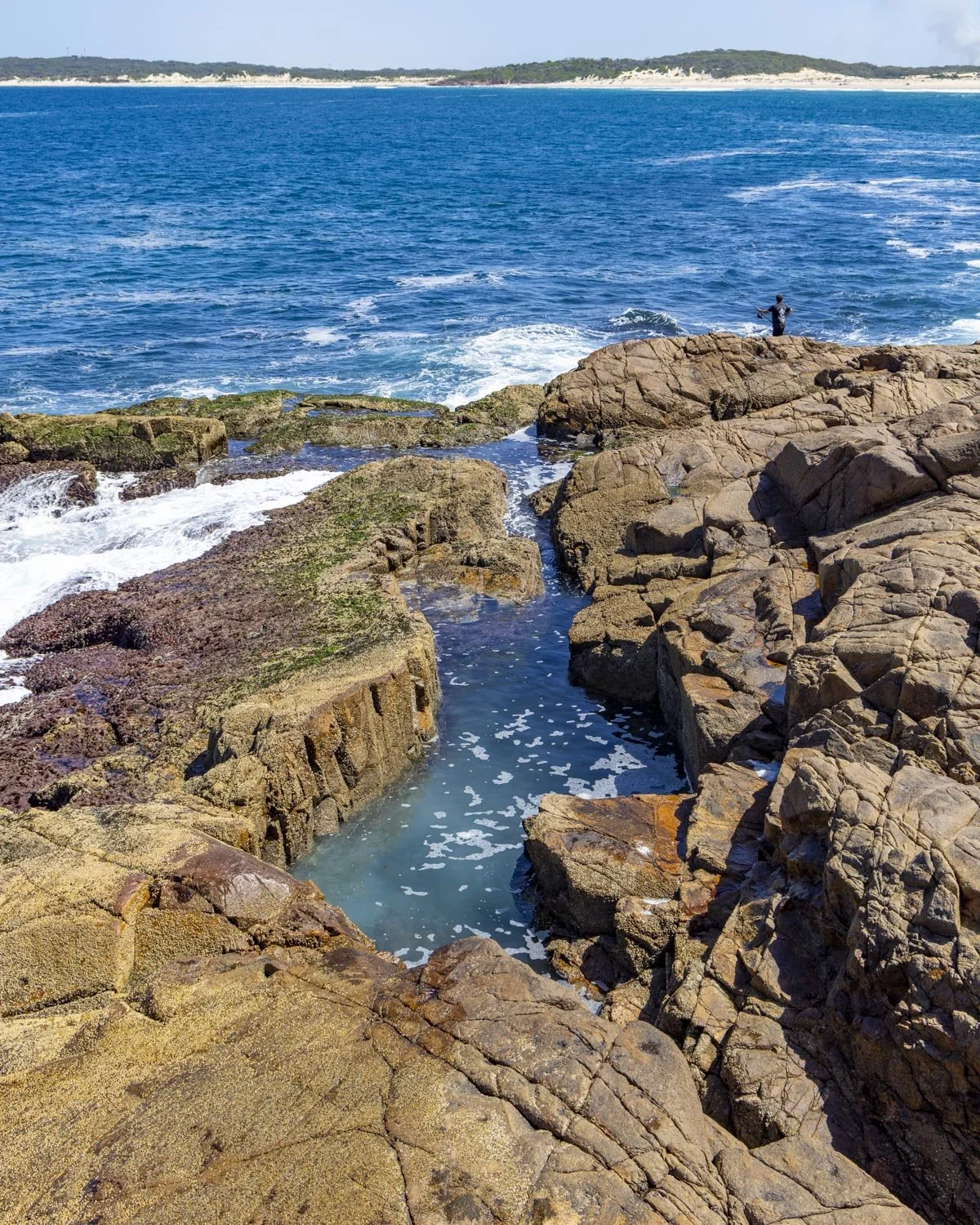
The first time we saw this pool I assumed we had not picked a day with good enough conditions to swim, however, every time we’ve been since the conditions have still been dangerous, including on a good low tide of 0.4m and a decent slight swell.
There may well be some exceptional days when it’s not wild, but generally speaking this pool is to be admired but not entered.
I would even caution on standing too close to it as the waves even on a slight swell can turn in an instant and reach several metres high, whitewashing the rock platform above the pool. The waves can be so violent that if you got caught you would be washed out to the ocean.
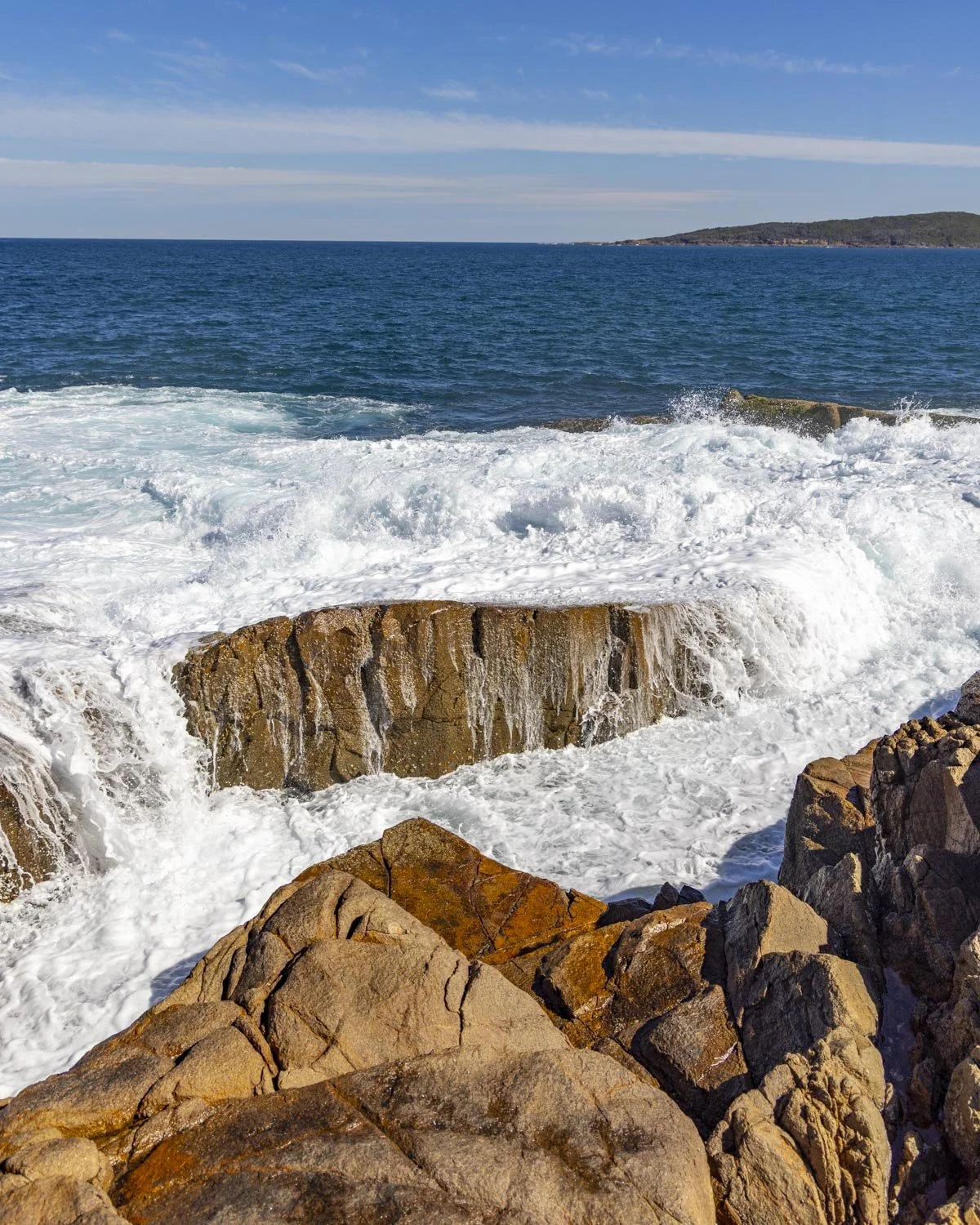
It is a stunning pool, but best viewed from several metres back (at a minimum) and on one of the high rock shelves.
If you continue a little further to the right, heading for the far west side of the island and away from the dodgy pool, you will come to the second swimmable rockpool and reaching it is easy.
If you were to only visit this pool you would approach from the west side of Big Rocky Beach (heading right with your back to the channel). This route is easy, avoiding the down climb to the Blue Hole and the traverse between the cliff walls.
Swimming at Big Rocky Rockpool
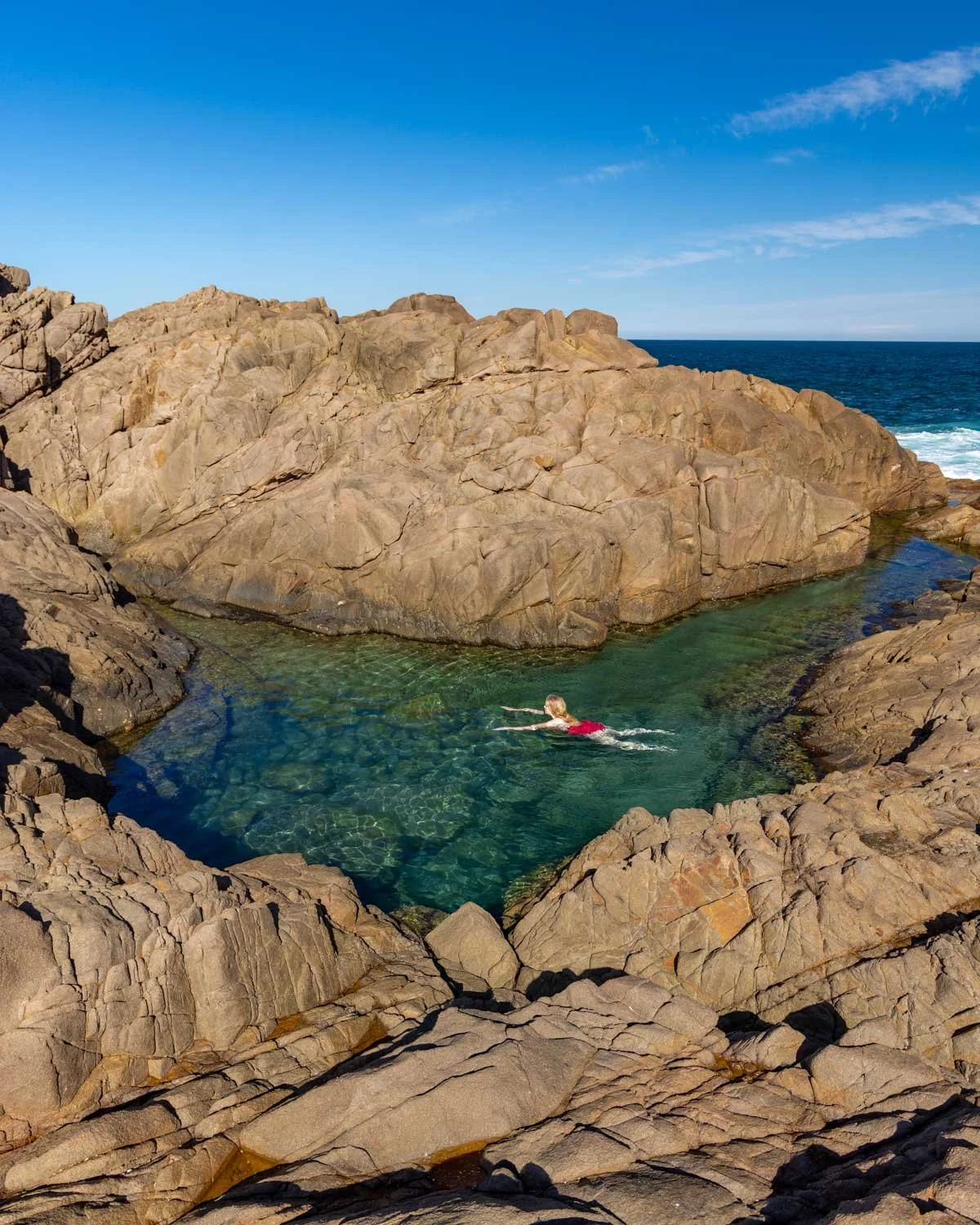
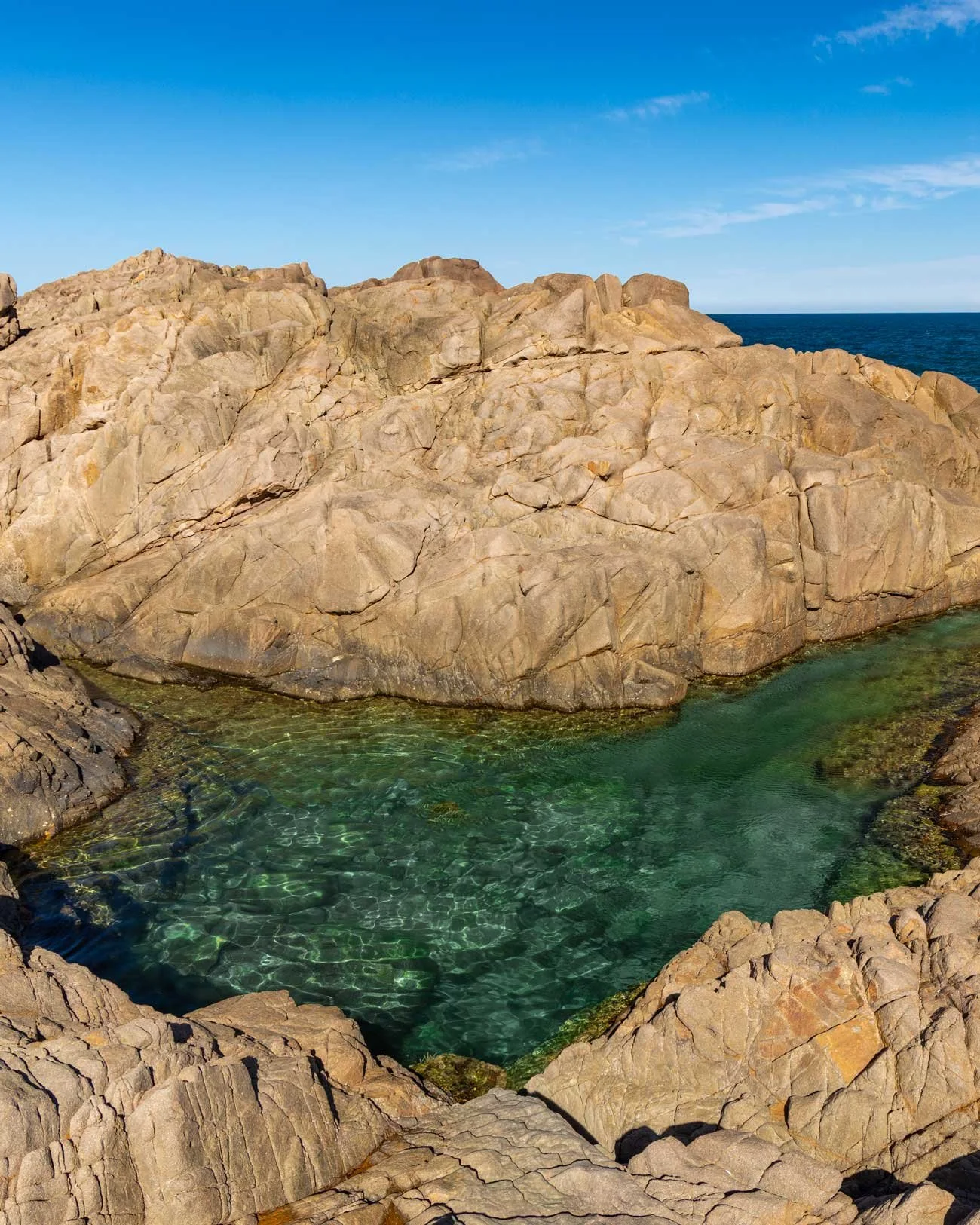
Big Rocky Rockpool is a beauty and the sheltered nature of the pool makes it feel both very relaxing and very private. The Blue Hole feels fairly private too, but it’s not enclosed by the rugged rocks like this one is.
The rock walls are dramatic and gorgeous to look at, while also providing some safety from the rolling waves beyond.
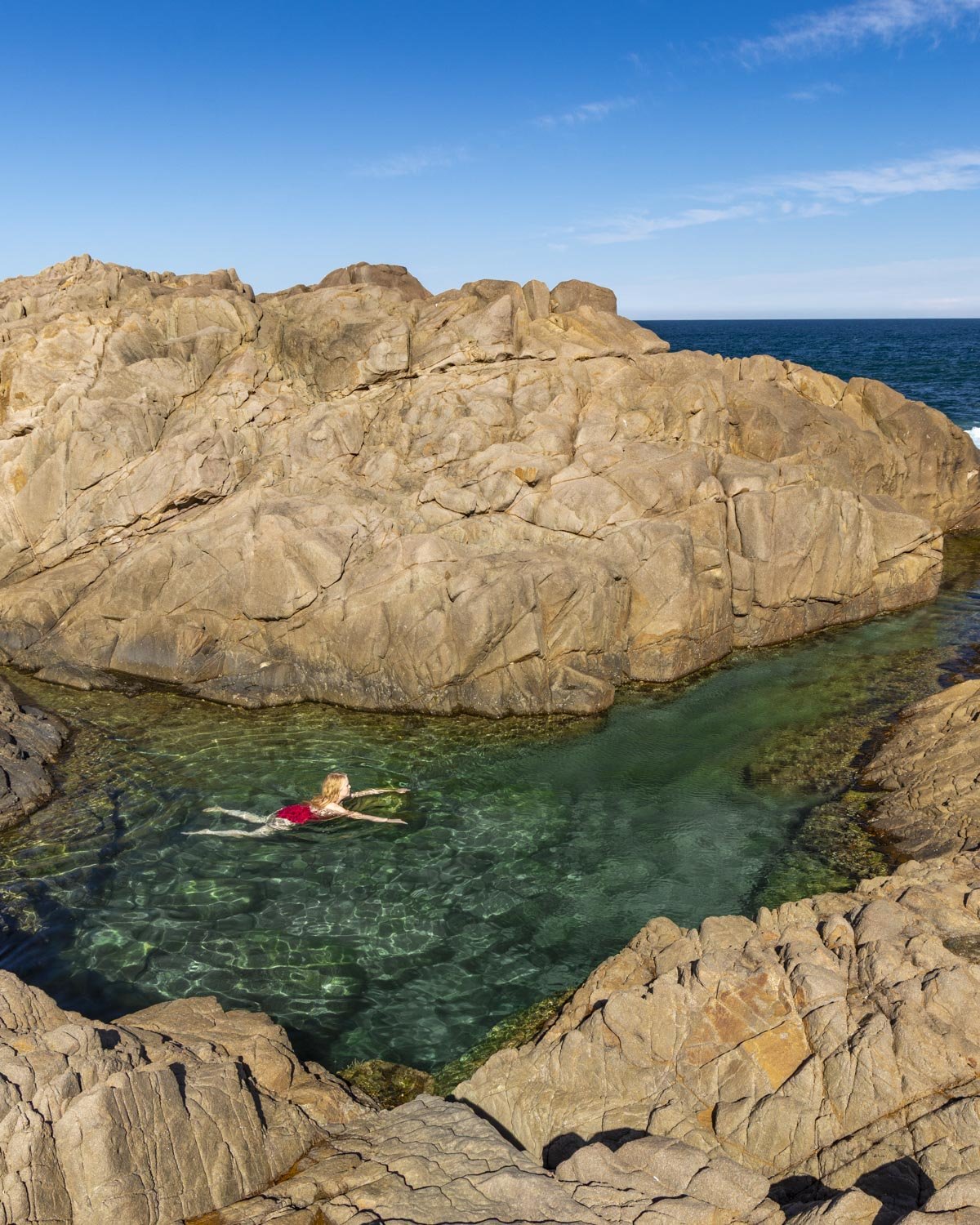
The water here is crystal clear and the pool big enough for a proper swim. We’ve only encountered very minor waves occasionally trickling in from the southern side, almost like a dainty cascade so it feels very serene (though rogue waves can happen anywhere).
Entering the pool is even easier than the Blue Hole as the rocks are shallow and easy to climb down and then there is tiered entry to the water (which is shallow at the edge).
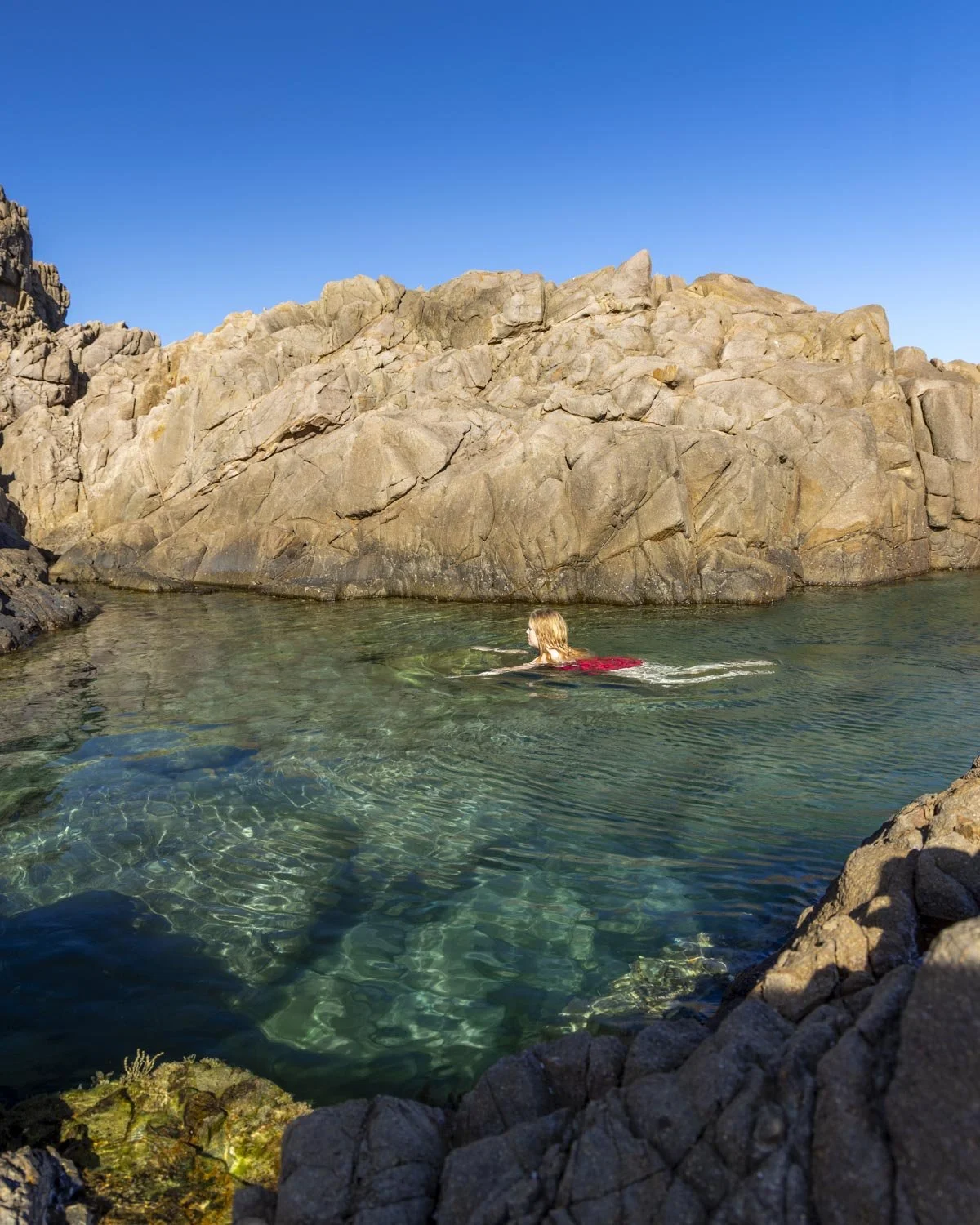
Generally speaking the pool is deep but there were areas I could stand up too. There are one or two rocks but a clear space for swimming and no weeds whatsoever!
It’s a stunning place for a swim and I loved the feeling of being fully enclosed by the rock walls for ultimate seclusion.
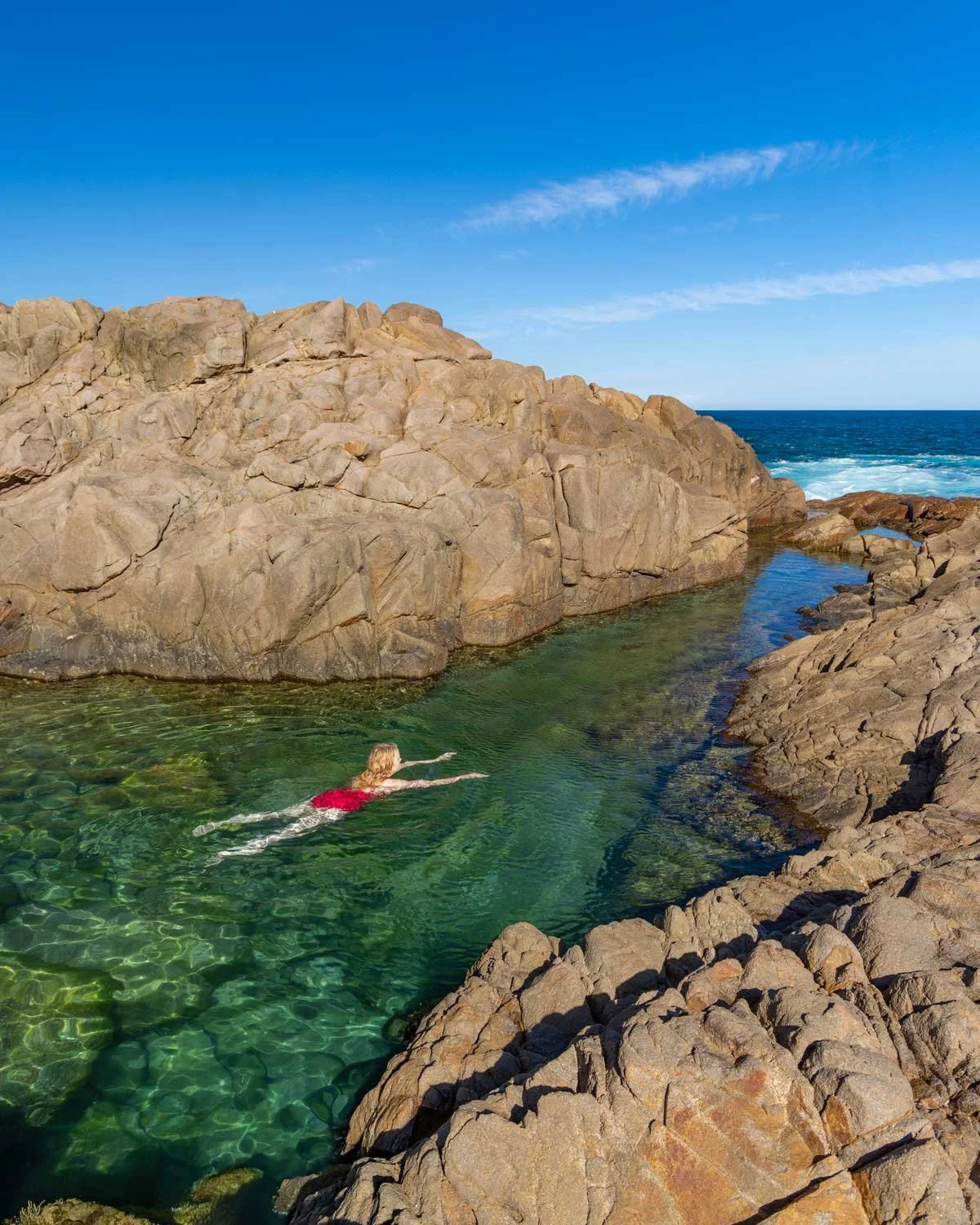
When you’re ready to leave the pool you don’t retrace your steps but simply continue following the rocks round to the beach again which is only 130m away.
Keep them wild
Please remember to take all rubbish with you and keep these places wild and pristine - as with anywhere in the outdoors. It’s important to leave them exactly as you found them so they will remain beautiful for generations to come.
Litter tends to breed litter, so if you do spot any and are able to pick it up and dispose of it outside the area, it will go a long way to keeping the area clean.
Please remember to wear reef safe sunscreen to protect the marine life inside the pool.
Getting to Big Rocky Island
The closest car park to Big Rocky Island is the Big Rocky car park in Tomaree National Park in Port Stephens, you can see it on Google maps here.
The last 2.9km of the road to the car park is gravel, but suitable for any car at time of writing. It has potholes, but not any that should cause any issues when driven slowly.
The car park is located 7km and roughly a 15 minute drive from Nelson Bay and a similar distance from Anna Bay.
This post may contain affiliate links, meaning at no additional cost to you, that we will earn a small commission if you click through and decide to make a purchase. This helps towards the costs of running our website. Thanks for your support.

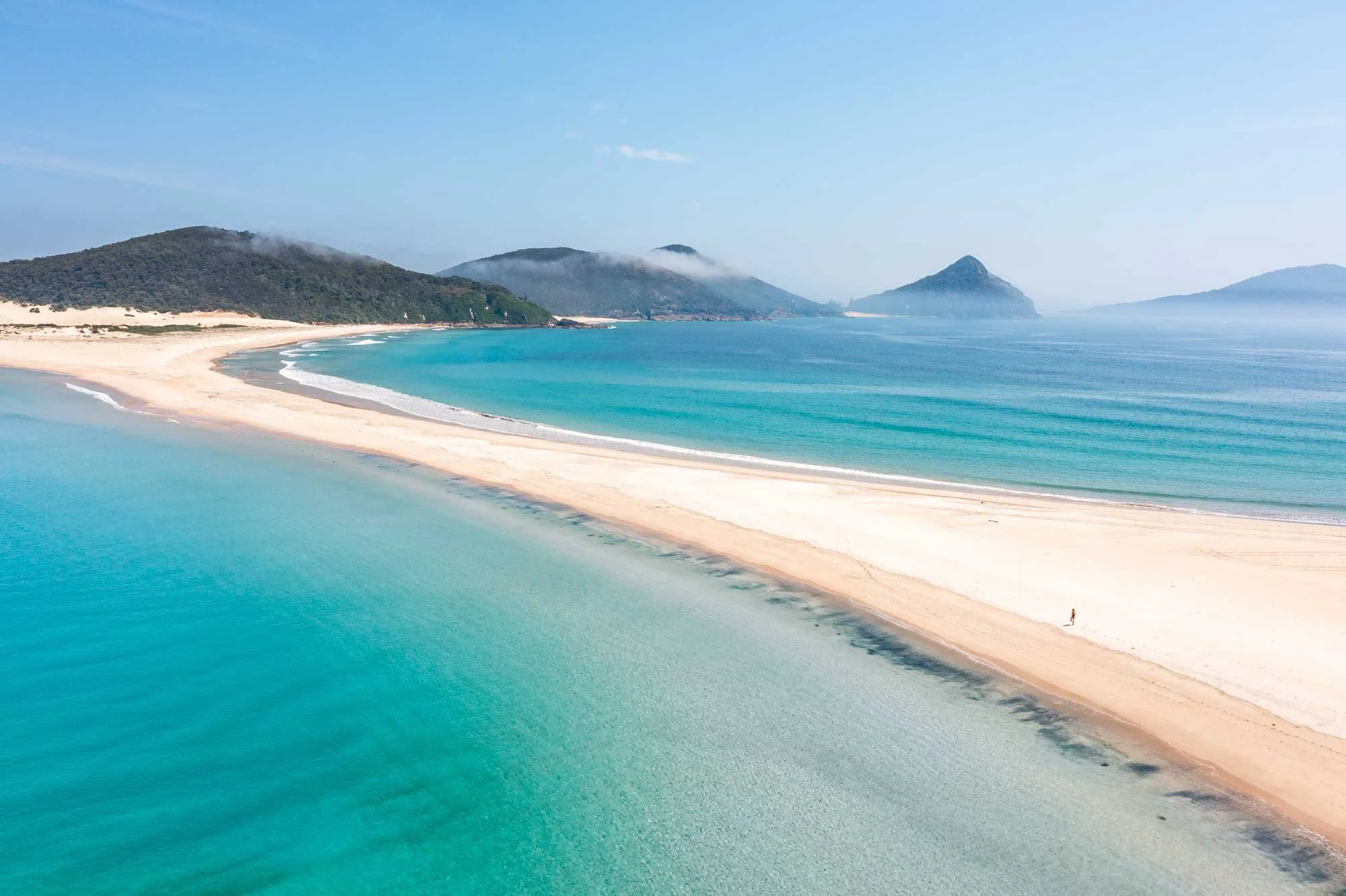


The complete guide to the Port Stephens Sand Dunes, one of the must-see places in New South Wales. We’ll tell you about the best things to do independently, the tours that operate, handy insider tips, how to get to the dunes and everything you need to know to have a truly memorable trip.