
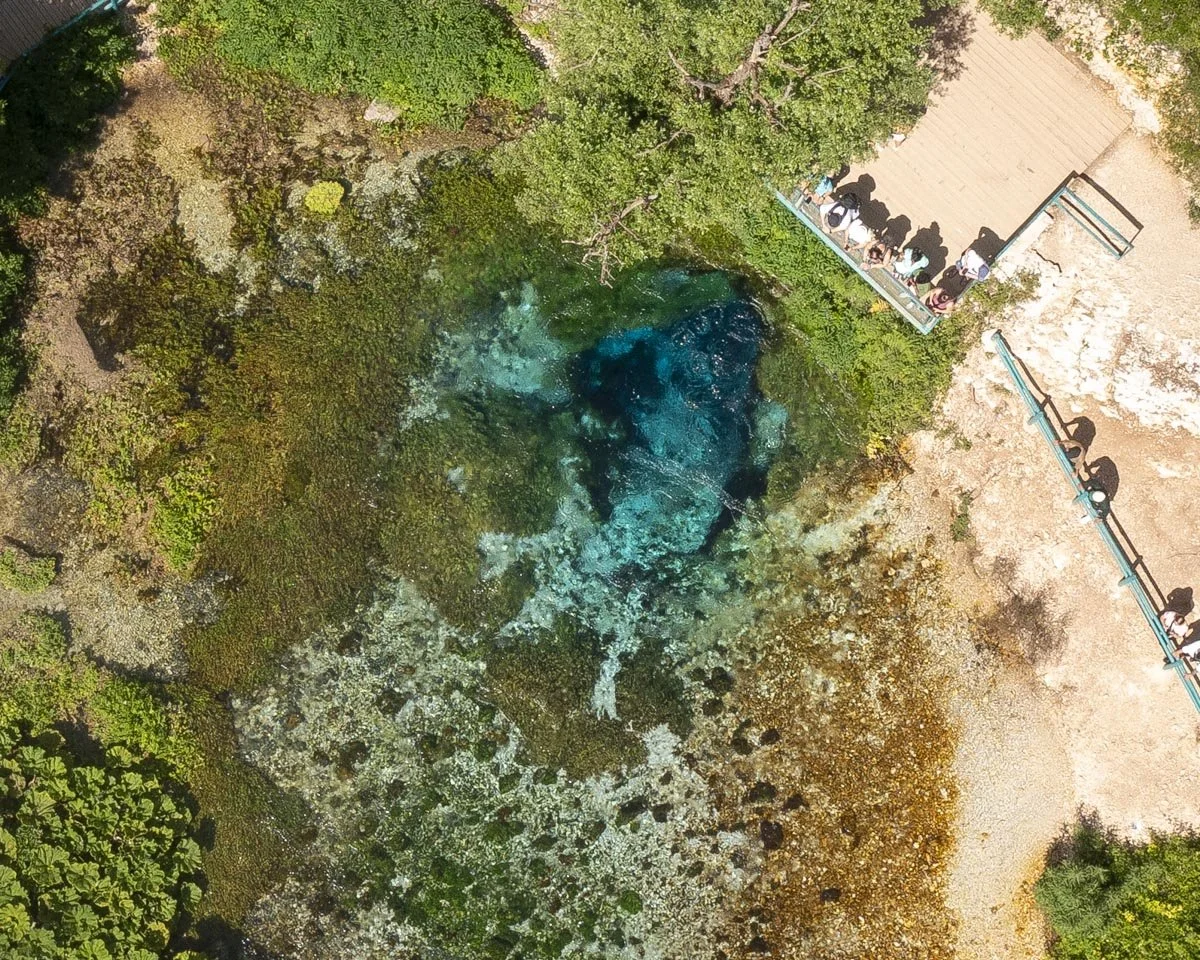
If there’s one thing almost everyone who visits Albania will do, it’s visit the Blue Eye. The dazzling electric blue water has become the poster child for the country and it’s easy to see why. However, a lot has changed in recent years and a visit here is not what it used to be.
It’s hugely commercialised, but that’s not really the change that made me a little disappointed with it. The real kicker is that swimming is no longer allowed anywhere at the site; so with that in mind, is the trip still worth it?
We’re sharing our thoughts on that as well as all the details on what to expect when visiting Albania’s most popular natural attraction. Note that this article refers to the original Blue Eye in the South of the country, not the one in Theth.
Visiting the Blue Eye
The truth about swimming
Considering almost everyone we saw at the Blue Eye came in swimwear or with towels in tow suggests that the majority of people visiting were expecting to swim. So let’s start there with the disappointing truth that swimming is prohibited everywhere at the site.
Swimming in the eye itself has been banned for several years although it was previously only loosely enforced. Today were you even to step near the barriers you will be whistled at instantly.
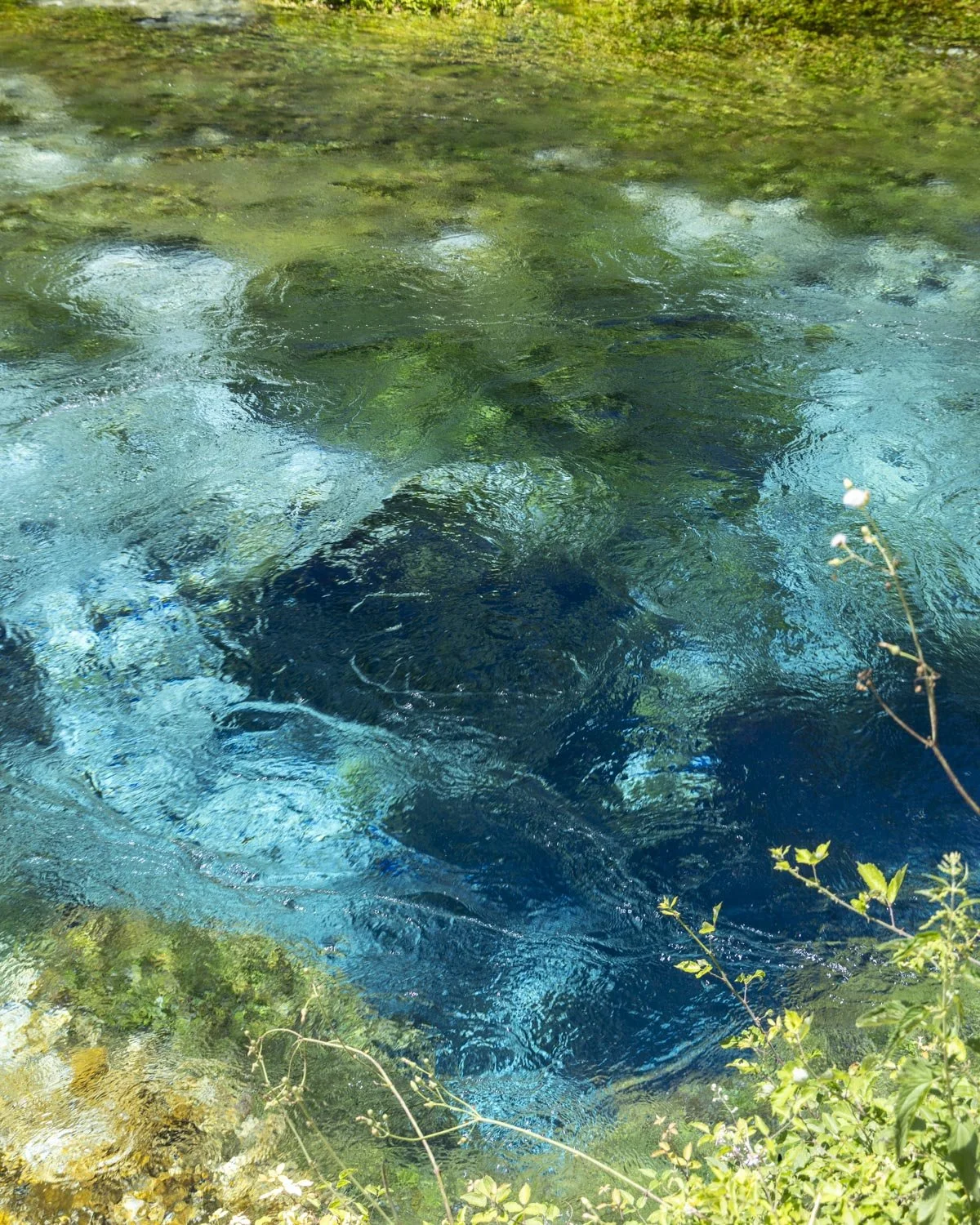
We knew swimming at the eye was not allowed prior to visiting but all sources online said you could still swim in that dazzling blue water further down river. Alas, this is no longer the case.
Swimming anywhere in the complex - except the lake (which doesn’t have the turquoise water) - is strictly prohibited.
So with that in mind, here’s what you should expect when visiting and whether we still think it’s worth it.
How the site is set up
Due to its huge popularity, the road leading to the Blue Eye is understandably closed to the public as there wouldn’t be anywhere near enough parking available near the eye.
That leaves you with four options for accessing the site. The first is on foot, either via the road or the hiking track. We did both walks and will describe them in the notes below.
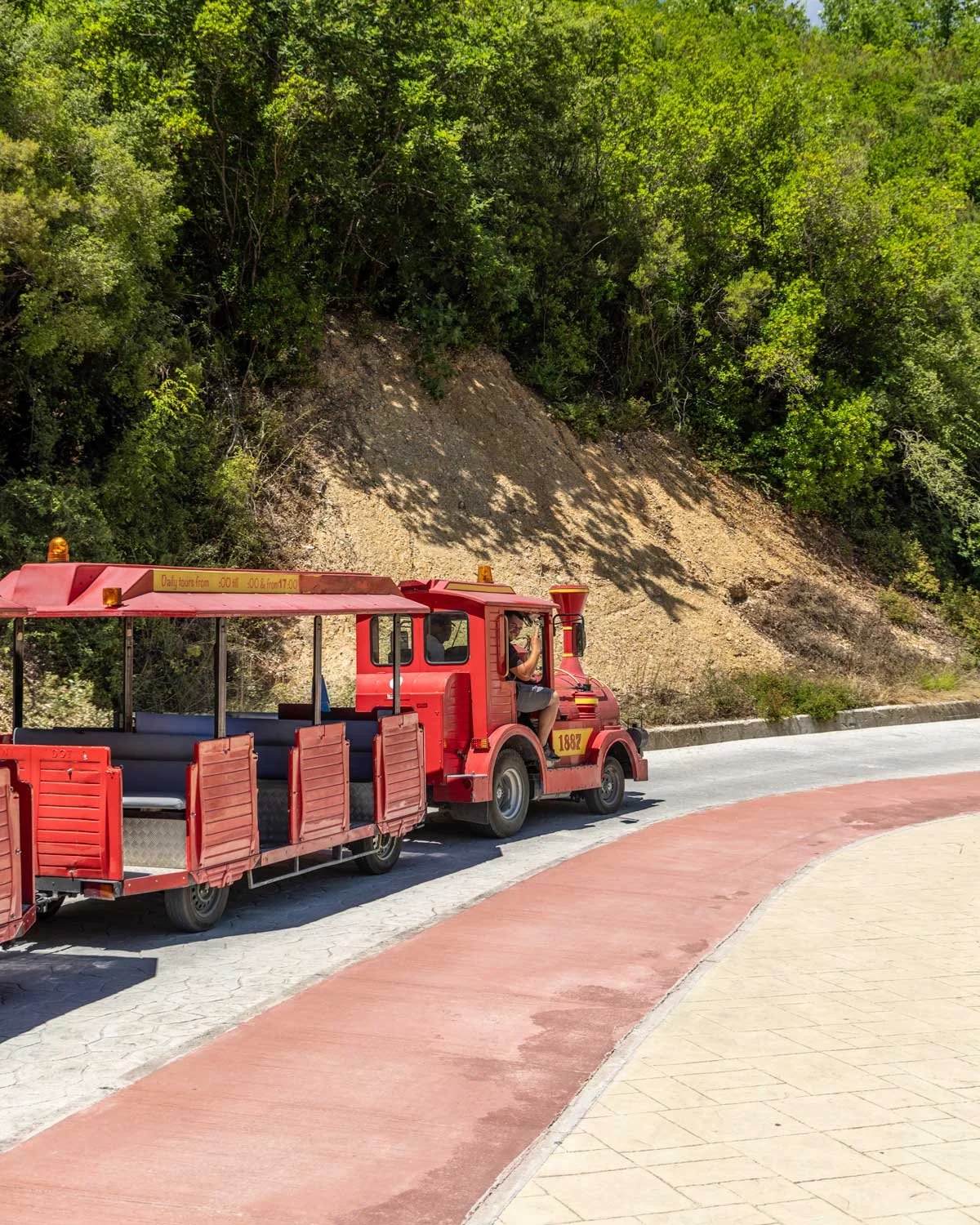
The second is by e-bike which you can rent at the entry gates. The third is by the little tourist train.
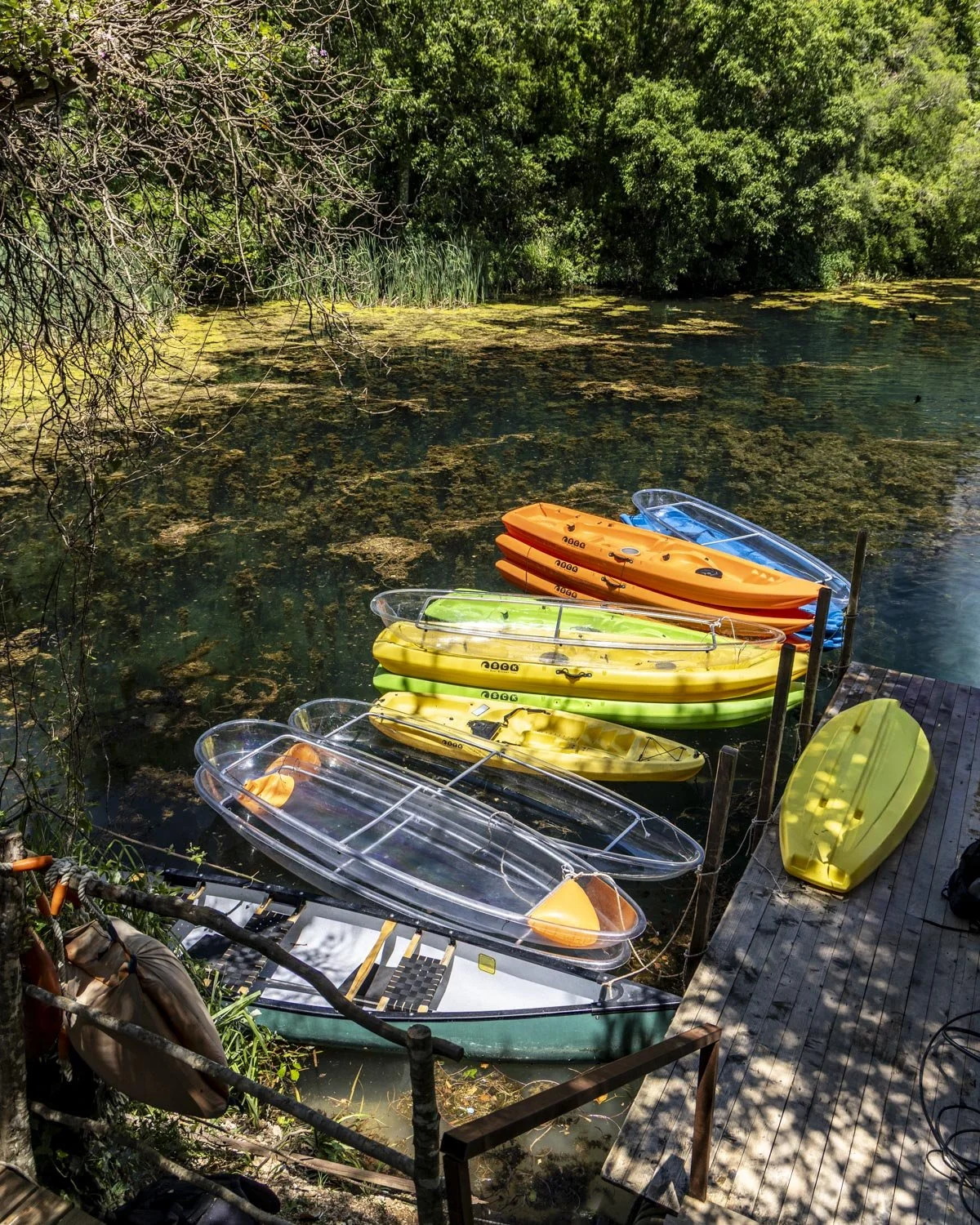
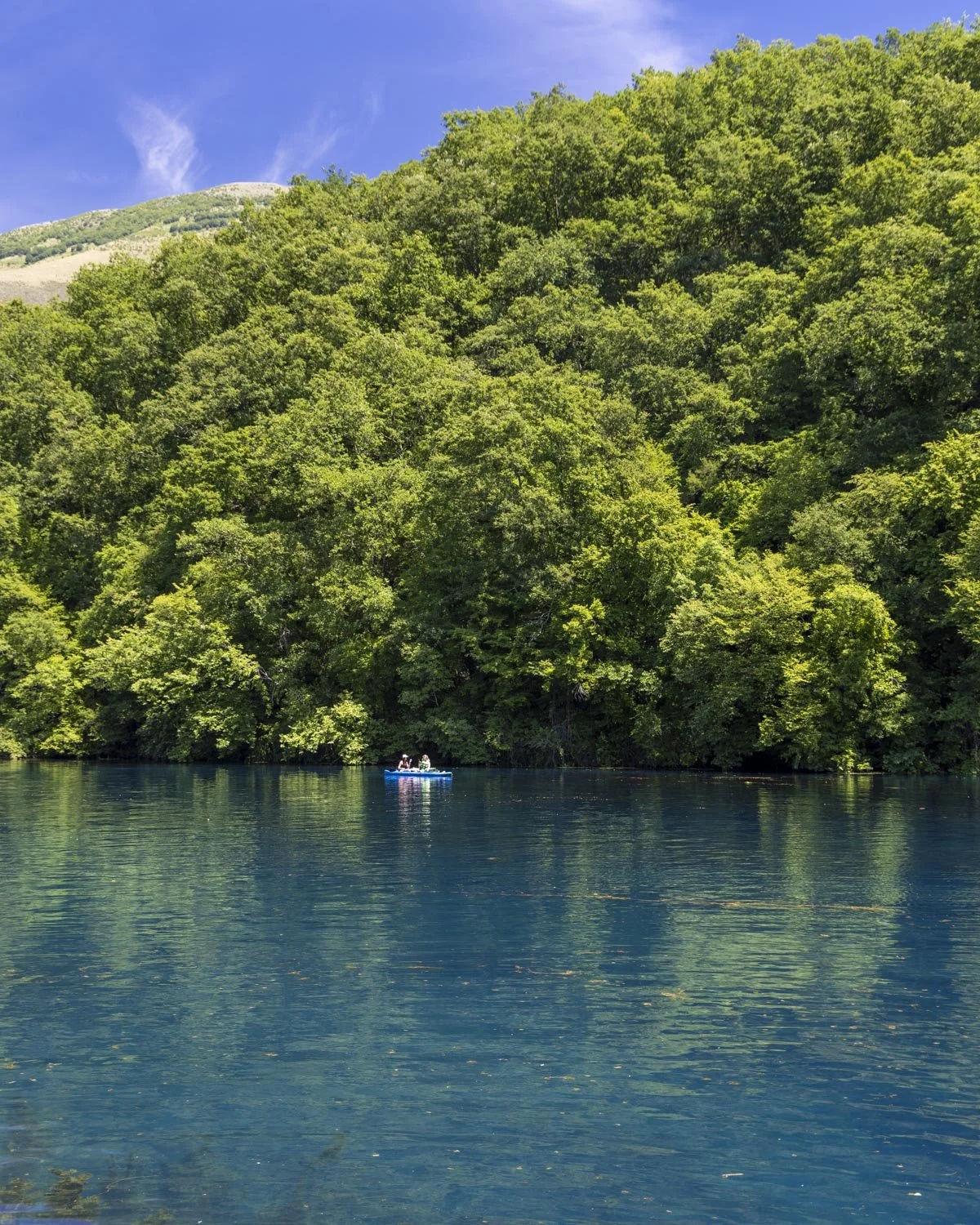
You can also rent a kayak or canoe to cover the last stretch by water (you still have to walk the first 1km of the road to reach the launch point, though on the way back you can paddle all the way through to the dam).
You can’t paddle through to the eye either, you have to leave the kayak before you hit the turquoise water.
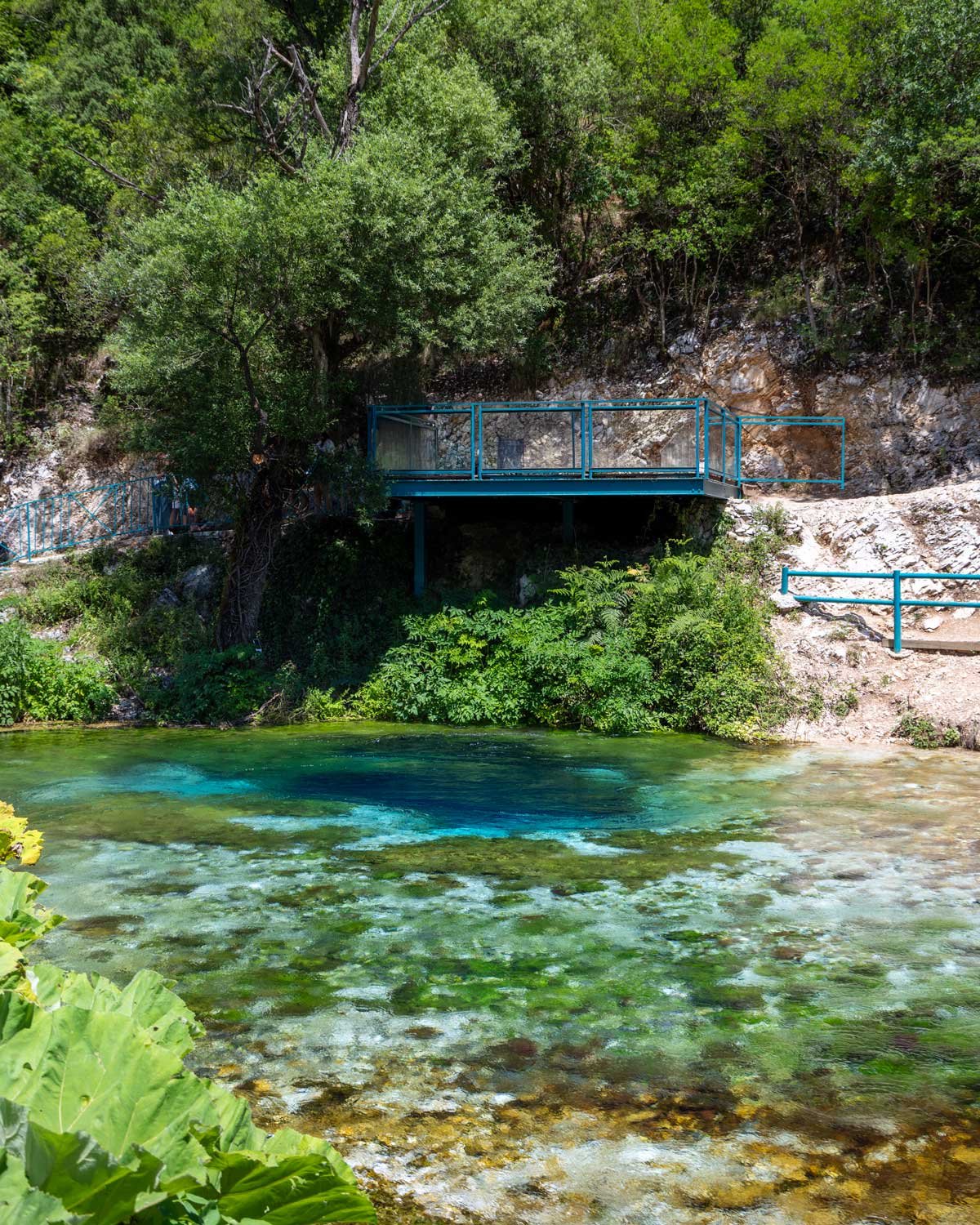
The eye has a viewing platform and fencing surrounding it as well as several restaurants, some cabins and a tourist information site, wild it is not!
The initial part of the road into the site - which you need to walk whether you’re planning to go the whole way on foot or take the train - is lined with fruit sellers and places to get fresh juice.
We made good use of that on the way back after the hot sweaty walk!
The experience at the eye
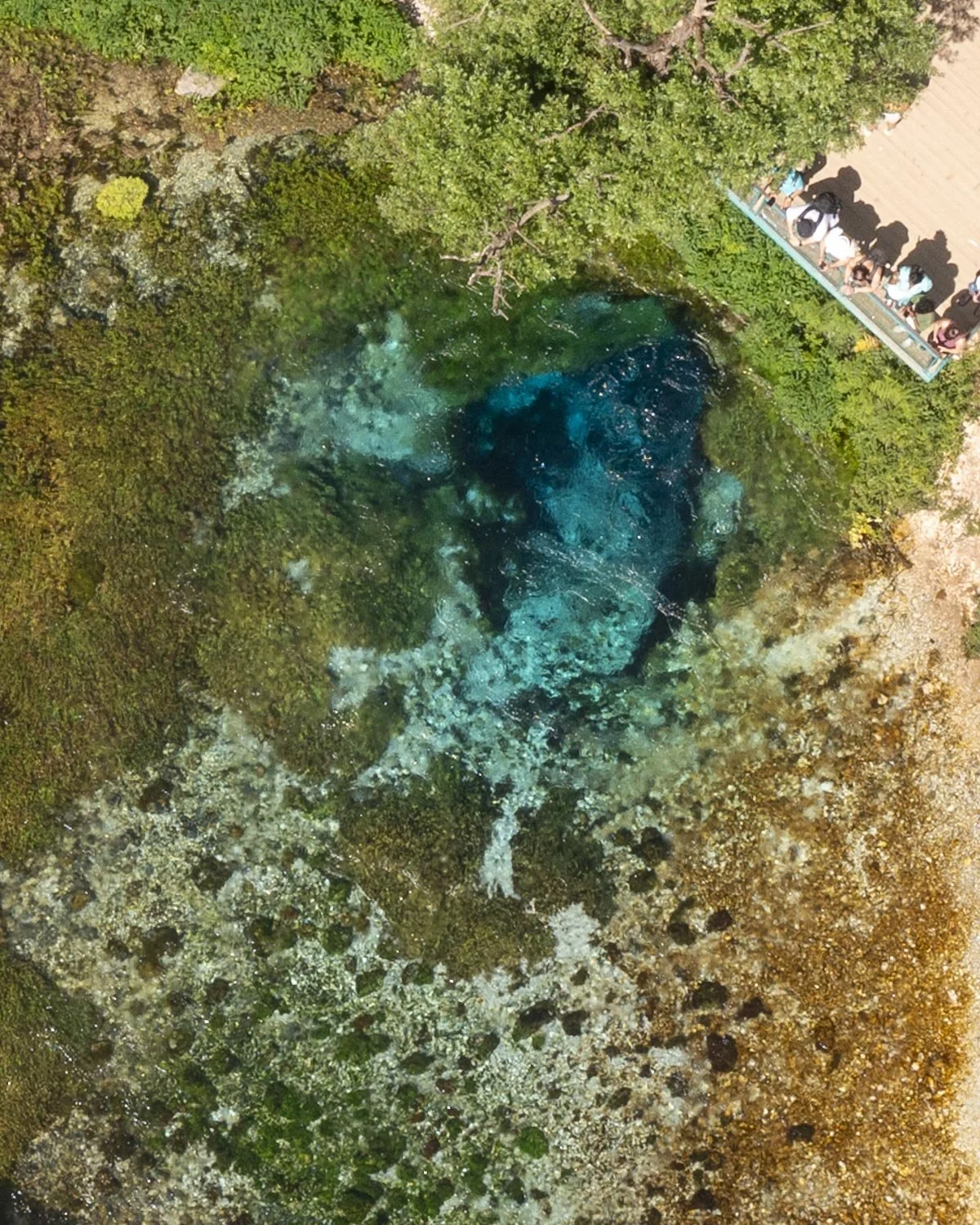
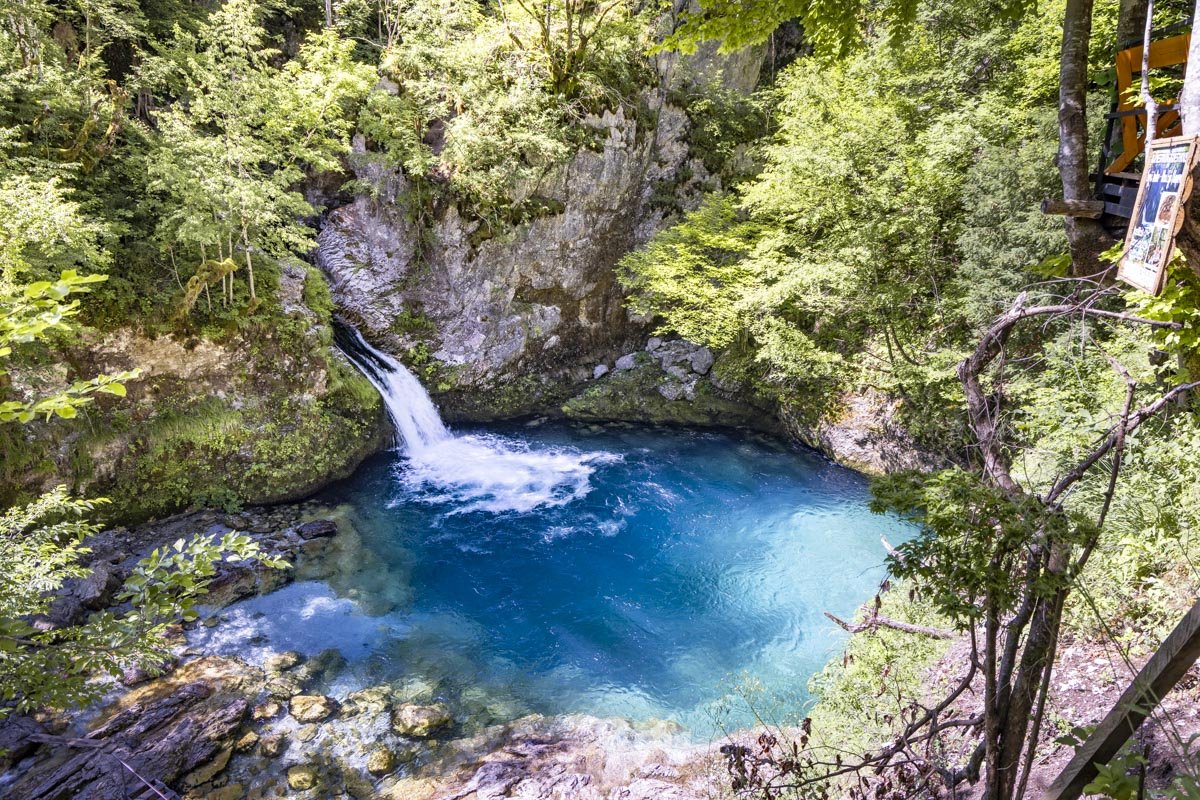
As mentioned, the eye is fenced off, but there’s a raised viewing platform which offers great views looking down on the eye and you can also see it at eye level (sorry!) without climbing the stairs to the wooden lookout.
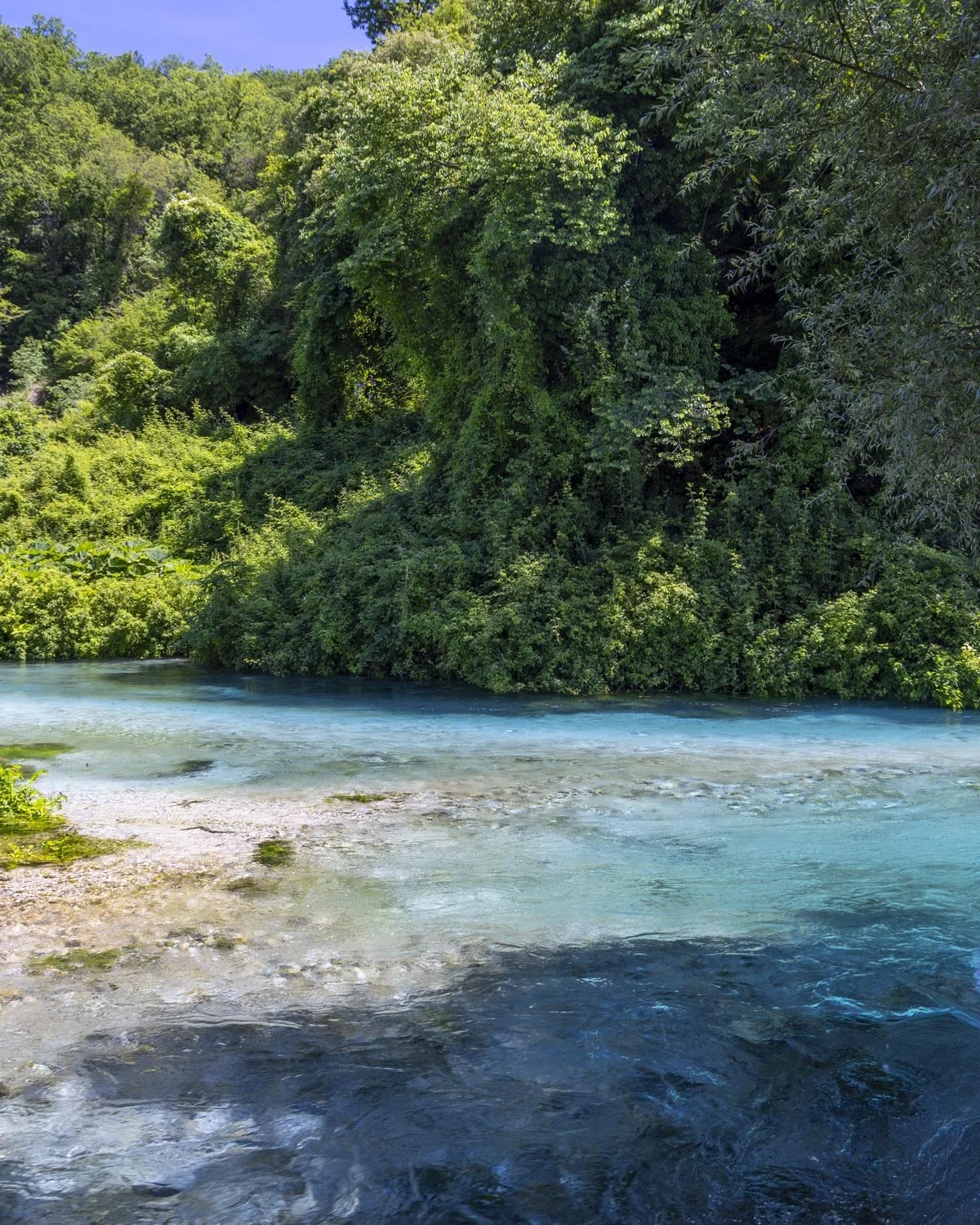
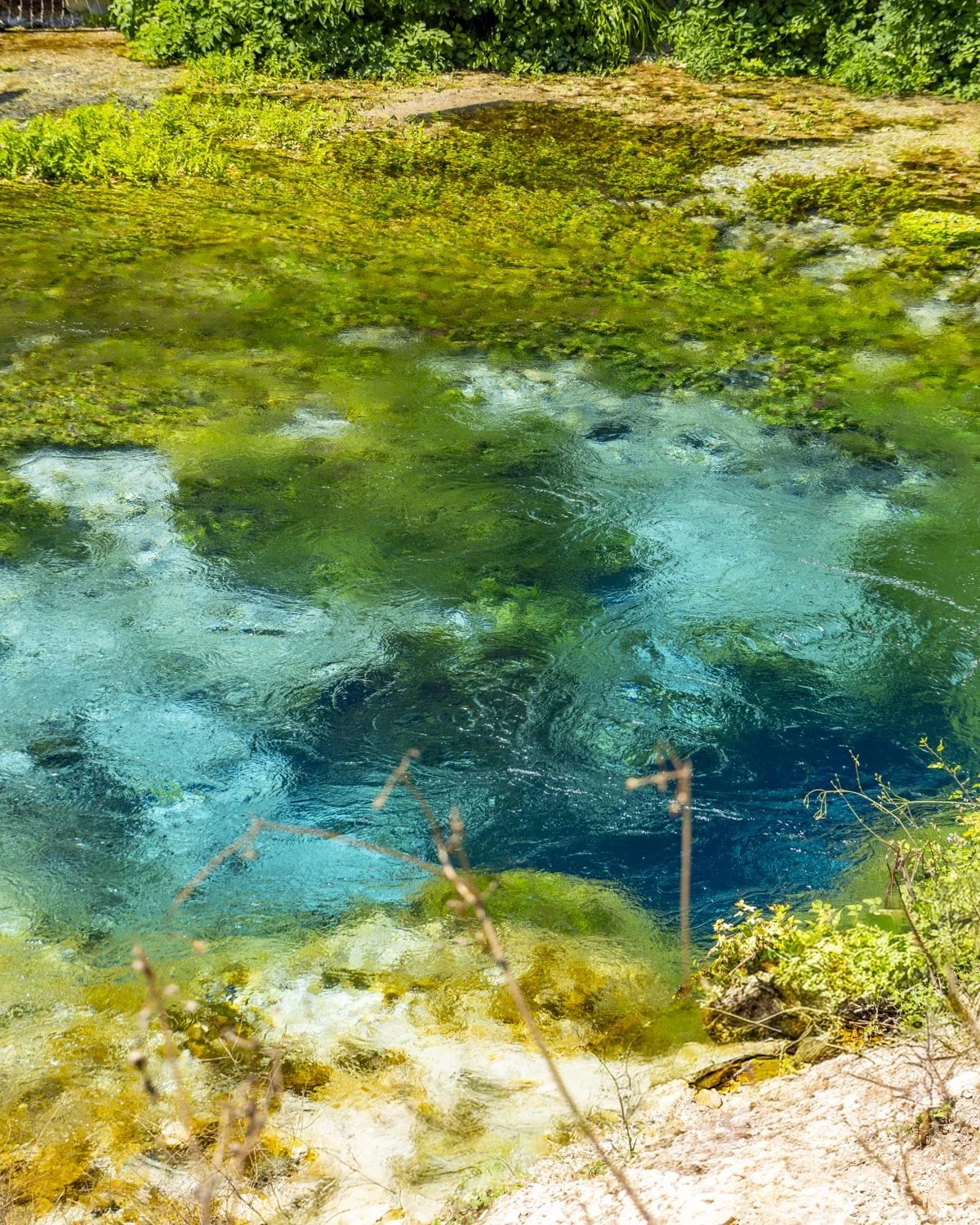
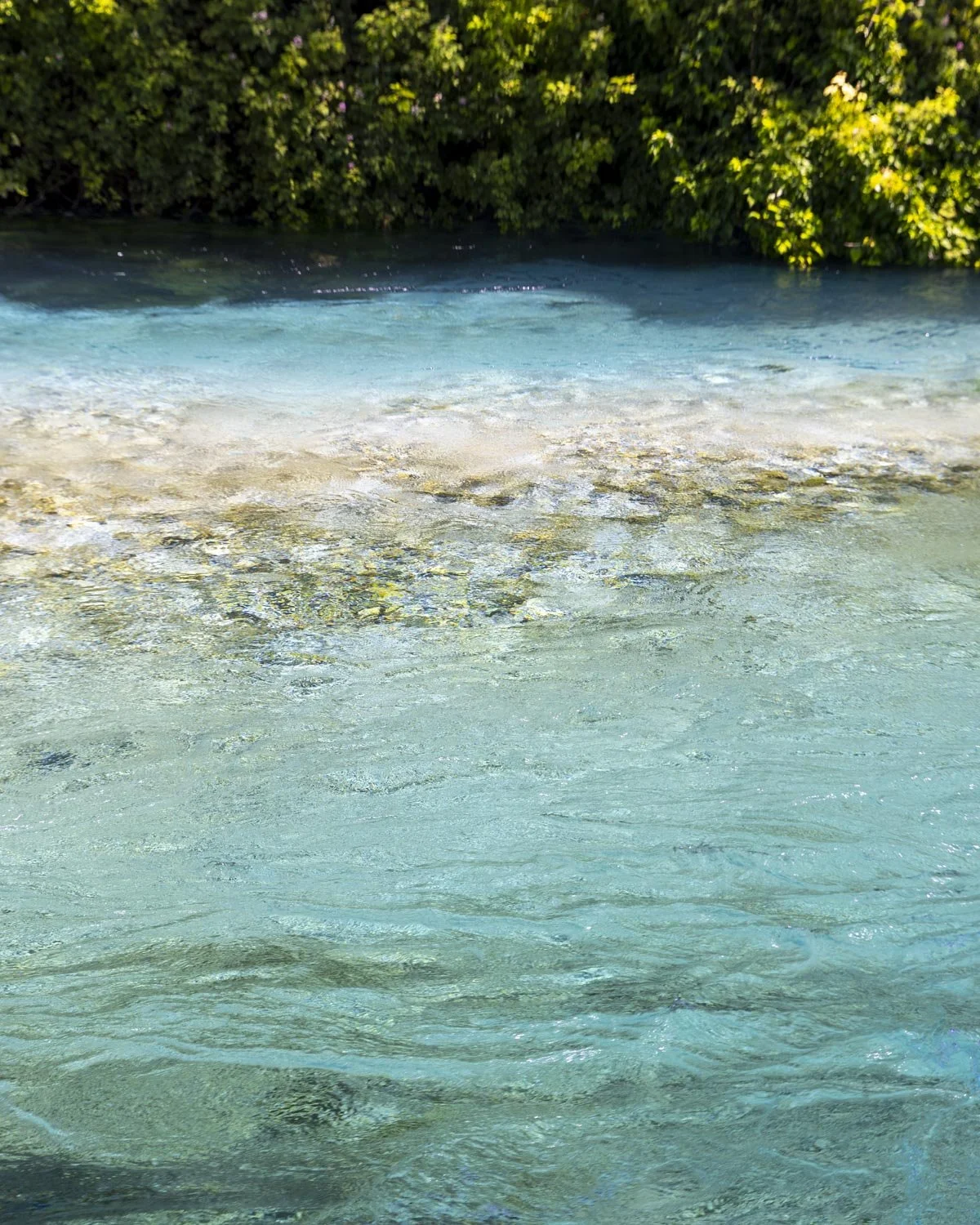
The water is an exceptional shade of blue and it’s quite mesmerising to watch the bubbling spring. While I would have loved to swim there I can see that it is far too small to account for the number of people visiting nowadays.
In fact it’s much smaller than I was expecting.
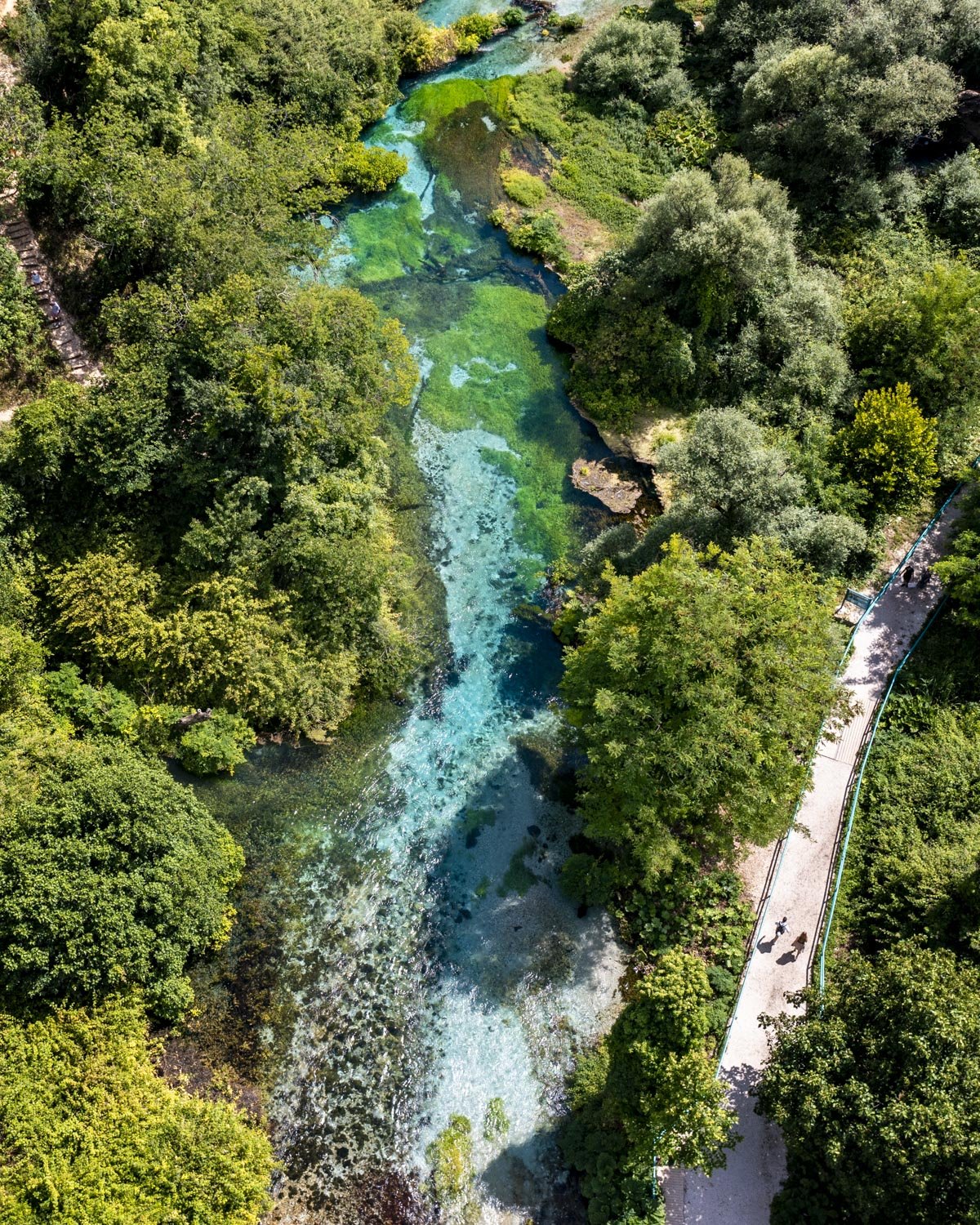
There is a sign up saying that you can get drone videos (free but tips are expected) if you want to get pictures from above, but we only saw one person do this so there wasn’t constant buzzing.
In short, a visit here is now just about having a look and taking some pictures before moving on to sit by the river or enjoy one of the cafes.
Crowds at the Blue Eye
The car park for the Blue Eye is ginormous and when we arrived it was almost full. I immediately thought it was going to be way too crowded for me, for reference we arrived at 2pm on a weekday in June.
Strangely enough, when we got to the eye there was only a handful of people around at any one time, and we never saw more than around 15. I have no idea where all the people were, but it was definitely less busy than we’d expected.
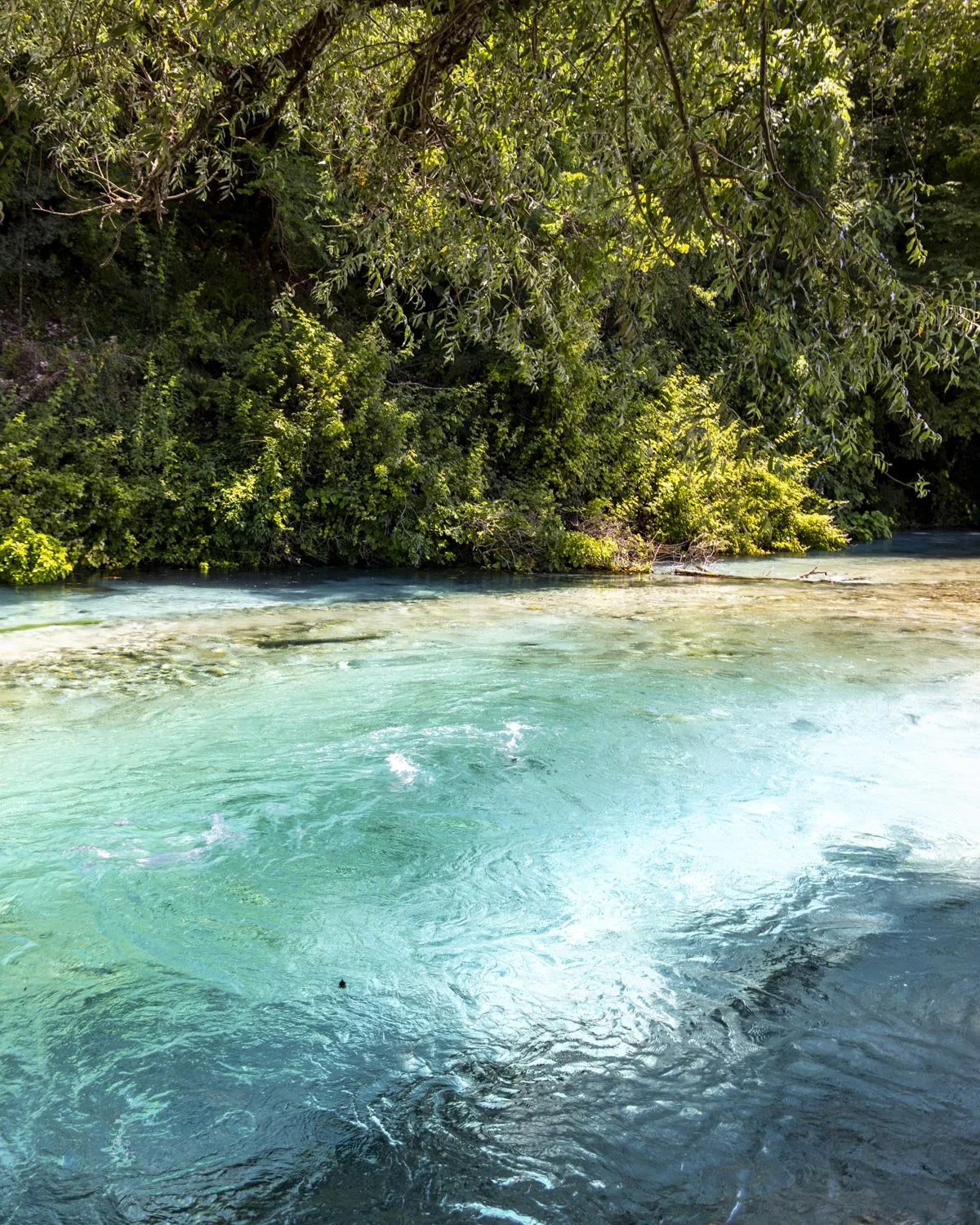
I guess there are quite a few different activities you could be doing, which must space people out a lot. If this was still an area for swimming, I would have recommended coming early or late in the day to avoid the crowds.
However, as the site is fenced, you can look down on it without any people in the water, so you don’t need to come at off peak times unless you simply want to view it with as few people around as possible.
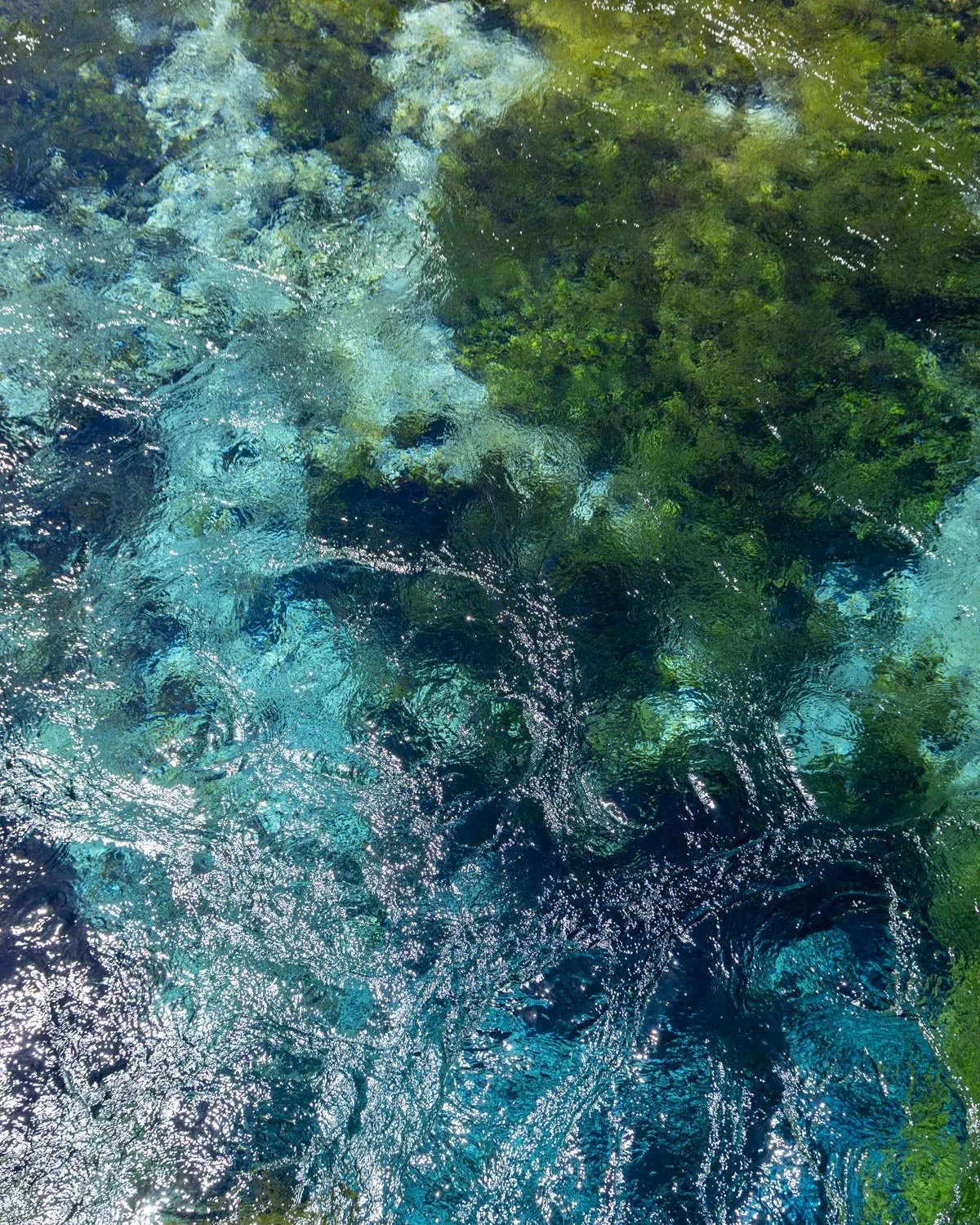
Personally, I would say it’s better to come when the sun is high in the sky so that the blue colour of the water really shines - although this does increase the glare which to be fair doesn’t work as well for certain photo angles.
The walking options: the road vs the hiking trail
First things first: walking along the road (which has no cars, only the train and bikes) is by far your easiest and quickest option. However, it’s the least scenic and has no shade.
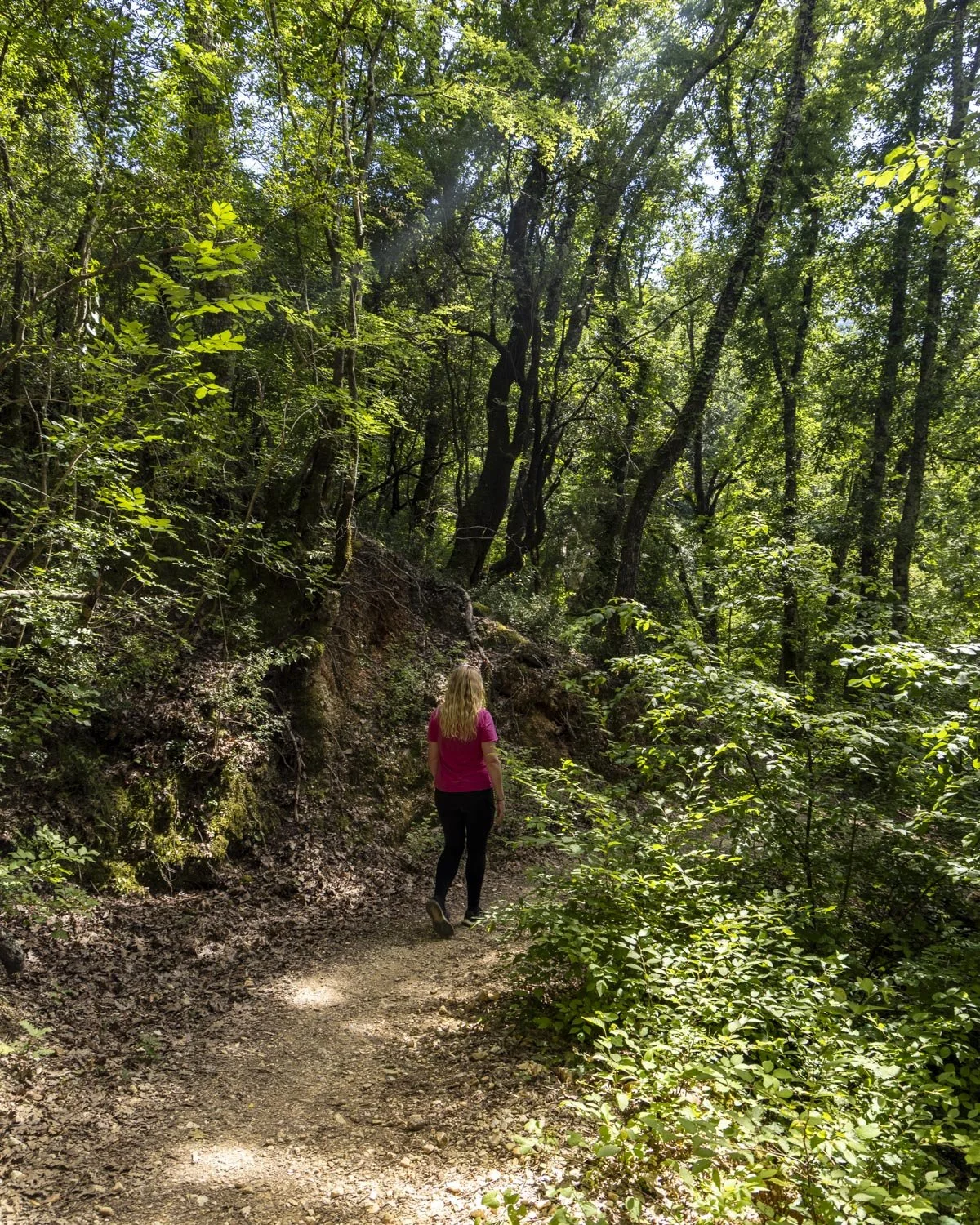
The forest path is shaded the entire way and it’s beautiful, but it is steep, rough and slippery in a lot of sections. The walk is also longer.
Walking to the Blue Eye via the road
Distance: 1.8km one way
Elevation gain: 30m
The walk along the road is all on a smooth surface and you can’t go wrong in terms of directions as there are no turns to make whatsoever. It does have uphill sections but it’s never very steep.
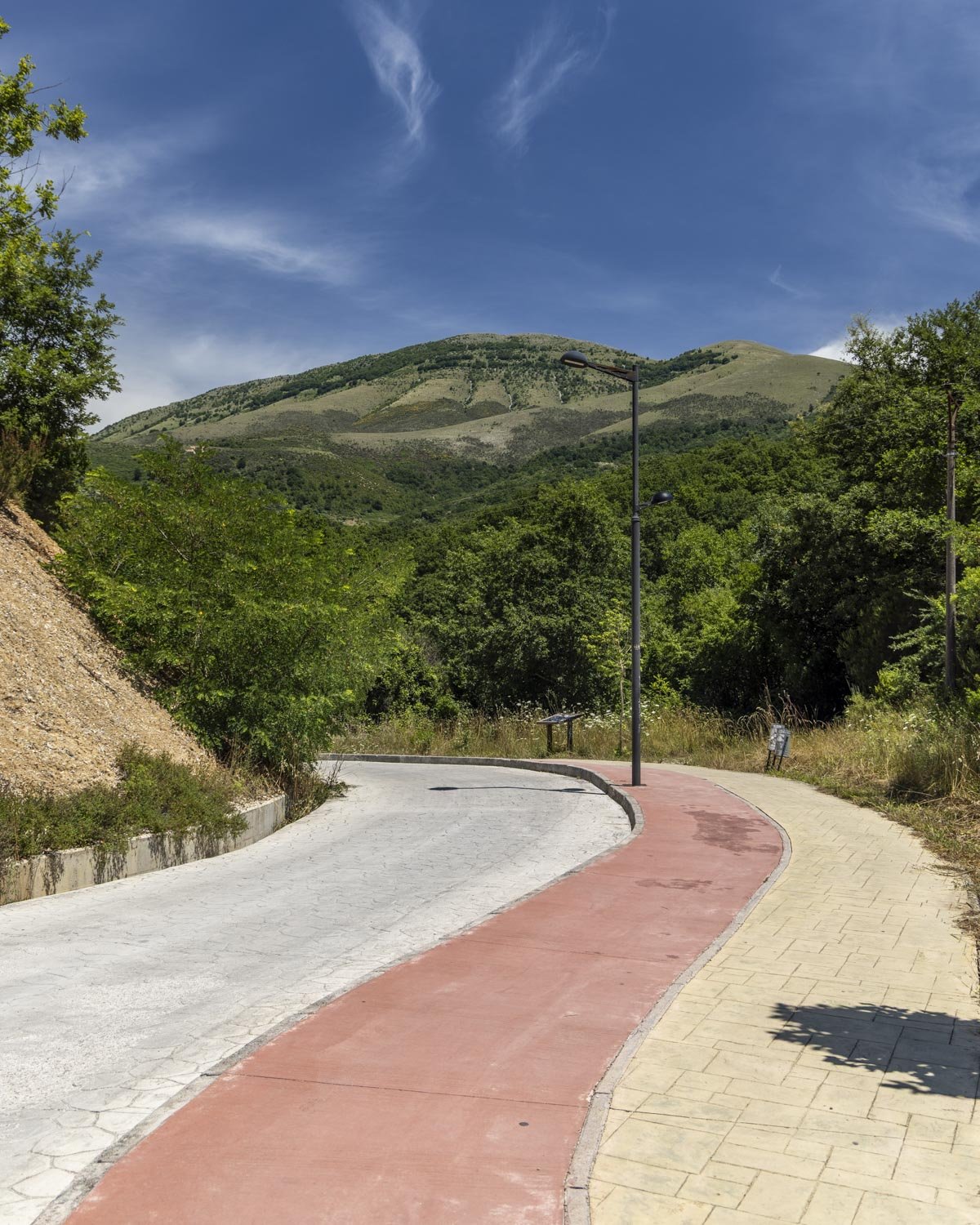
The hardest thing about walking the road is that there is no shade and if you’re visiting in summer it will be very hot.
You’ll start by walking from the car park, past all the fruit sellers, and then come to the entry booth 350m later. This is where the train departs from.
It’s flat until around 600m in when you’ll starting heading uphill for around another 650m, passing the kayak rental area 1km into the walk.
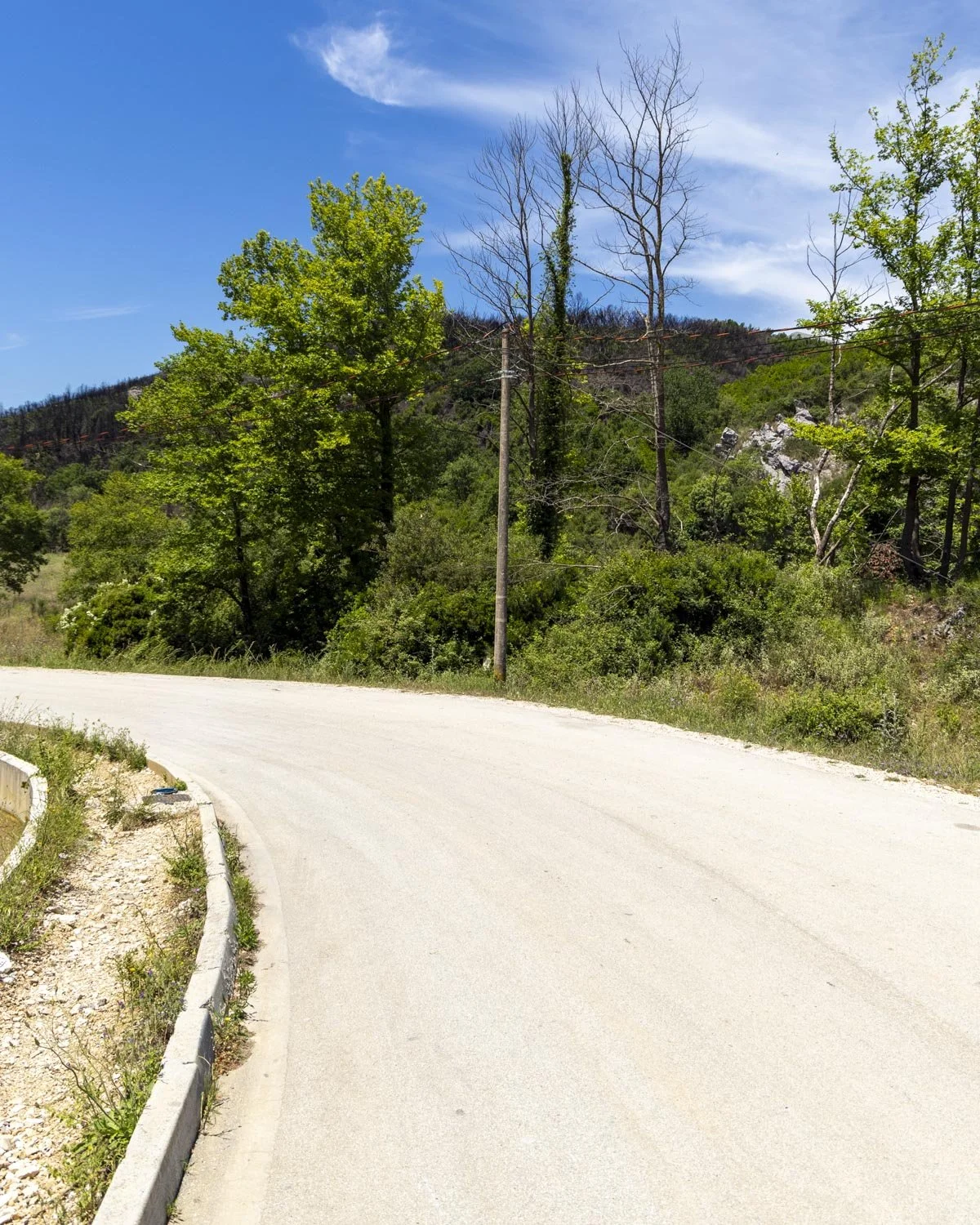
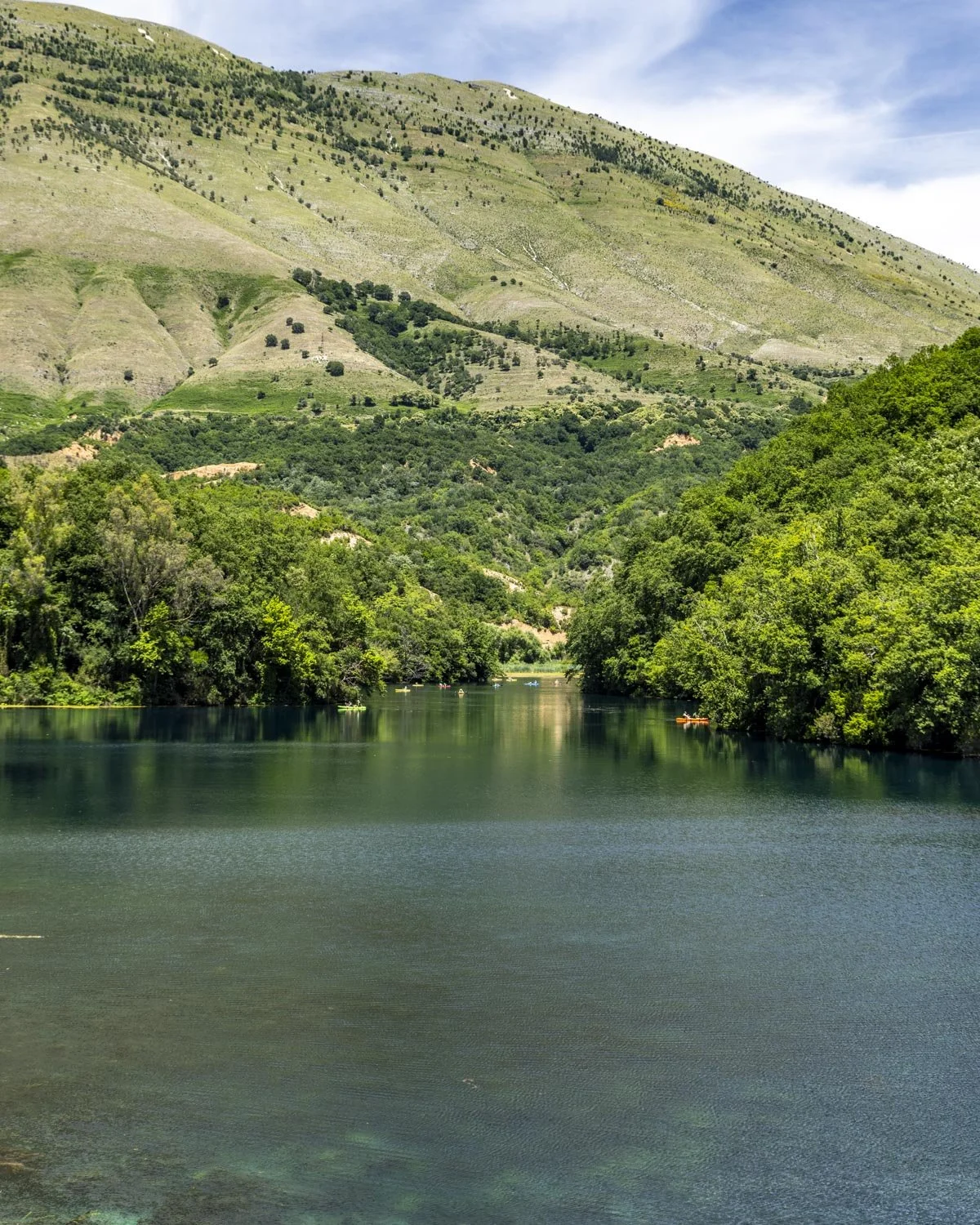
There is a little bit of a descent just before you reach the toilets and then you’ll come to the bridge over the blue stream, 1.7km in. Roughly 100m after crossing the bridge you will come to the Blue Eye itself.
The Blue Eye via the forest path
Distance: 2.4km
Elevation gain: 105m
The forest path is far and away the most scenic option for reaching the Blue Eye, but the trade off is that it’s much hillier and has some uneven loose terrain.
If you don’t fancy the sound of that, you could walk the first few hundred metres from the eye to get some glorious views of the blue river and then head back and use the road instead.
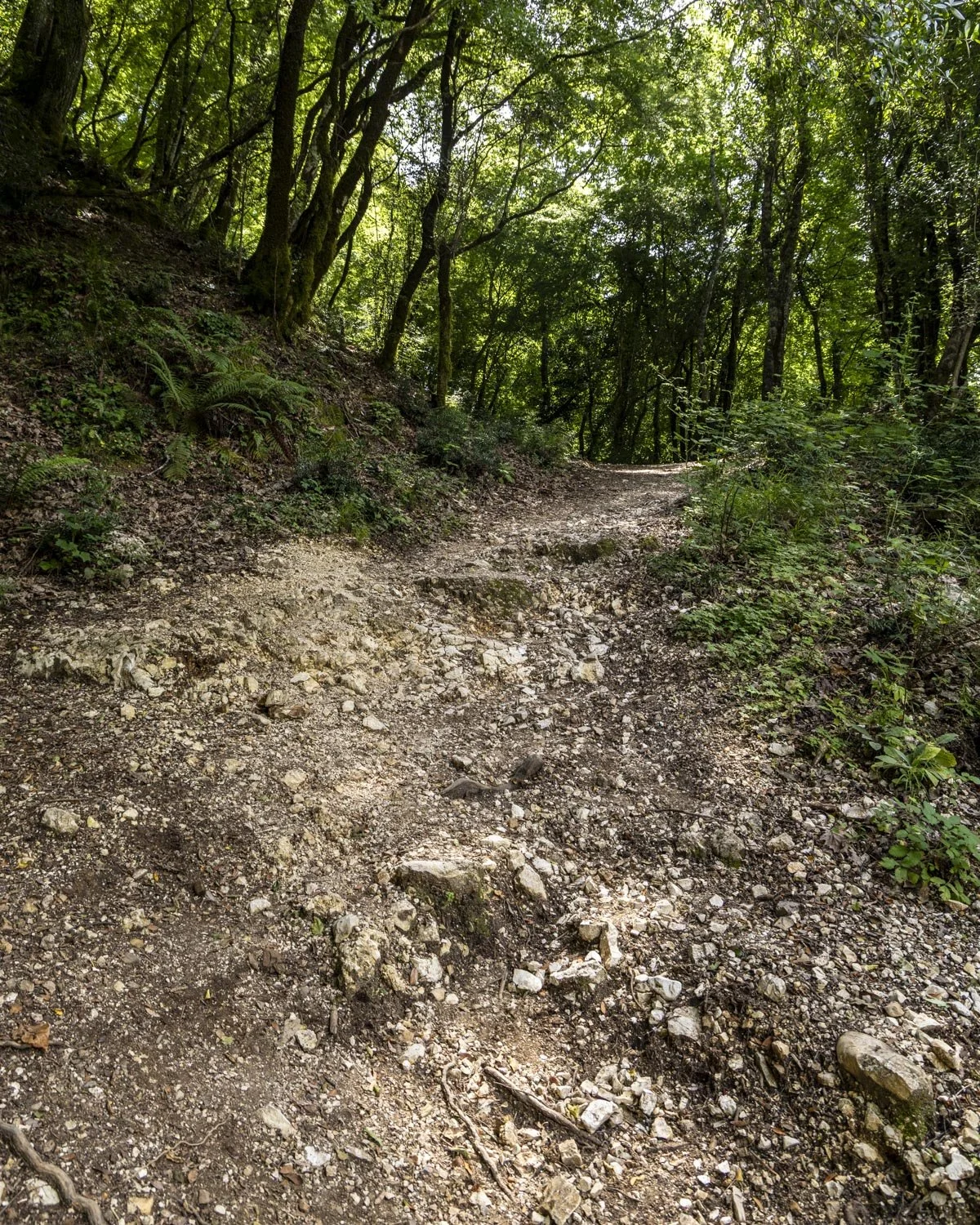
If you don’t mind a rough track it’s a pretty walk, with the best river views all coming in the first 400m. The rest of the walk is mainly through woodland which offers lots of shade.
We only saw one other person on the latter part of the walk as everyone else turned back after the river views ended.
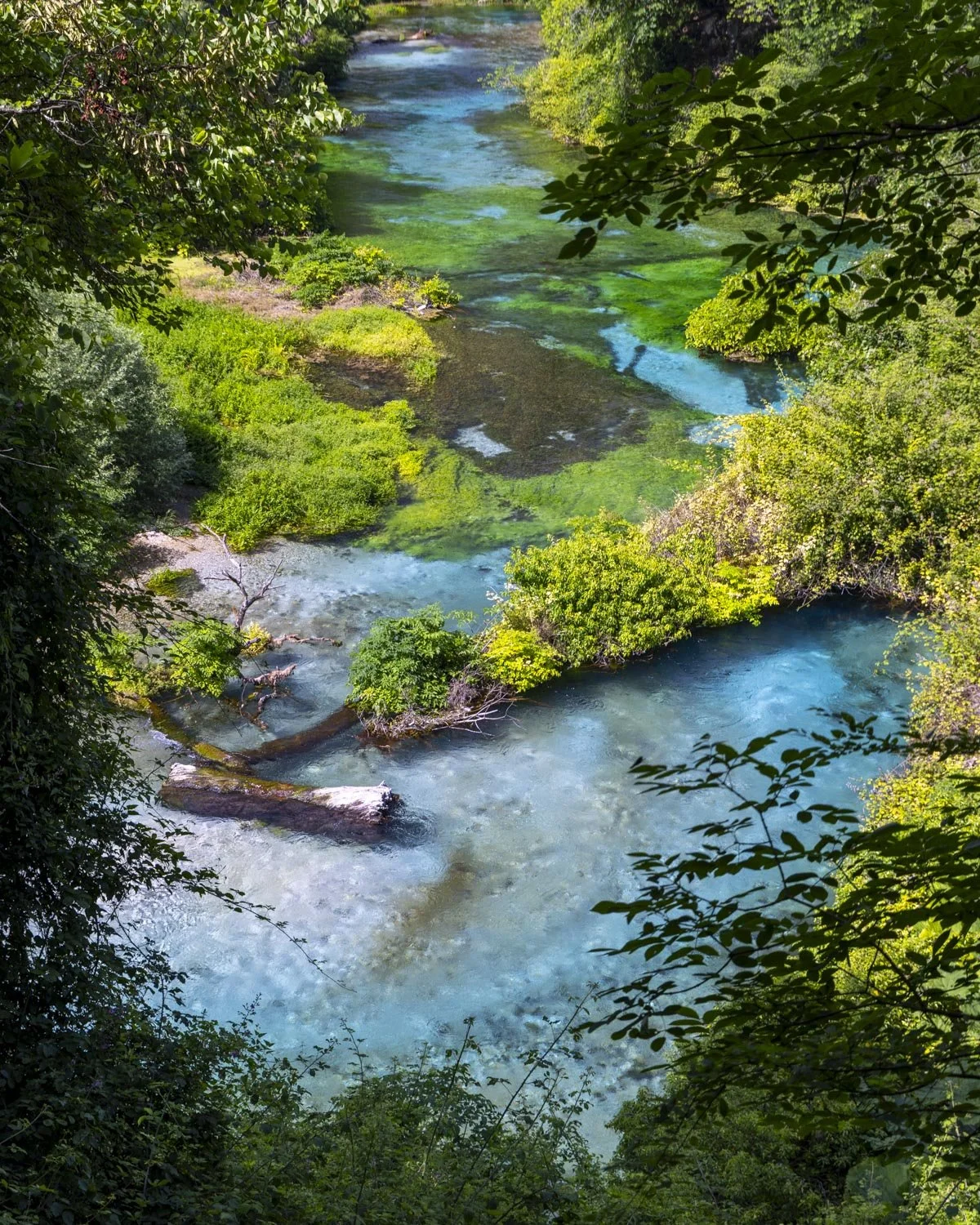
Expect plenty of undulations and some steep sections even just to get up from the eye to the part of the track with the water views.
The path is narrow, rocky in places and has some loose sections which can be very slippery. Tread carefully and don’t attempt it in flip flops unless you are a flip flop hiking connoisseur - I know they exist because I’ve hiked some gnarly trails with Americans in flip flops but most people would not enjoy the experience!
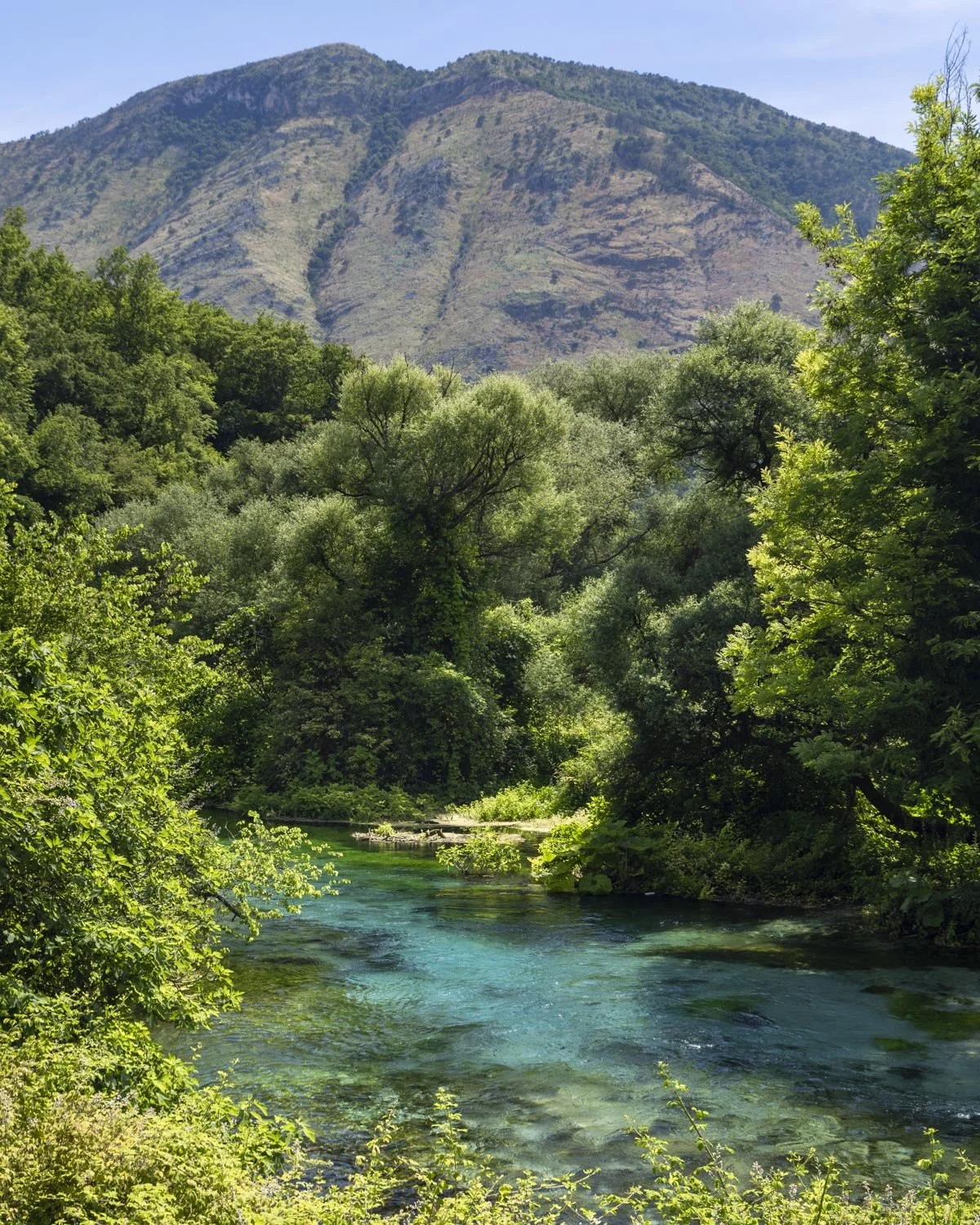
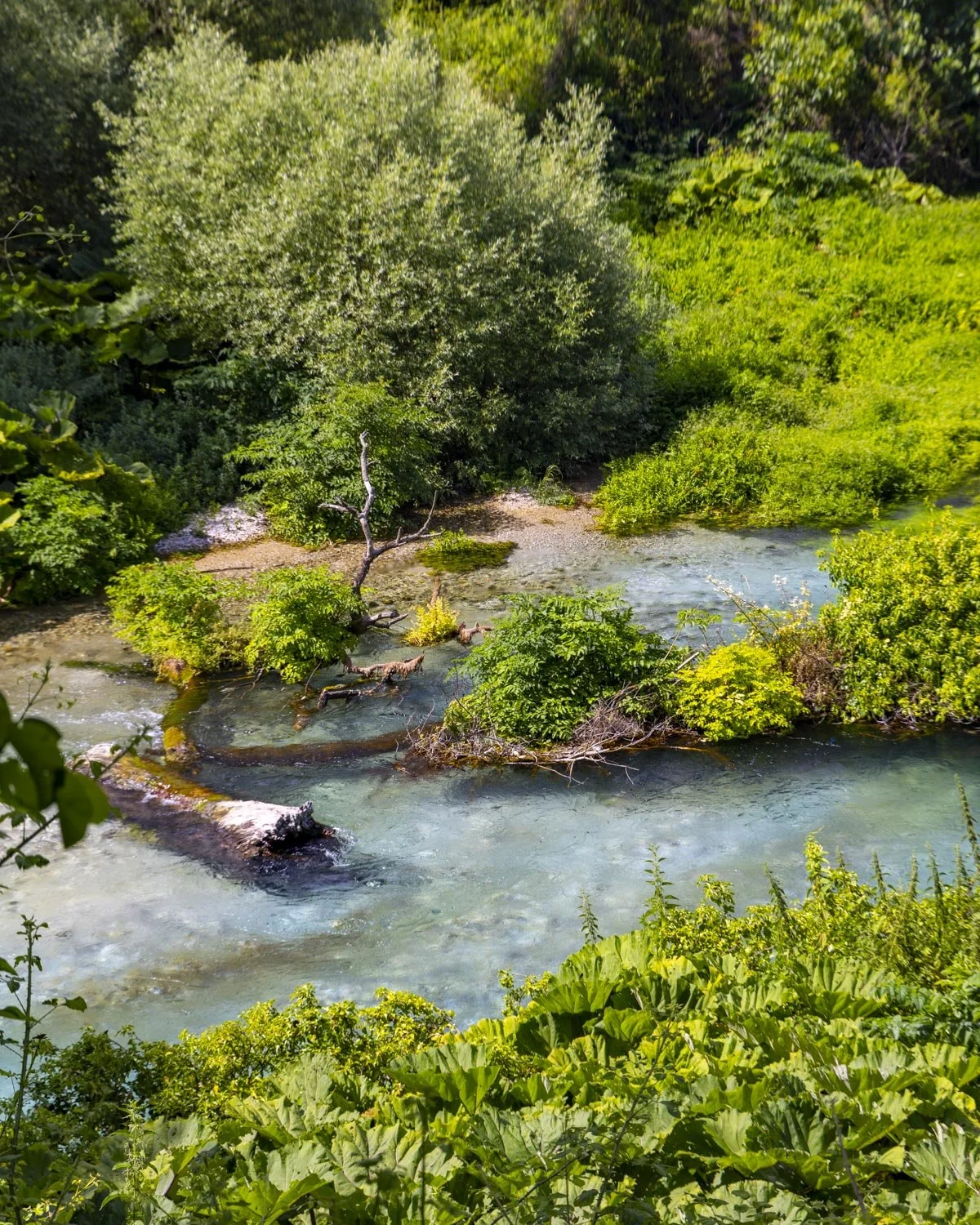
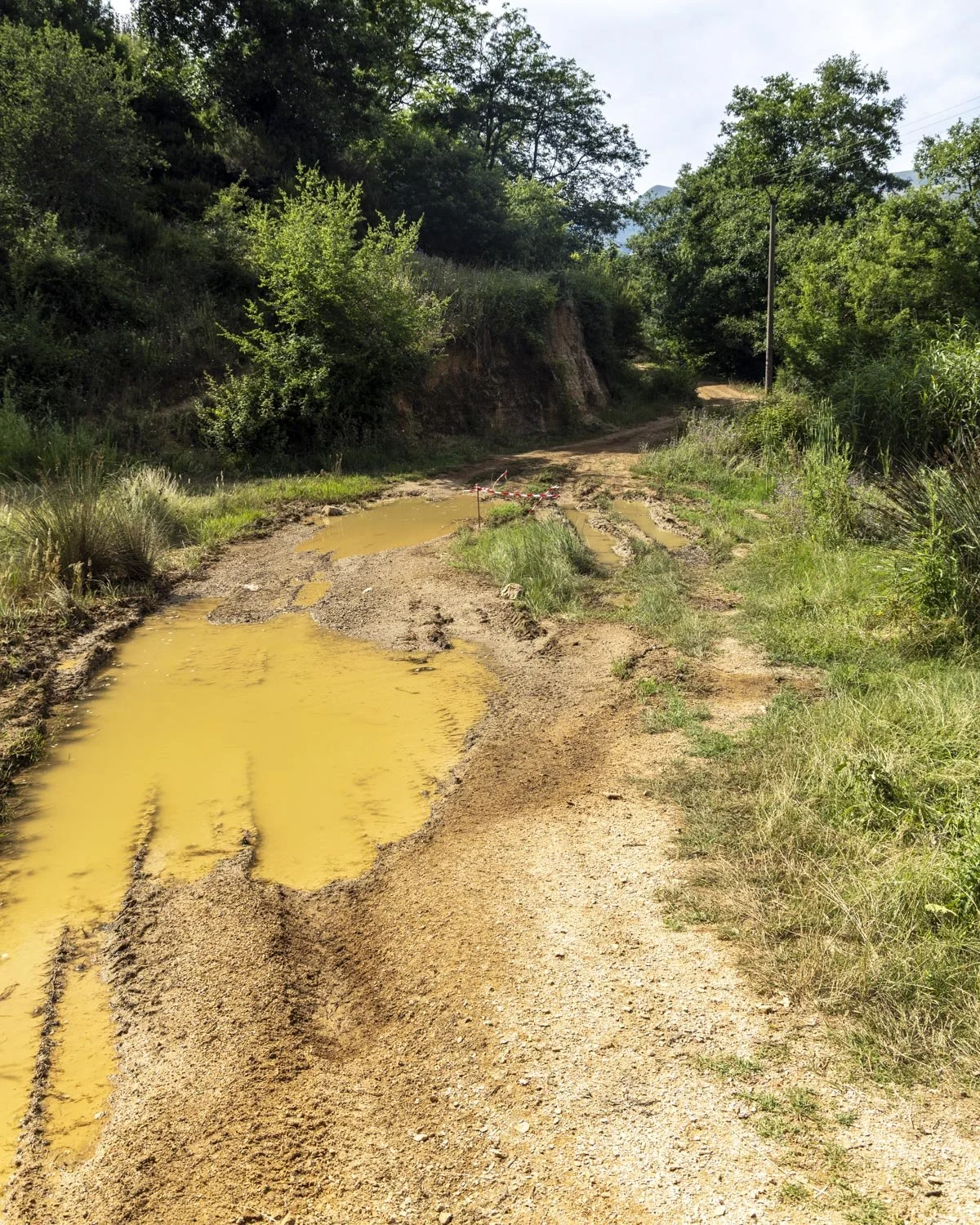
The final 500m before you reach the road may have some muddy patches but it was pretty easy to get around most of them.
This latter section (after leaving the forest) also feels like you’ve strayed from the path as it becomes an open unkempt track, but it’s the right way so keep going until you re-join the road just before the fruit sellers (close to where you pay the entry fee).
So is the Blue Eye worth it?
Whether you think the Blue Eye is worth it depends on your expectations. If you’d seen glorious videos on social media with people swimming and imagining it is one of the top thing to do in the country, then it’s likely you will be disappointed. If you come with realistic expectations, then you might feel differently.
Obviously this is subjective, but my personal opinion is that it is absolutely beautiful, but not a must do. If you’ve been to any of the blue springs in New Zealand you will have seen similar scenery and they are left to feel much more natural.
If you are passing between the coast and Gjirokaster, then I would definitely stop in, or if you have never seen a blue spring before, but I wouldn’t say as it stands today that it is a must do for everyone.
If you’re coming a long way to visit or you have a short amount of time in the country, I think you might be underwhelmed.
Again, not to say we didn’t find the water spectacular, but as a whole the experience does not rank anywhere near top of the things we’ve done in Albania so far.
Essential info about visiting the Blue Eye
Facilities at the Blue Eye
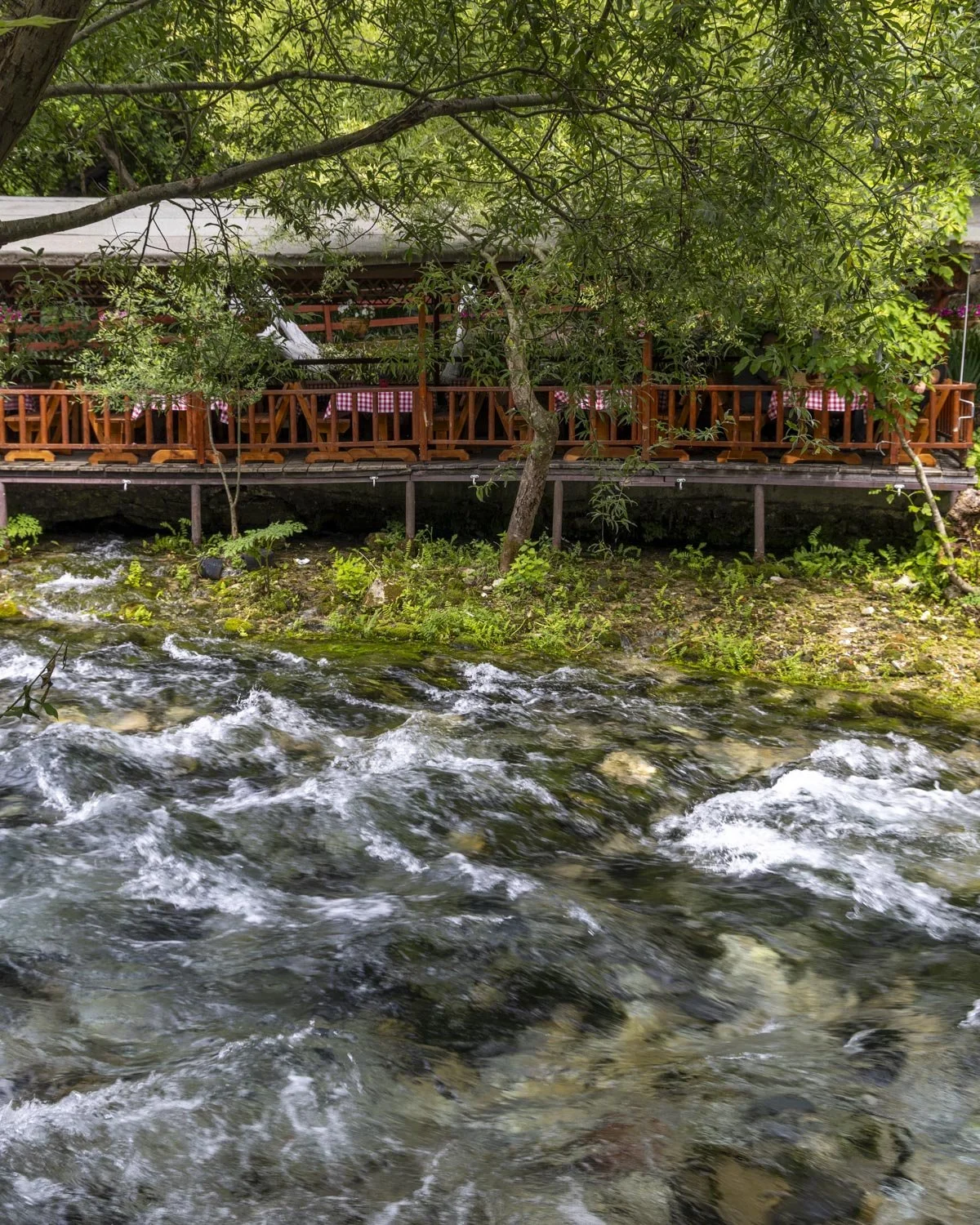
At the site you have several cafes beside the river which make for a nice place to sit and relax. There are toilets about 100m before the bridge or 150m from the eye.
The smell is pretty diabolical, so I wouldn’t necessarily recommend using them unless you’re desperate, but they are free unlike the ones by the fruit sellers at the start of the road which cost 1 Euro.
Entry fees and cost of activities at the Blue Eye
The entry fee for the Blue Eye is a mere 50 Lek (0.50 Euro). You pay after walking 350m from the car park. The car park fee is 200 Lek (2 Euros). Some people parked outside on the road for free but after spending five weeks watching Albanian drivers hurtle around corners, I wouldn’t risk it.
The fee for the train is 300 Lek each way (3 Euros) and you can use it just one way if you want to.
Electric bikes are 500 Lek (5 Euros).
Kayaks and canoes are 1000 Lek (10 Euros) and the time was unlimited. The current is very strong in the river and they would only rent canoes to experienced paddlers. Kayaks were seen as beginner friendly.
Blue Eye opening hours
During the summer months the Blue Eye is open from 8am to 8pm Outside of peak season the hours are reduced. The only way to get in earlier or later in the day is to stay in the onsite cabins.
The onsite cabins
The onsite cabins are located beside the blue river, around 150m from the eye itself. It’s an idyllic setting and the cabins are modern and comfortable.
You can also enjoy the site before the day trippers arrive which is a bonus if you want a quiet experience. The downside is that people will be passing by your cabin all day during the opening hours so it’s not very private.
You can check out the reviews and prices on:

How to get to the Blue Eye
The Blue Eye is located in the south of the country, close to the village of Krongj, you can see the exact location of the car park on Google maps here.
It’s around 35 minutes from Sarande, 55 minutes from Ksamil and 50 minutes from Gjirokaster.
If you don’t have a car you can either take a tour, or if travelling between the coast and Gjirokaster most buses will stop at the eye if you ask them to - but confirm this before you board!
The majority of tours run from Sarandë and offer hotel pickup and free cancellation, so there’s no risk when booking ahead. You can see a selection of the tours on offer below.

This post may contain affiliate links, meaning at no additional cost to you, that we will earn a small commission if you click through and decide to make a purchase. This helps towards the costs of running our website. Thanks for your support.
Everything you need to know about the hike to Pëllumbas Cave including what it’s like to explore the inside of this incredible cavern. We’re sharing difficulty level, trail conditions and what the access road is like.