
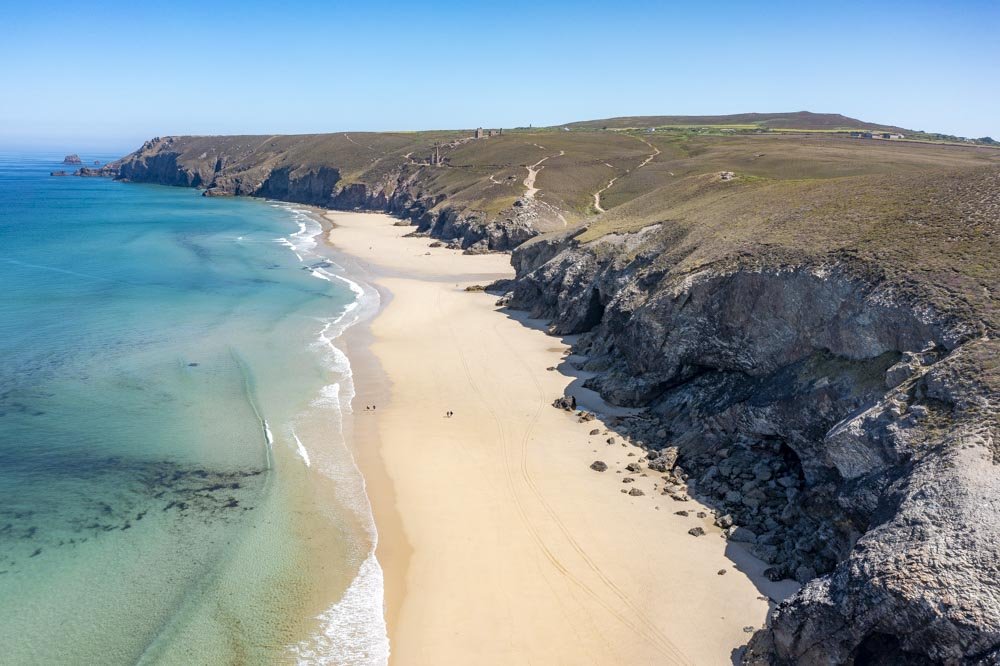
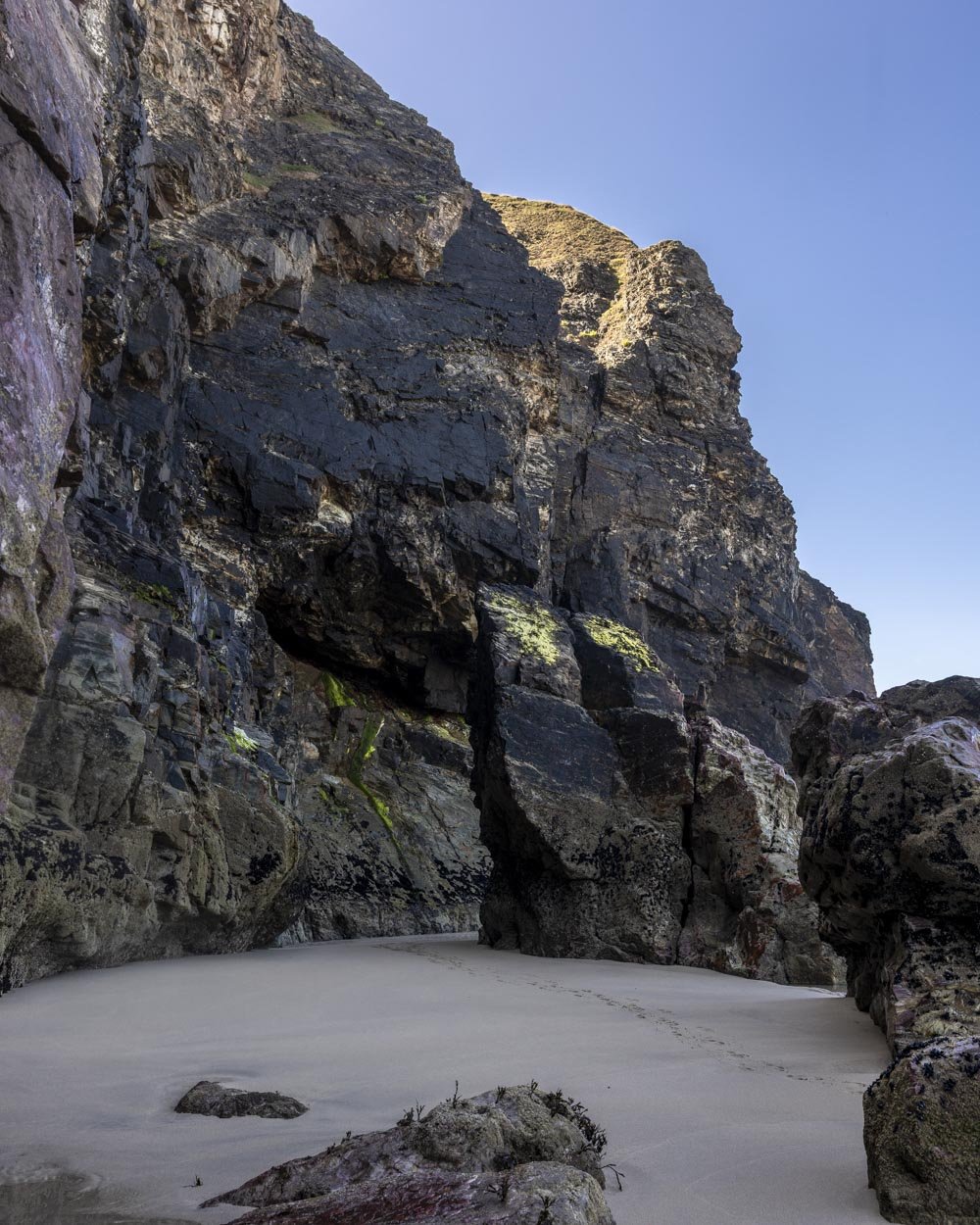
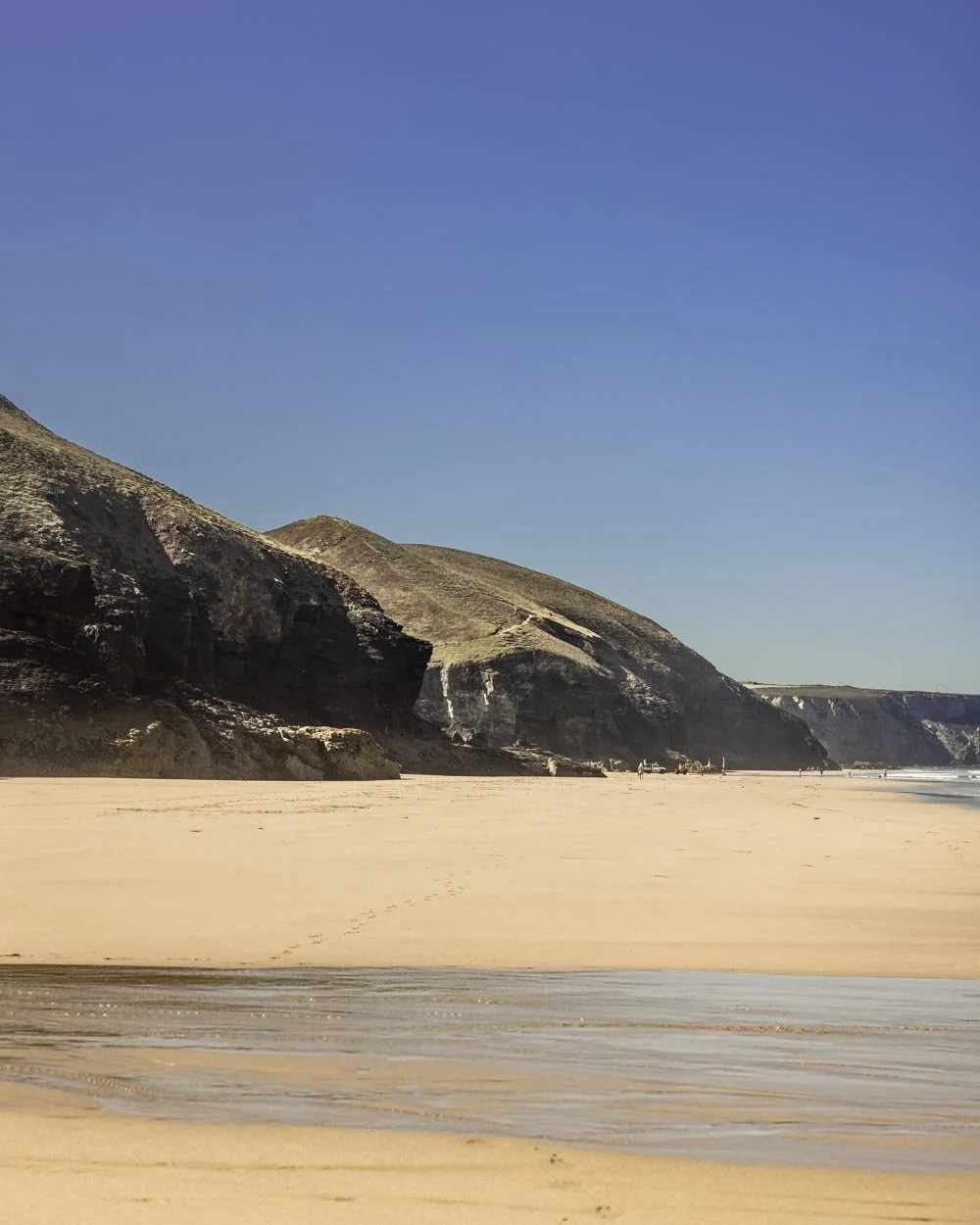
Chapel Porth Beach is one of Cornwall’s most glorious beaches. We’ve spent the last 13 years living in Australia which boasts many of the best beaches in the world and honestly, with its huge sweep of golden sand and towering cliff walls, Chapel Porth Beach would fit right in.
However, look up from the beach and the remains of an old tin mine can be seen perched high up on the cliff top which gives it a quintessentially Cornish feel.
And it’s not just the beach itself that is special, it also has an incredible sea cavern - which would be reason alone to visit - and a small dippable rockpool set far back from the sea, making it perfect for little ones.
Here’s everything you need to know to plan your visit.
Tips for visiting Chapel Porth Beach
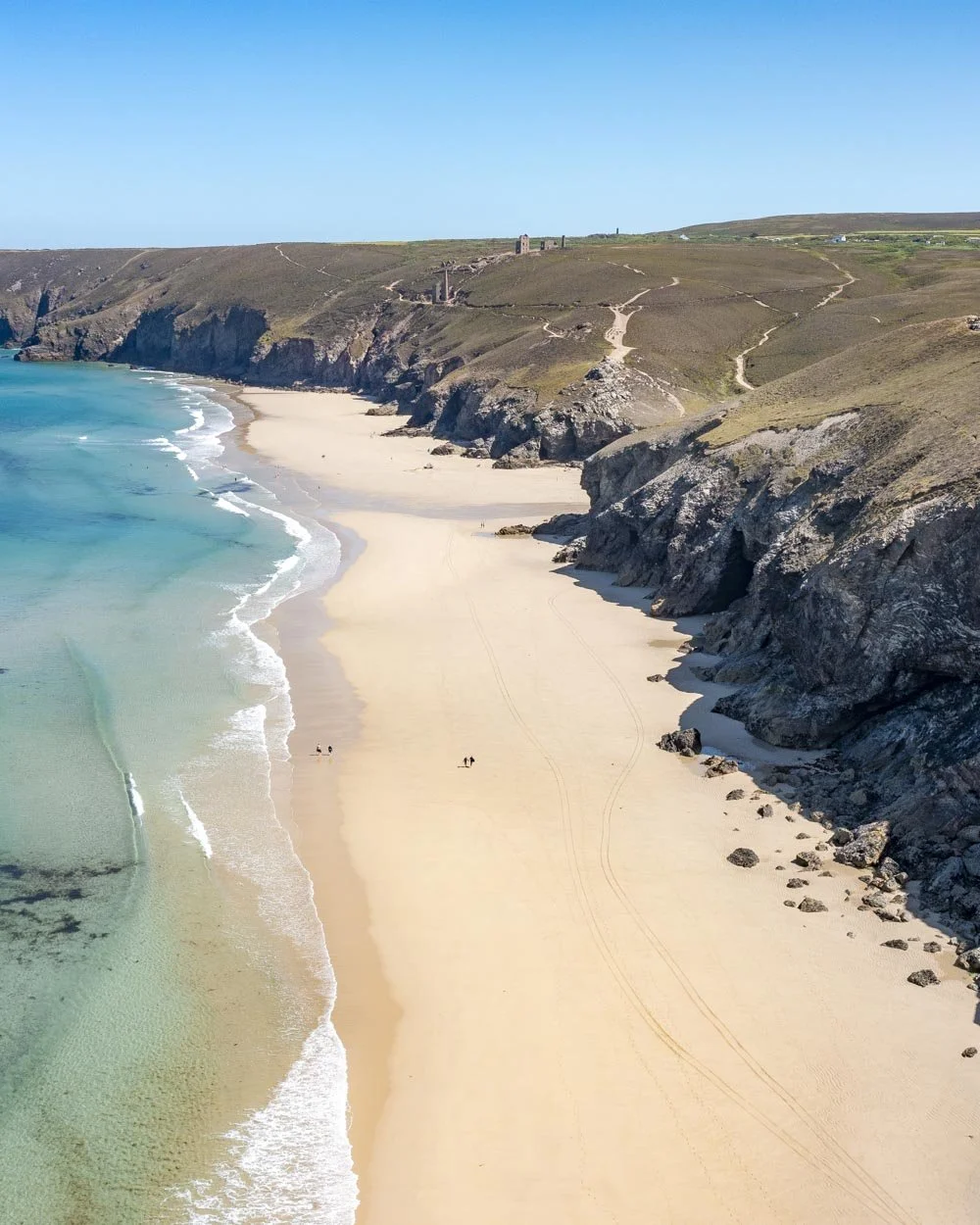
Check the tides to make the most of the full length of the beach
If you time your visit for a few hours either side of low tide, Chapel Porth Beach is enormous - walking its entire length is quite the workout! However, the beach reduces in size dramatically at high tide making exploration more limited.
Visiting closer to low tide allows you to spread out and find some seclusion even in the busy summer holidays.
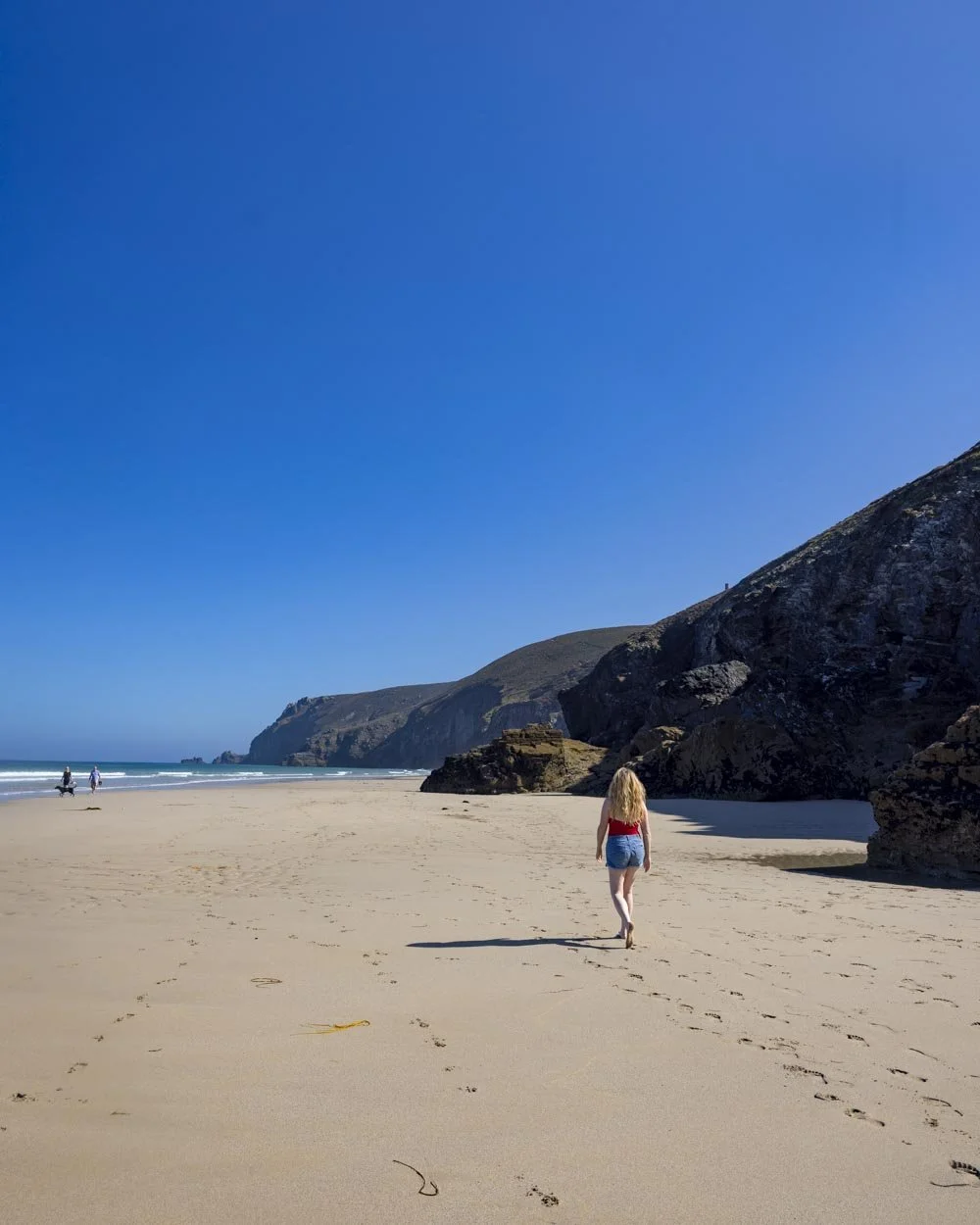
The beach is generally quite wavy, so it’s not the best for swimming, but it’s popular with bodyboarders and hardier swimmers than us! Life guards patrol the beach, but only seasonally.
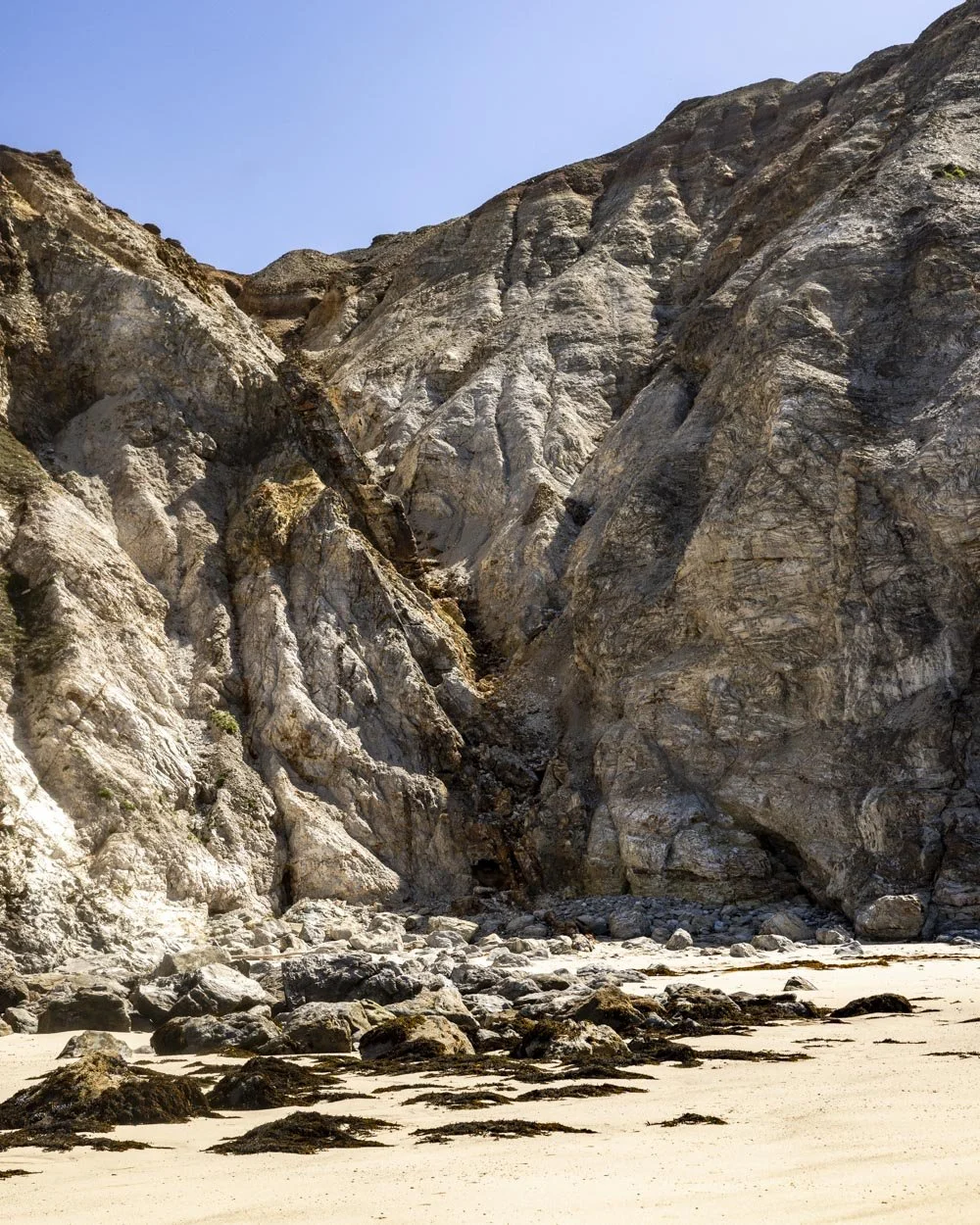
Huge cliffs give the beach a rugged backdrop and you can spot the remains of the former Wheal Coates tin mine perched on top.
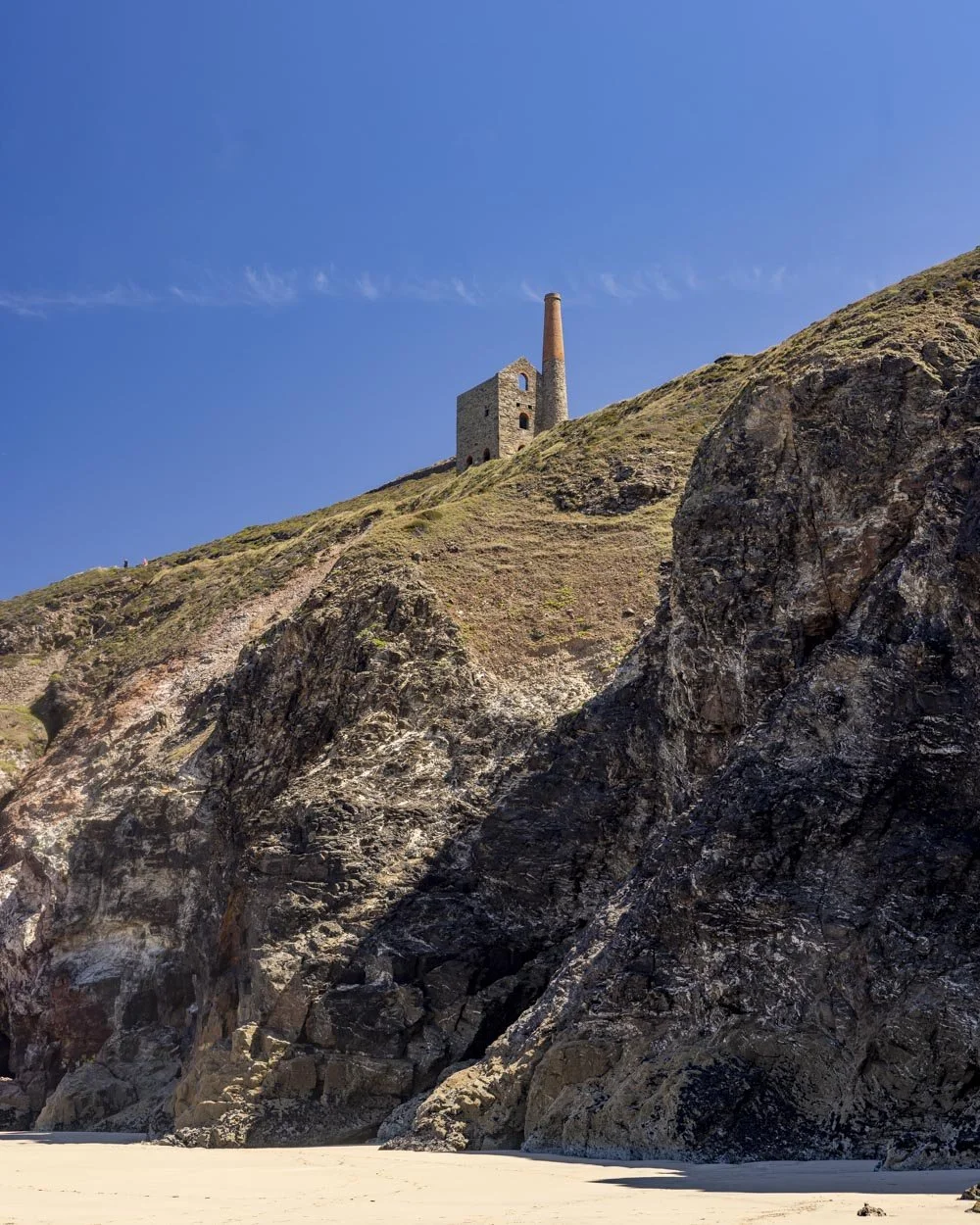
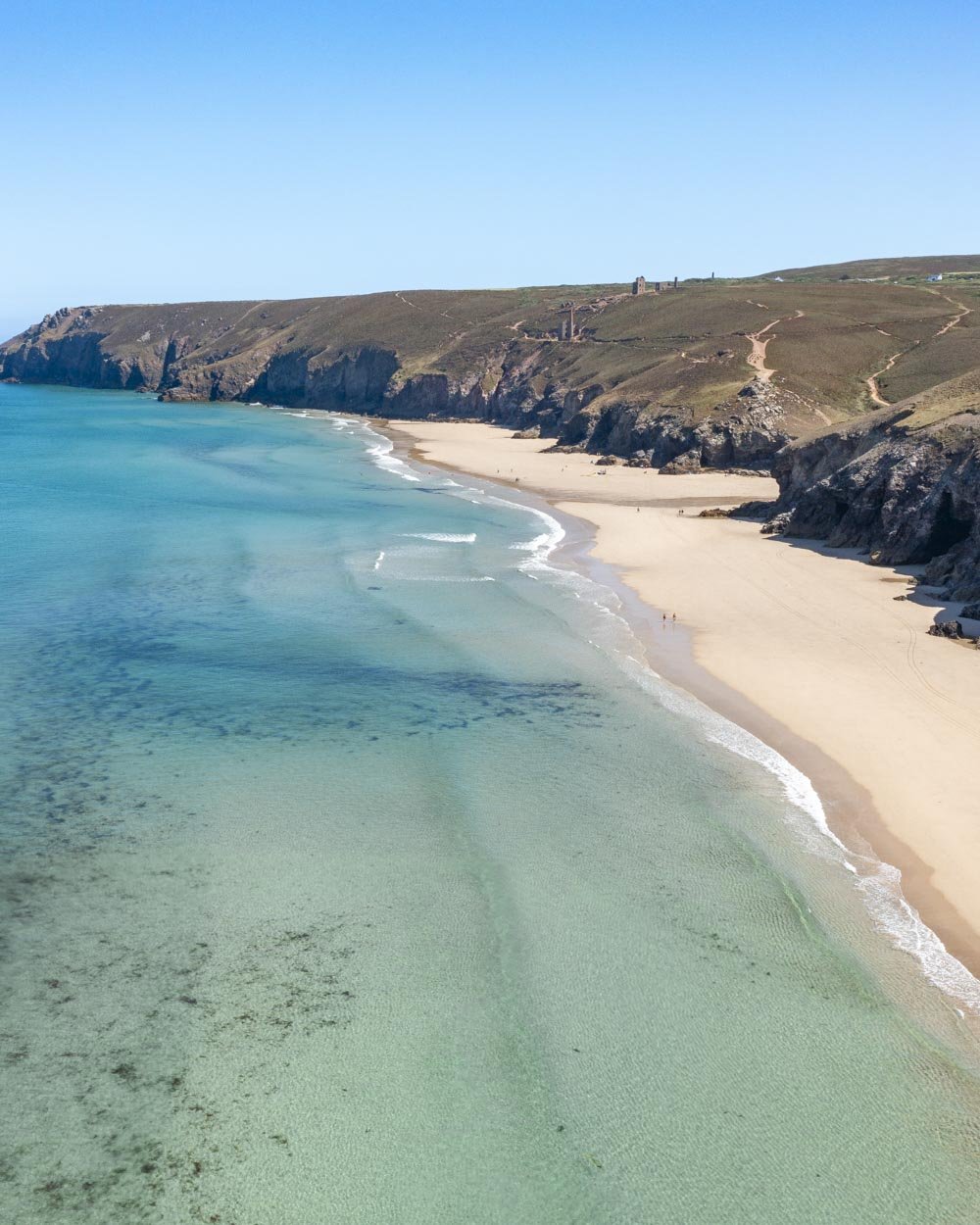
It makes a lovely spot for photography and you can wander up to the mine site if you’re looking for a longer walk and don’t mind climbing the hill.
The tin mine was operational between 1802 and 1889 and though it’s now very much a ruin, the engine house is still impressive.
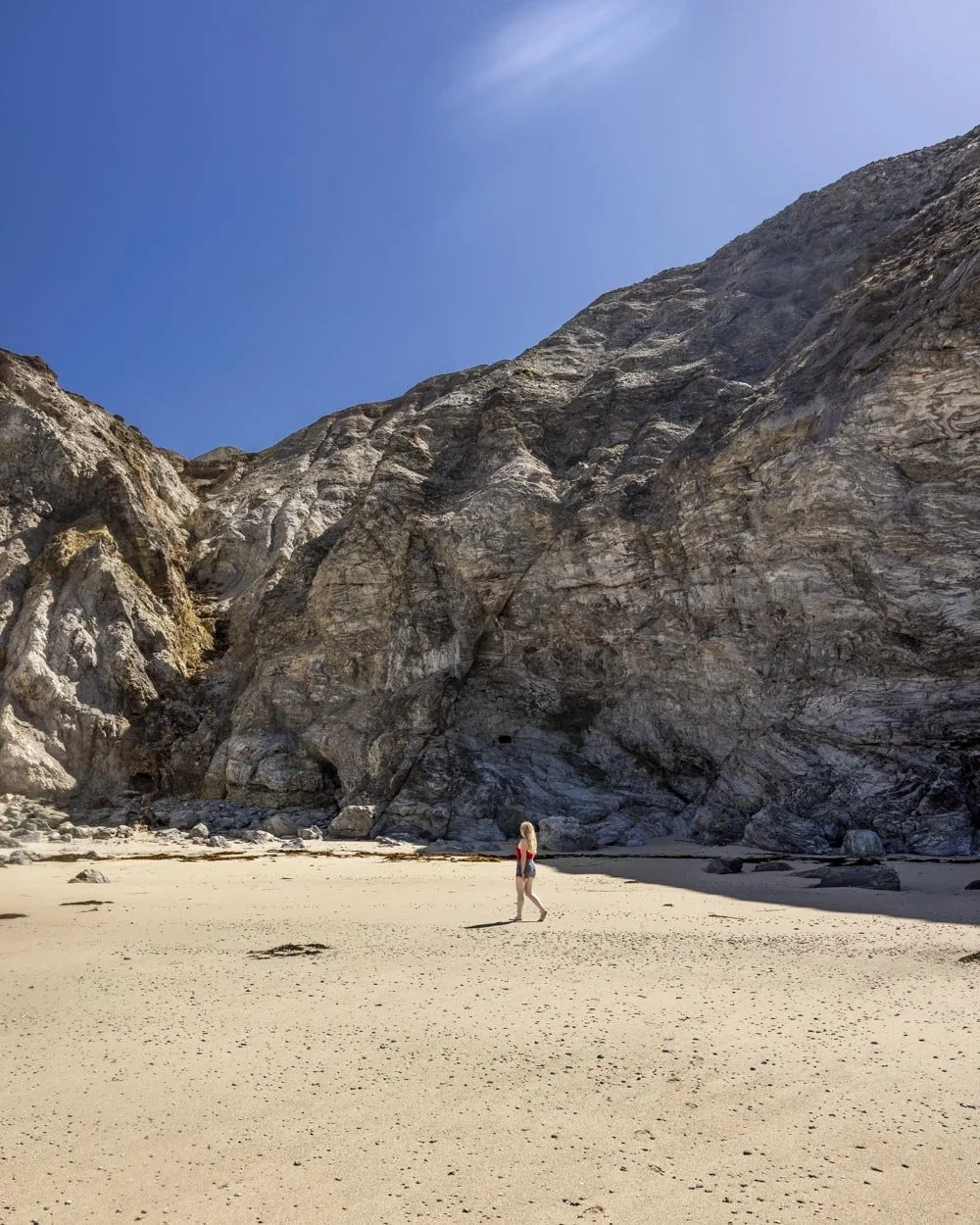
Seek out the incredible sea caves and caverns
Chapel Porth Beach is amazing, but what really blew us away were the sea caves, and in particular, the monstrously big cavern that we had no idea was there until we spotted it when strolling along the sand.
It’s best to visit a couple of hours either side of low tide if you want to explore the caves.
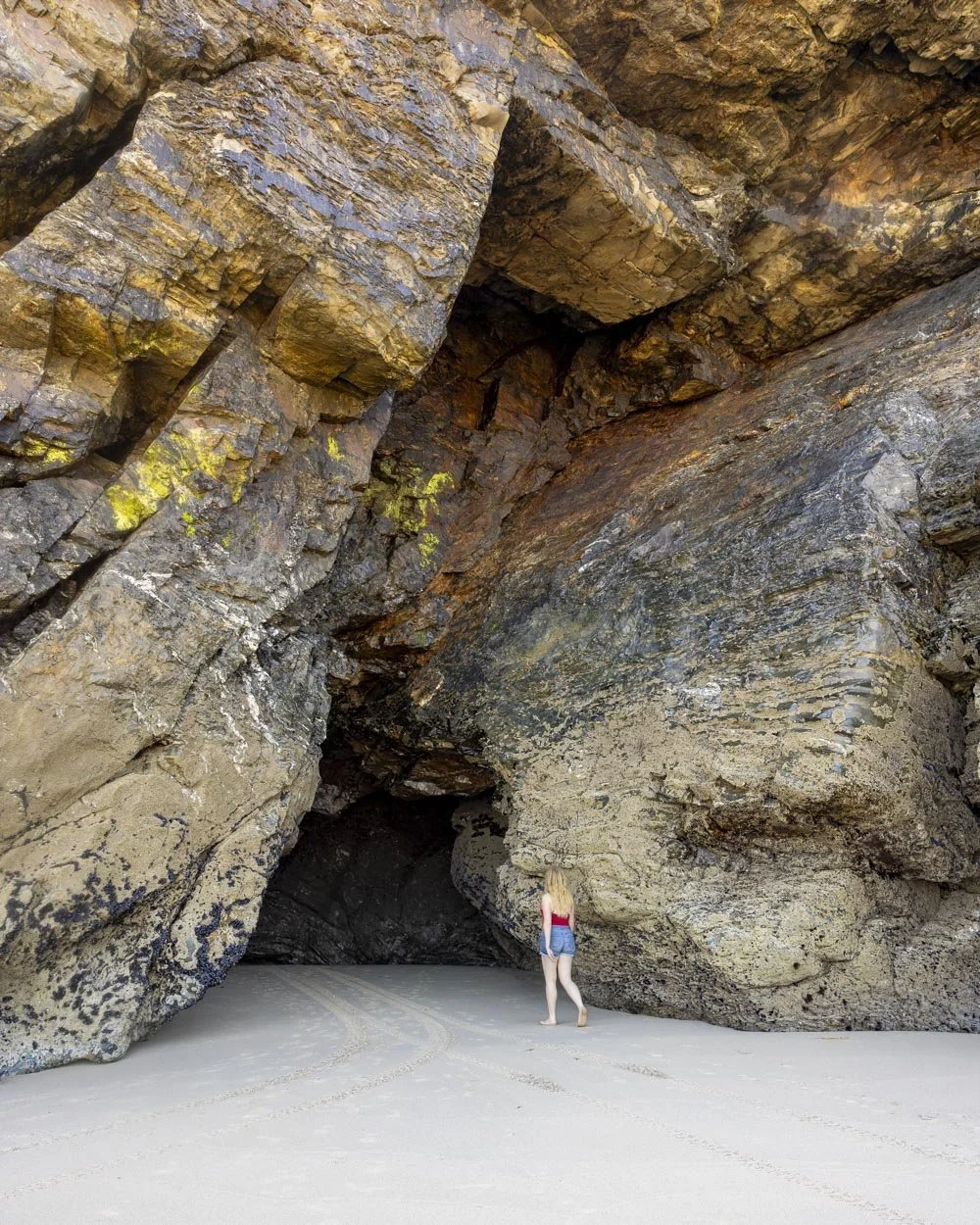
There are caves on both sides of the beach and all of them are impressive, but the best ones lie on the northern side (right as you enter the beach from the car park).
After walking for just a few minutes you’ll see some little kiddy sized crevices and then a larger cave, but it’s not very deep and therefore still quite open, more of an overhang really.
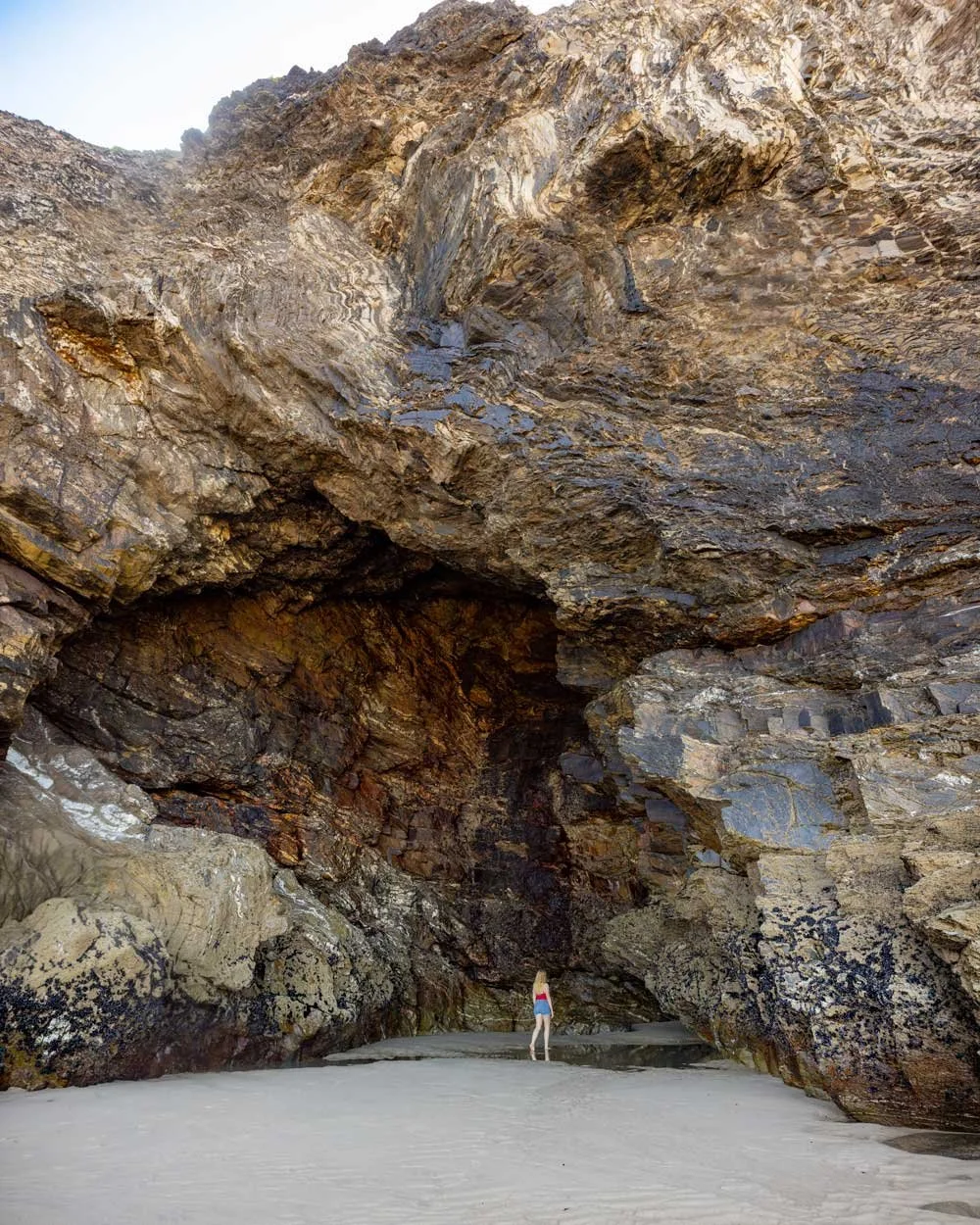
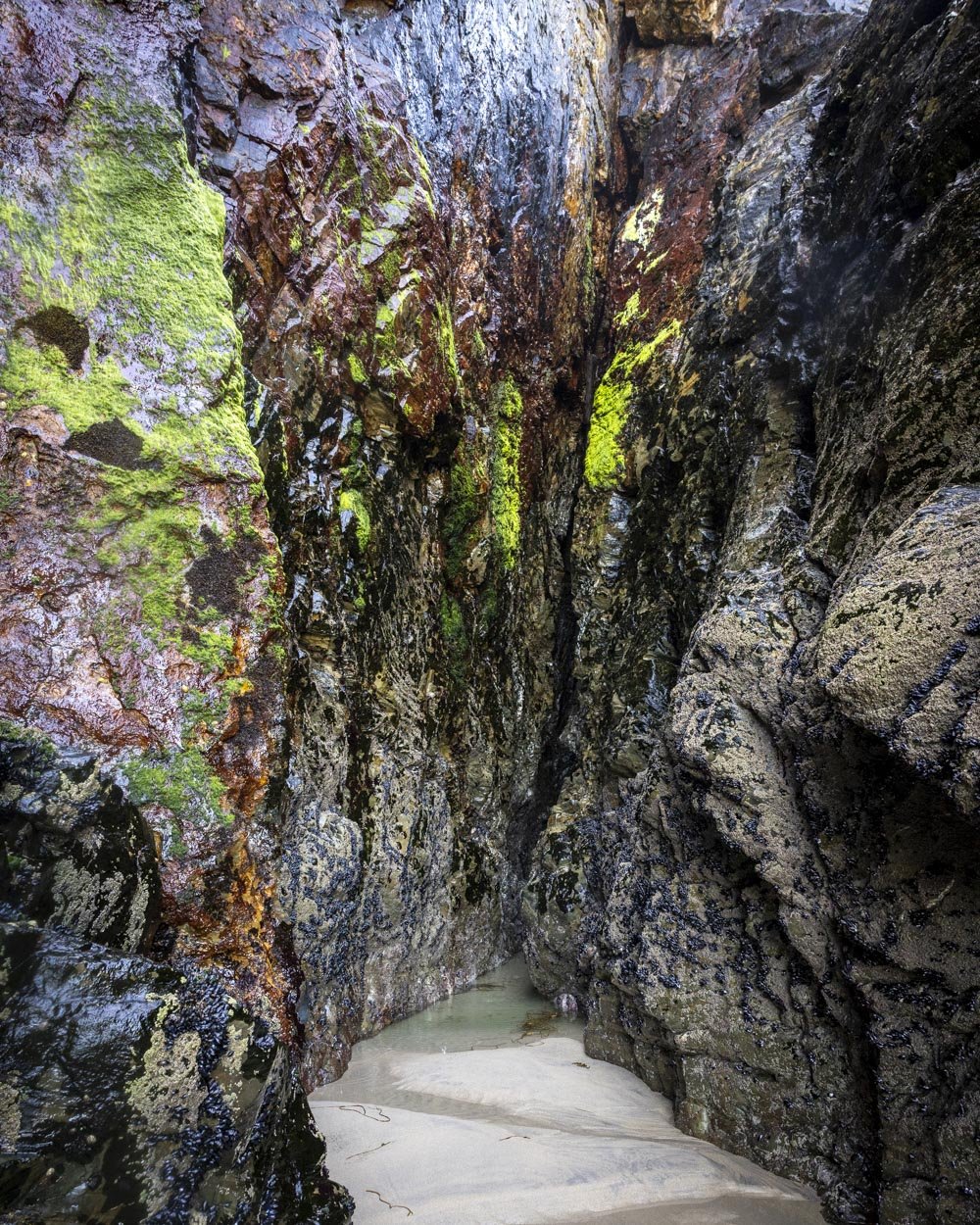
Continue a little further and you will see a narrow slot cave. Unlike the first caves which are dry, this one has shallow water running all the way through the slot (below knee height).
The colours on the rock and the size of the walls make it a really fun walk through, however the real show stopper is just a little further along the beach.
You can’t miss it because the mouth of the cavern is simply ginormous. The natural cave was expanded by miners to form what now feels like the cathedral of all sea caves.
Even the entryway is fabulous, with sparkling red and gold rock that looks like it could be the set of a Disney movie.
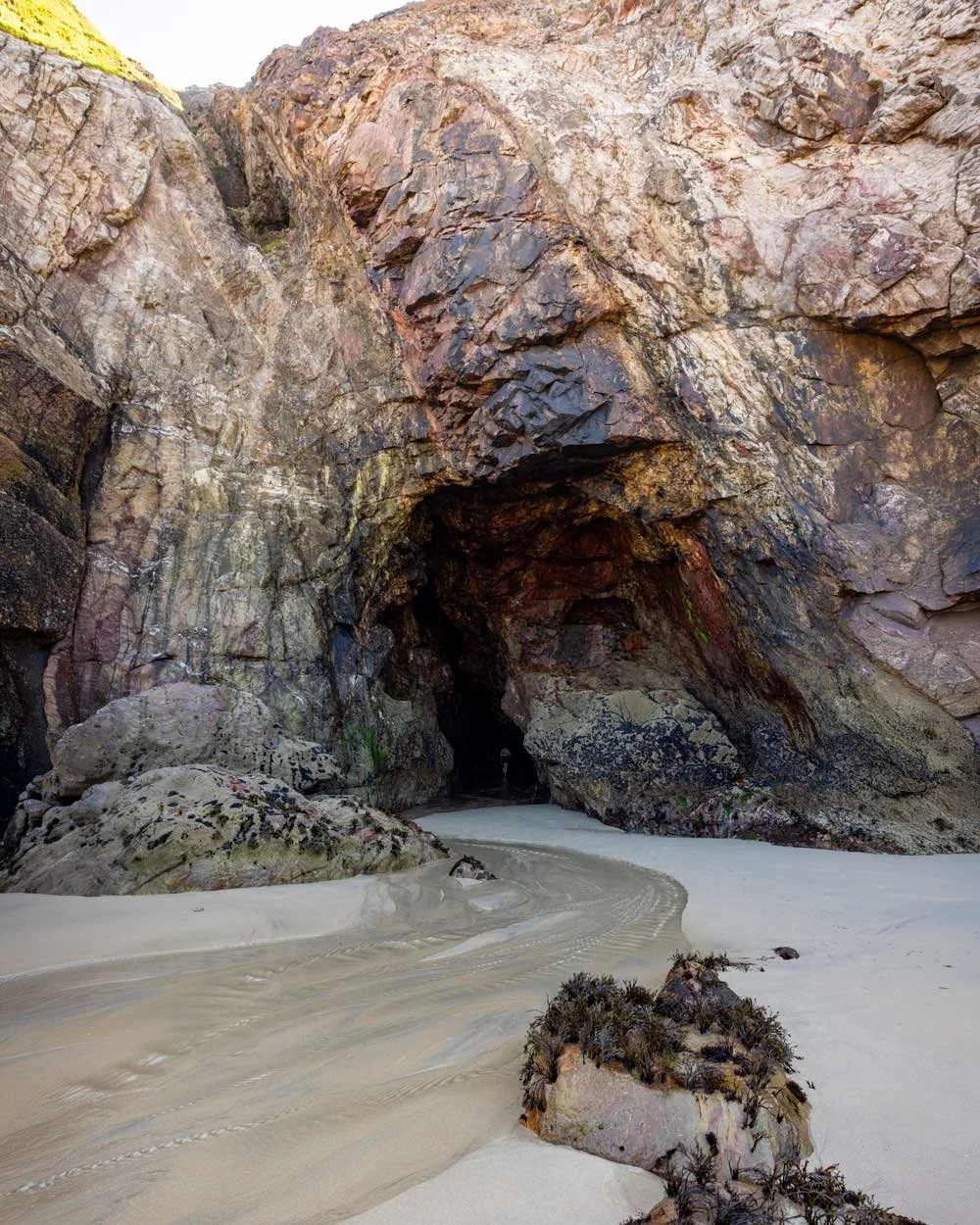
The colours continue as you head in, if anything getting more and more incredible. As you move through the passage you start to lose almost all natural light and the sound of pounding waves in the distance give an atmosphere which is part awe-inspiring, part eerie.
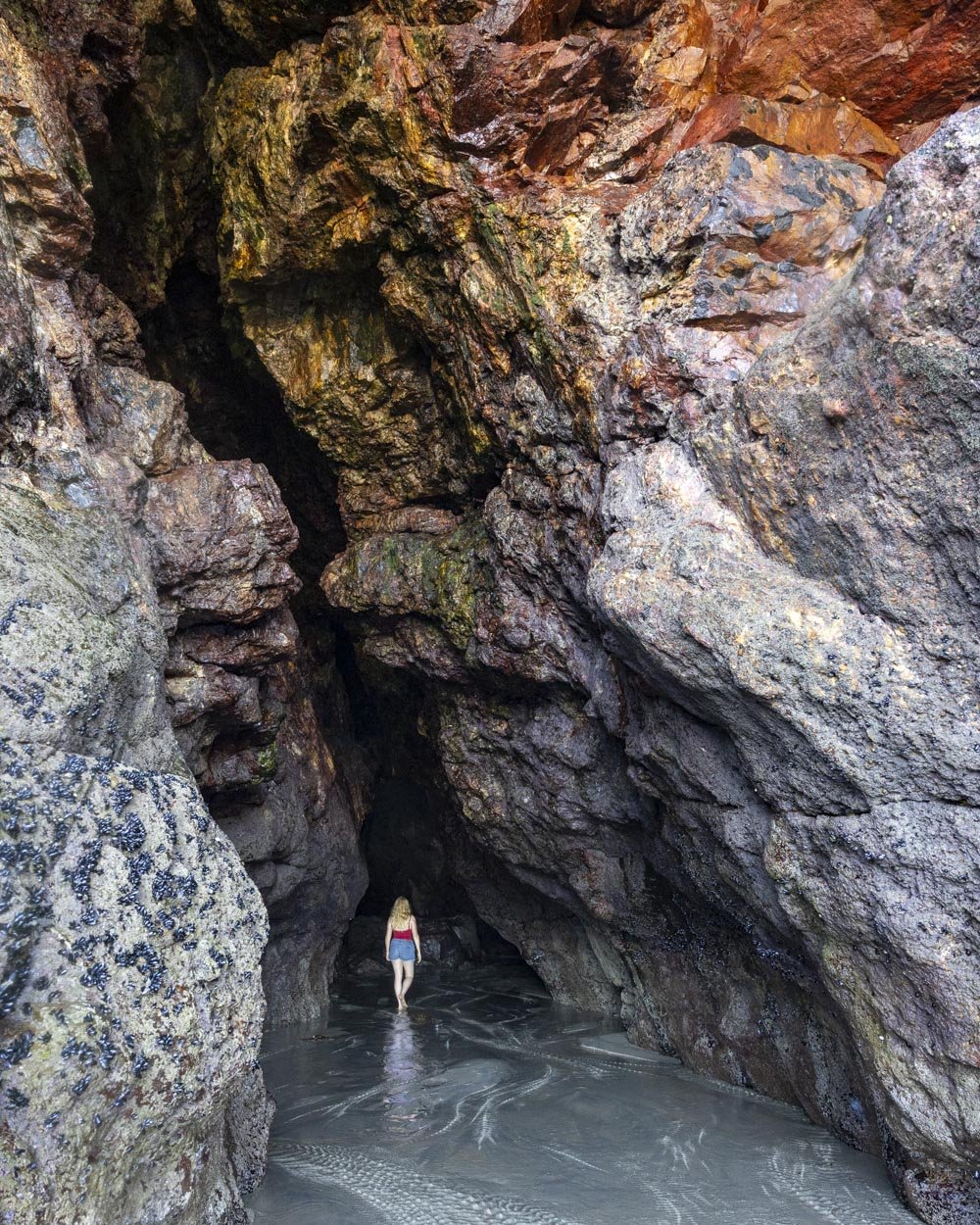
As you move further into the gigantic open chamber you come to a section of wet rock and just beyond this the sound of the waves reminded me of a blow hole and I decided to go no further!
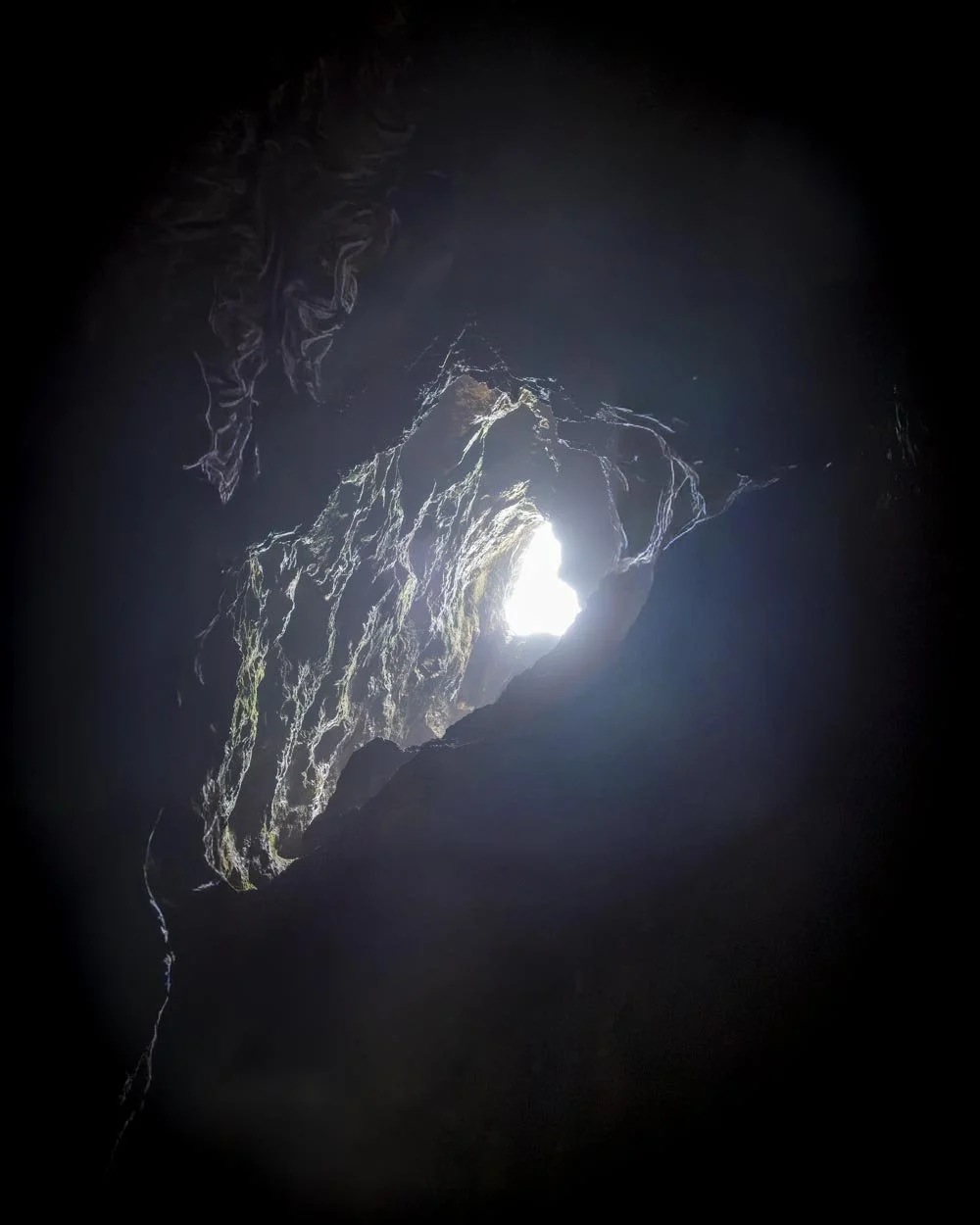
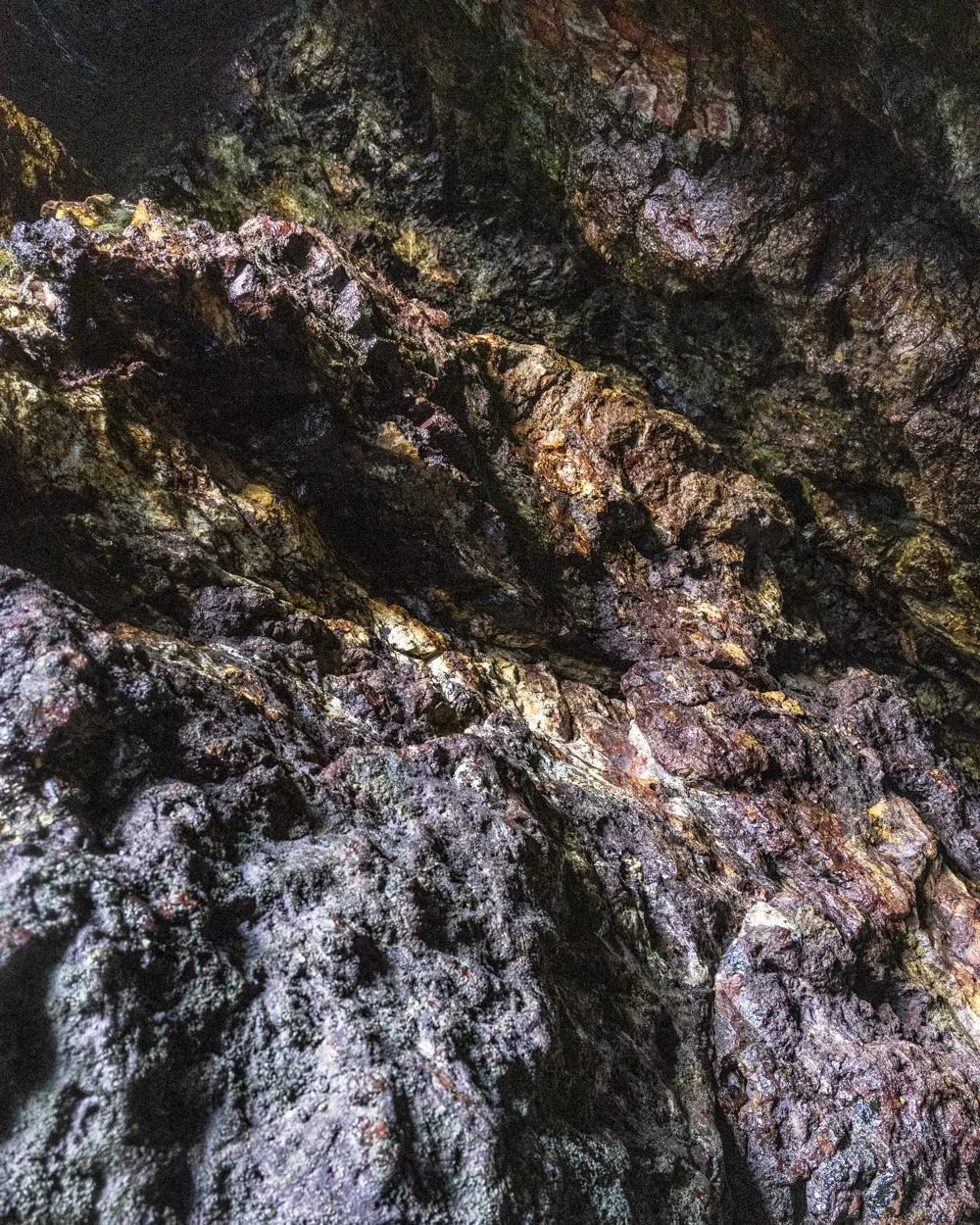
I love caves but that sound was totally wild! There is one skylight in the top of the main chamber, but it doesn’t allow much light to penetrate even on the sunniest of days, so you probably want a torch for this one.
You can wait and let your eyes adjust but most people will probably prefer a light source. It only takes a minute or so to reach the main chamber from the beach but it feels a world away once you’re inside.
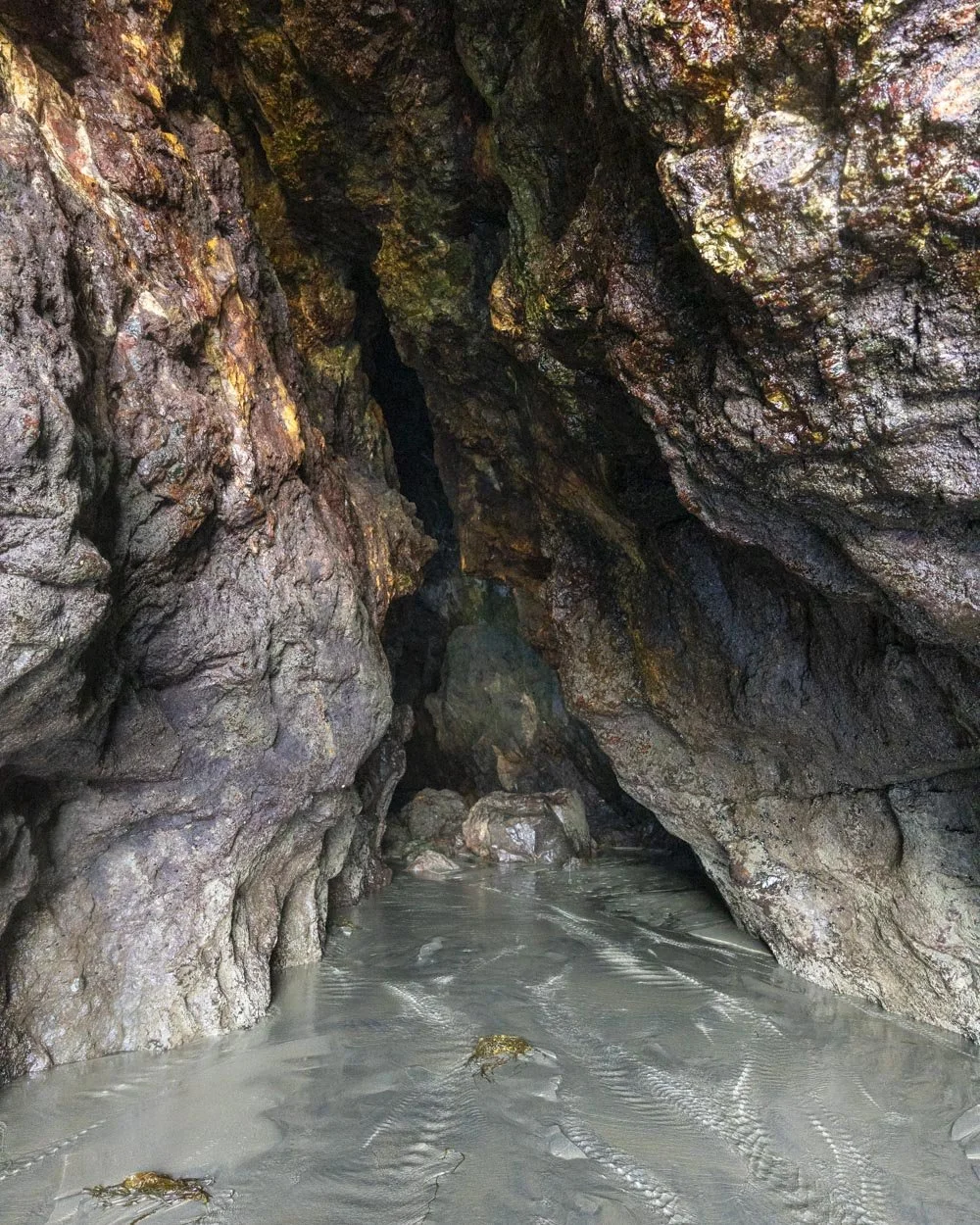
It’s one of the best sea caverns I have ever been to and that’s saying something because Cornwall is home to dozens of amazing sea caves.
Exploring it is also easy, as though there are many rocks in the main chamber there is also plenty of sand to walk on so you can go barefoot comfortably.
If you then turn around and head to the southern side of the beach you will find even more caves. None compare to the sea slot and cavern you will have already seen, but if you’re into caves they are definitely worth a look.
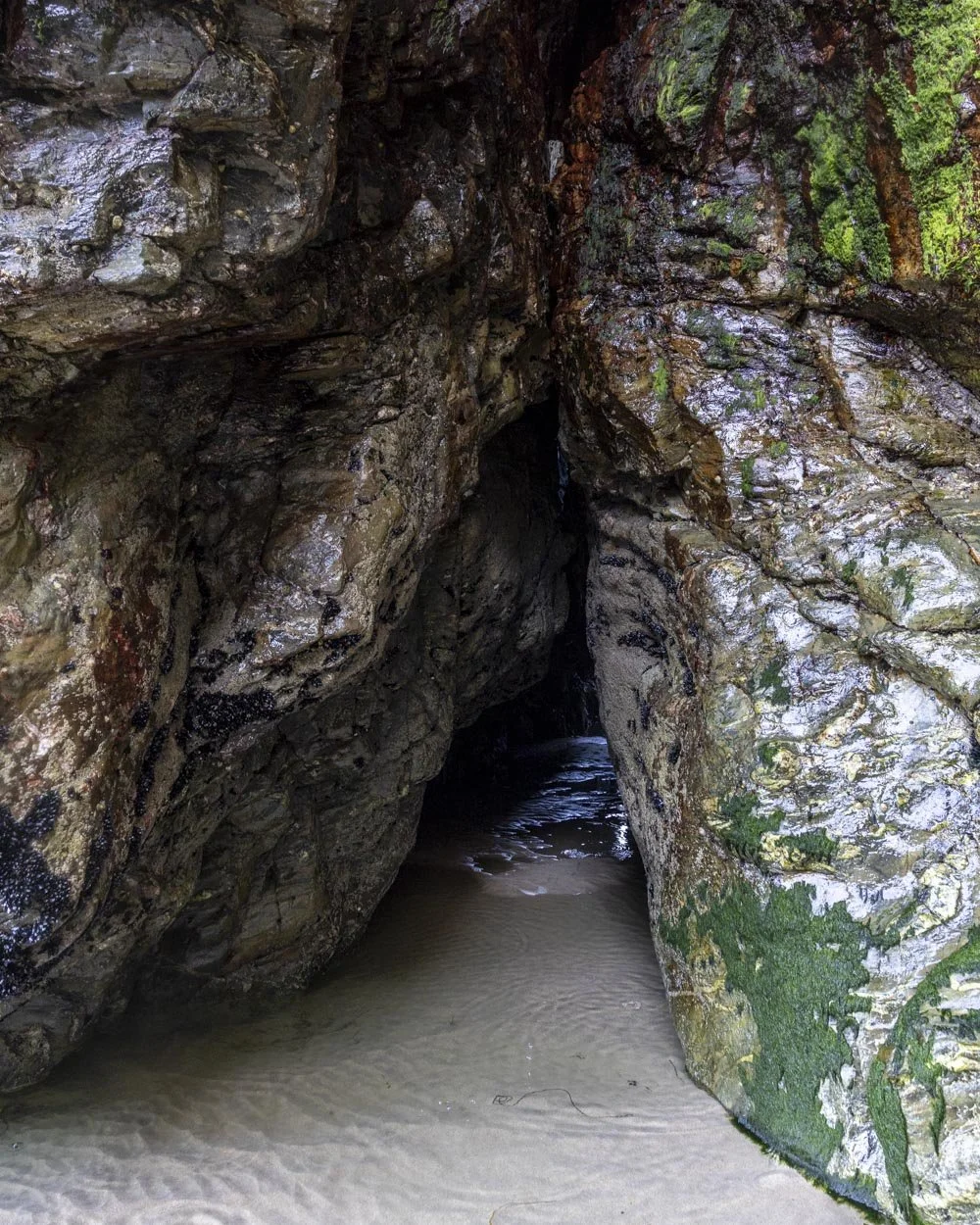
There’s a little slot cave which gets very, very dark first up, a favourite with kids daring themselves to do it without a torch.
It’s next to a cool cavern but unfortunately it’s pretty weedy (or was on our visit) so it’s not as pleasant to explore.
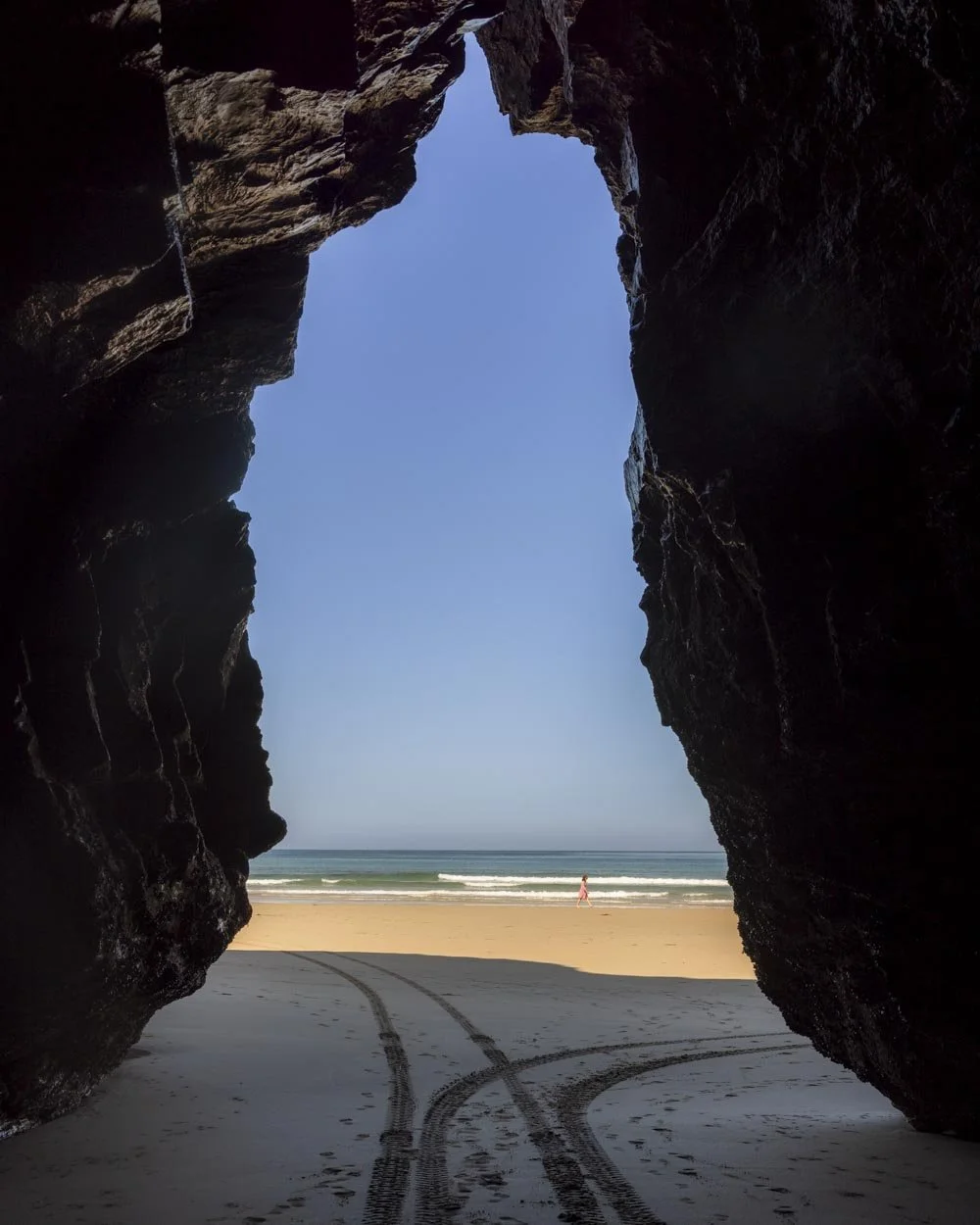
There’s a tiny narrow slit cave further on, best suited to kids, and I think that’s where the caves end, or at least that’s as much as we saw.
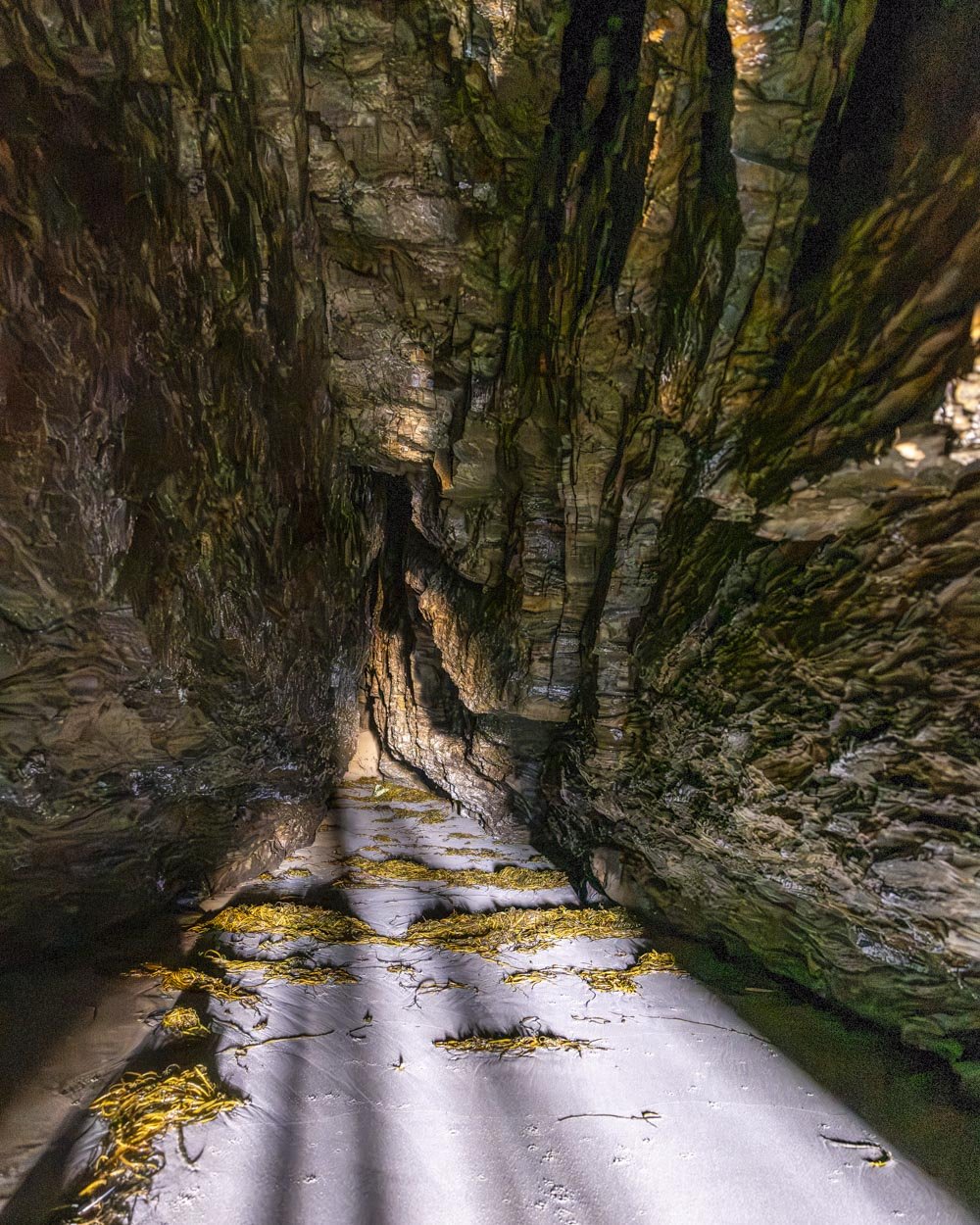
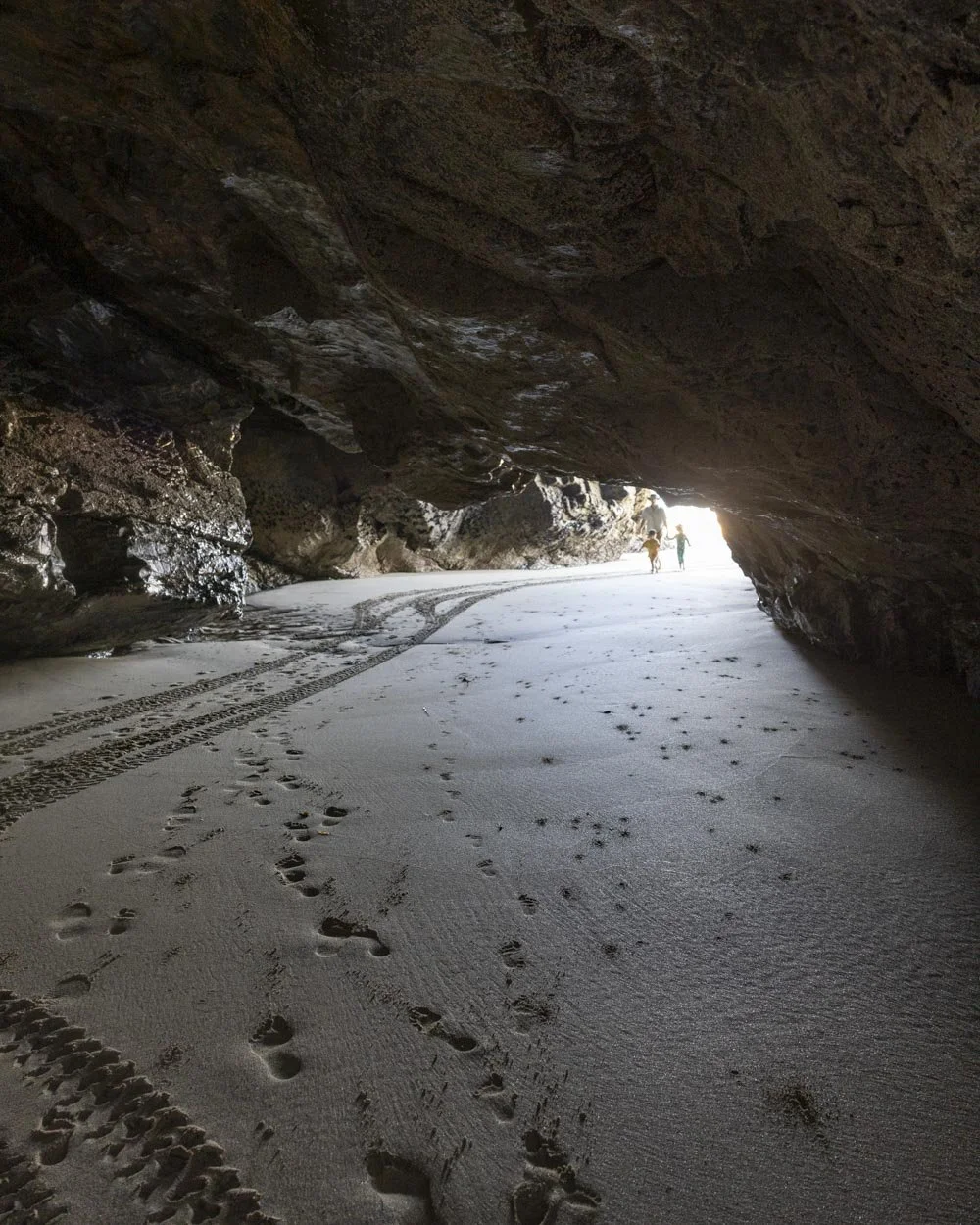
If you continue a little further along this side of the beach you will come to some stripy cliffs which reminded us a bit of Death Valley! It really is amazing how much there is to see on this one stretch of beach.
Take a dip in the aquamarine rockpool
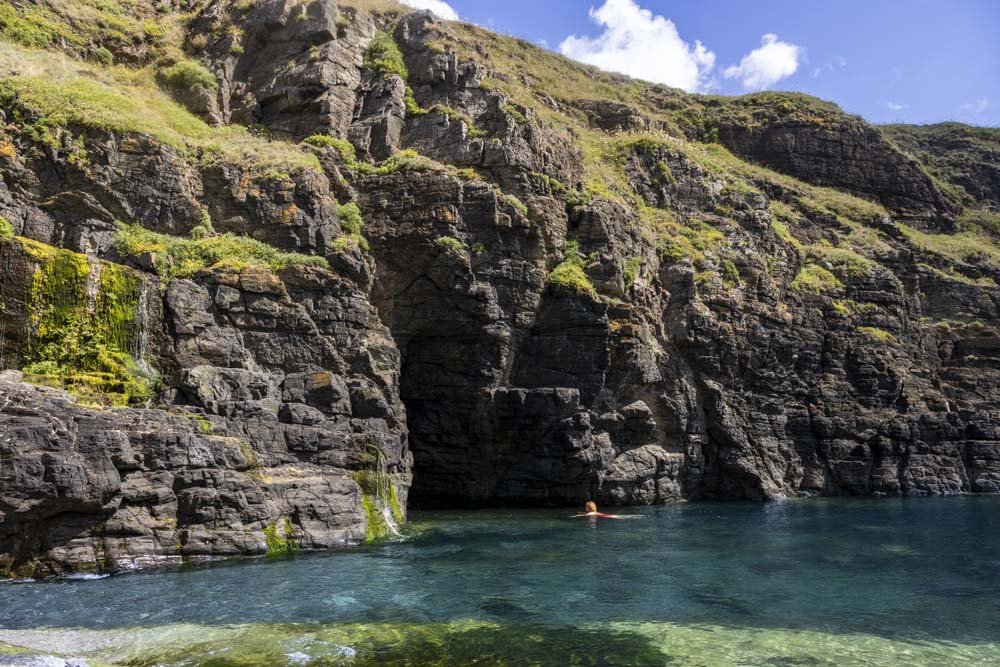
There are lots of little rockpools found in the rock crevices along the beach, but most are small. There is a slightly larger one that pools around the rock beside the sea slot on the northern side of the beach.
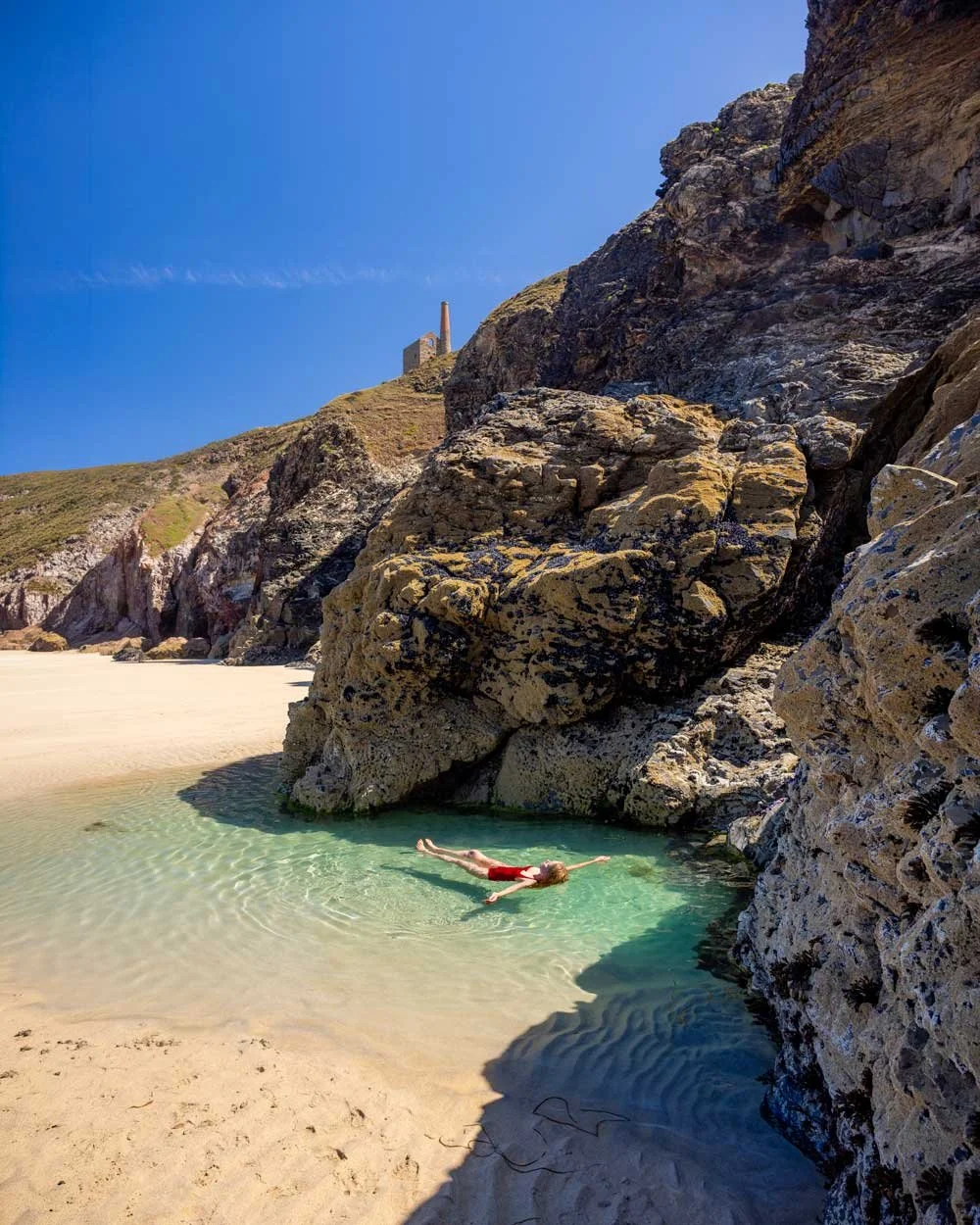
It has a beautiful sandy bottom which makes it a great paddling pool for kids, or a very small plunge pool for adults…..!
Never one to miss an opportunity to take a dip and not liking the look of how wavy the sea was, I did have a bit of a float.
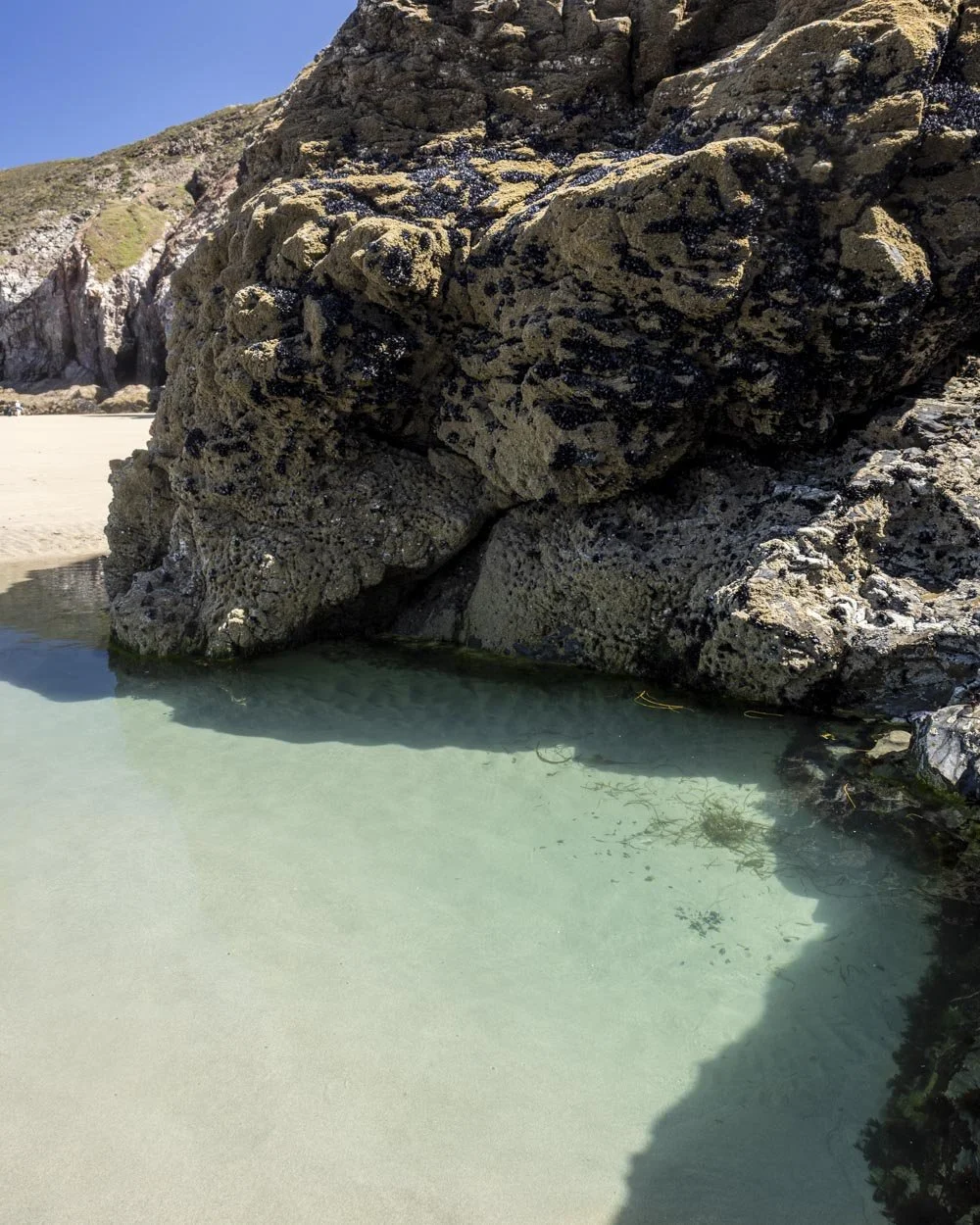
The water colour is really quite something, a very beautiful aquamarine and so clear. The fact the pool is very far away from the sea at low tide makes it the perfect safe spot for little ones to cool off in summer.
It’s dog friendly some of the year
Chapel Porth Beach is dog friendly, but only between October and Easter. Cornwall does have many dog friendly beaches which are year round, so you won’t have any trouble finding an alternative if you’re looking to bring your dog along.
Getting to Chapel Porth Beach
There is a National Trust run car park just behind the beach, however, I would recommend coming early or late if you’re visiting in the school summer holidays as spots fill up fast and there is a long windy single track lane coming down into the car park.
At time of writing the fees for non members are: £2.00 up to 1 hour, £4.00 up to 4 hours, or £8.00 for the whole day.
If it is full you can park further away and walk part of the South West Coast Path to Chapel Porth. The most popular walk to the beach is from the village of St Agnes, which takes around 40 minutes.
In terms of facilities there are toilets and a small kiosk selling drinks and snacks at the car park.
This post may contain affiliate links, meaning at no additional cost to you, that we will earn a small commission if you click through and decide to make a purchase. This helps towards the costs of running our website. Thanks for your support.


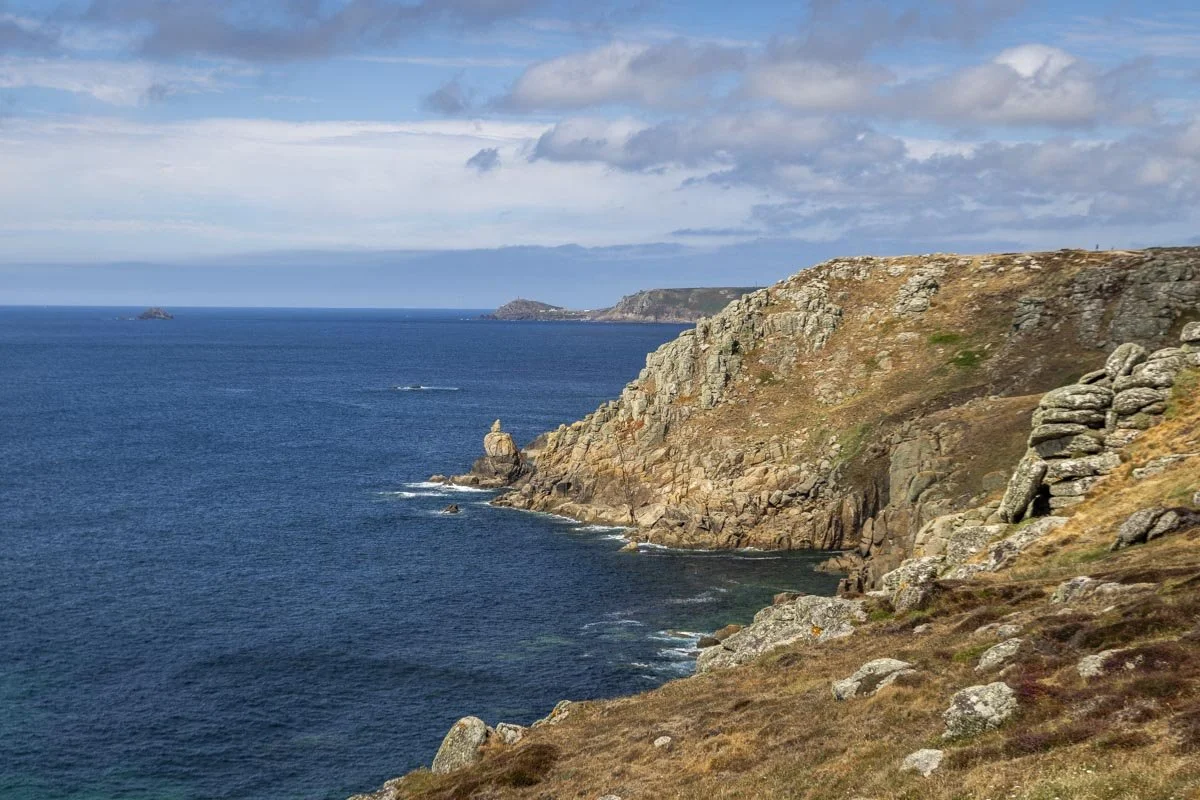


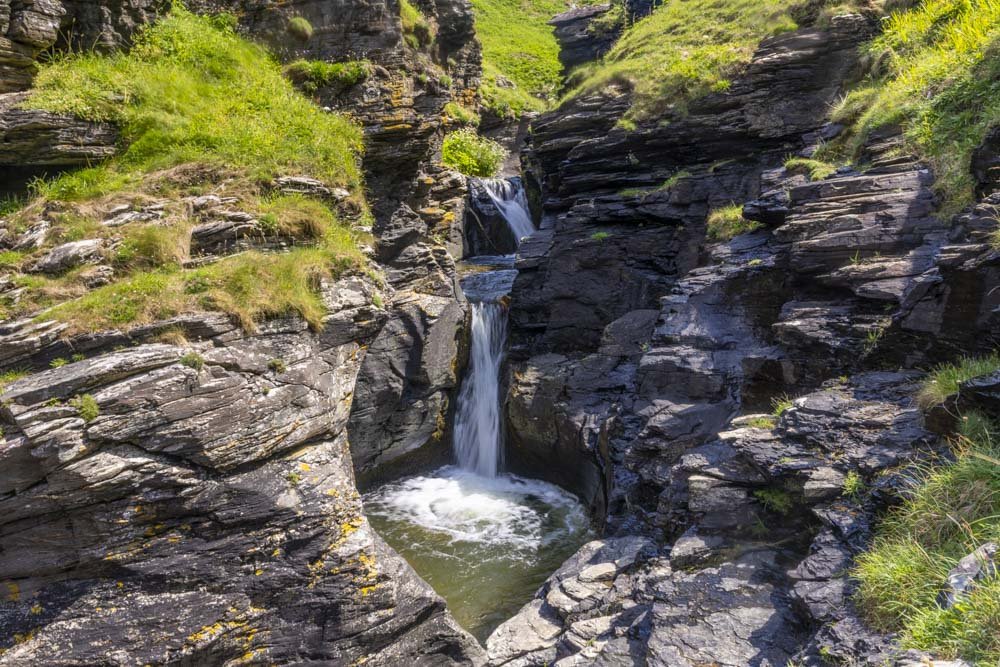


All the best wild swimming spots in Cornwall, from shimmering turquoise rockpools to emerald lagoons, quarry pools and stunning waterfalls. If you love longer swims there are many calm stretches of water where you can swim from bay to bay stopping at all the little gorgeous coves along the way.