

The 45km Tongariro Northern Circuit is one of the best of the Great Walks of New Zealand. You can also see some of the most beautiful parts of the trail as a day hike. It really blew us away, and if you are in the North Island and have the chance to do one walk, head to Tongariro.
This is a guide to helping you prepare for the hike, if you want to know more about our personal experience, read this.

Everything you need to know about the Tongariro Northern Circuit
What is the Tongariro Northern Circuit?
The Tongariro Northern Circuit is a 44.9km loop through Tongariro National Park on the North Island - New Zealand’s first national park. Most people do this in between 2 - 3 days. As this is a loop, you can walk in either direction.
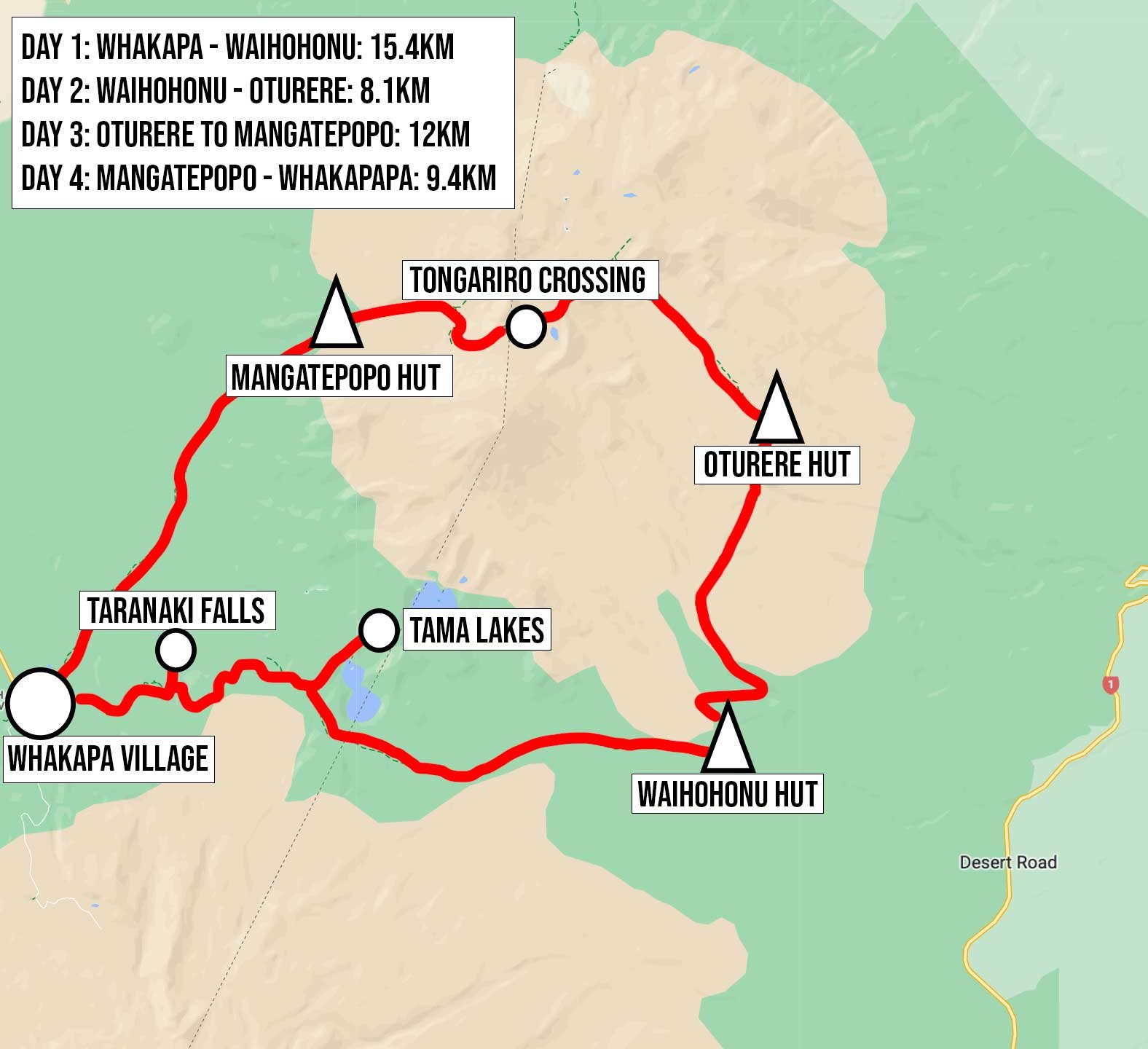
The Northern Circuit is an extension of the famous Alpine Crossing, that covers more of the park and creates a loop where you start and finishes in Whakapapa village. The trail takes you through an alpine volcanic landscape, and includes side trails to lakes and waterfalls.

Tongariro Northern Circuit vs Tongariro Alpine Crossing
Essentially this decision comes down to how much time you have as the Northern Circuit is a two-four day hike and the day walk - the Tongariro Alpine Crossing - is seven hours long. If you have the time, we would recommend taking on the Northern Circuit as, not only does it include the Alpine Crossing, but it also takes you through different, varied landscapes, and is very quiet.
The Northern Circuit also offers the opportunity to stay at Oturere Hut which is a magical place. At night the sky is full of stars and the landscape lights up under the full moon. At sunrise the whole place is bathed in an orange glow. It is one of the best huts we've stayed in, in New Zealand.
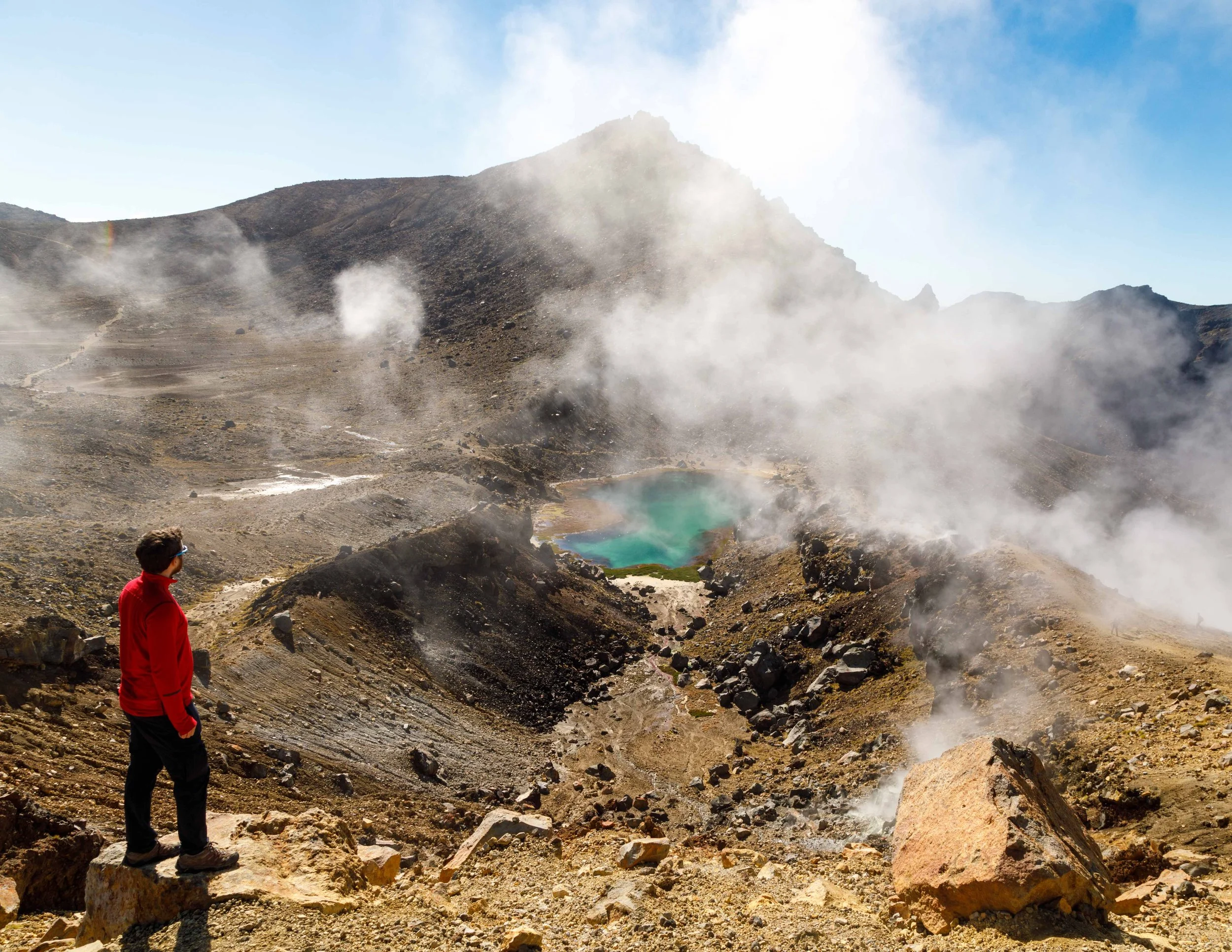
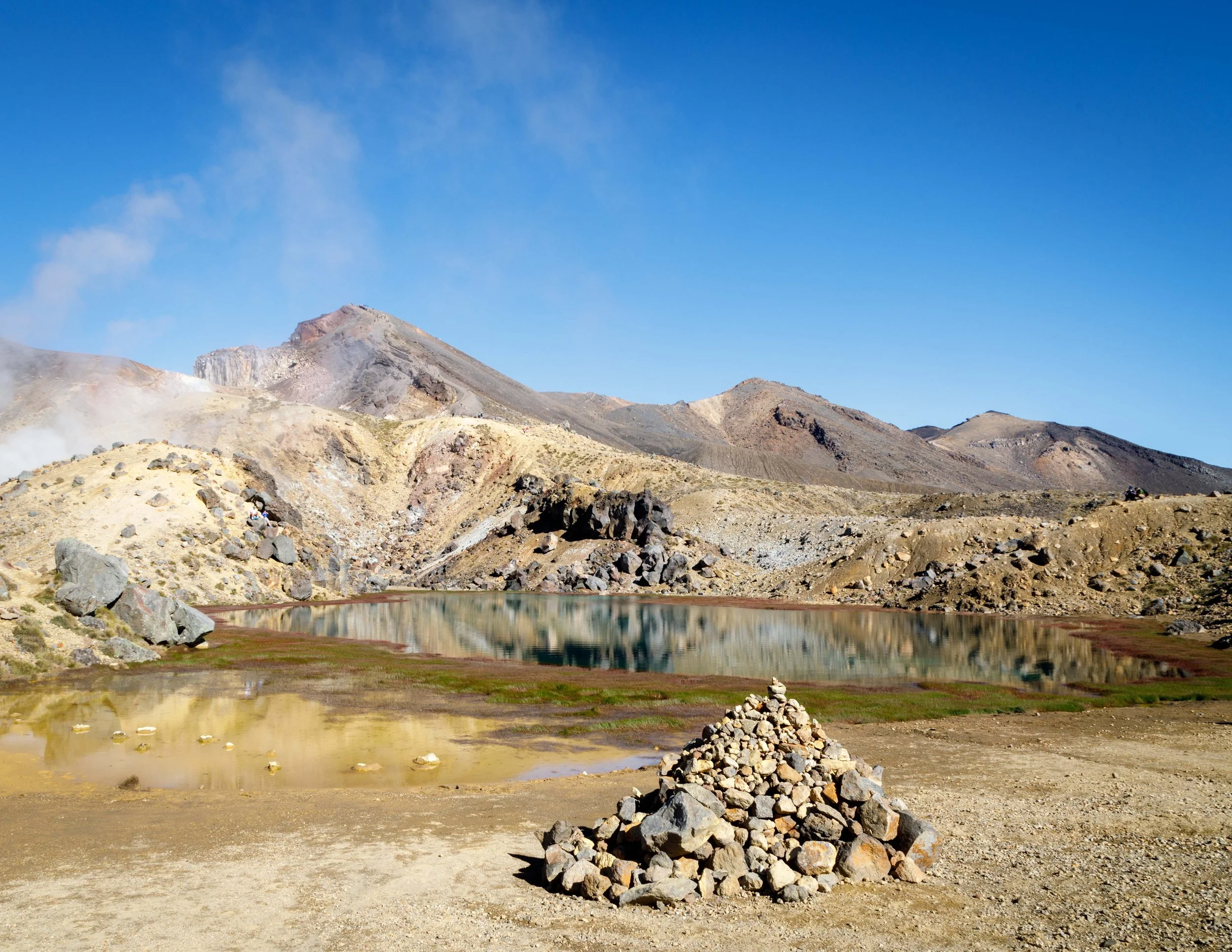
One of the Emerald Lakes on near Red Crater
However, the Alpine Crossing is also very good option. If you don't like DOC huts, camping or the thought of multiple days hiking, then it's the best option for you. Just make sure you do one of the two on your trip to Tongariro National Park!
Tongariro Northern Circuit Elevation
On the elevation map, the Tongariro Northern Circuit doesn't look too hard. However, it packs a punch with short and incredibly steep sections.
It certainly felt like the section round the Red Crater was the steepest climb we'd done on any of the Great Walks.
Source: Department of Conservation, New Zealand
Tongariro Northern Circuit Difficulty
Whilst there are some hard sections, the Tongariro Northern Circuit is perfectly manageable for the majority of people if done over three or four days. This will make the sections from Waihohonu to Oturere (day 1 or 4) and Waihohonu to Oturere (day 2 or 3) very short with two reasonable sized days.
If you choose to shorten it to two days, then the track becomes significantly harder.
Hiking the Tongariro Northern Circuit in 2 days
Hiking the Tongariro Northern Circuit in two days made it one of the toughest walks we've ever done. The days were over eight hours long, with significant climbs. If you're going to do this version, make sure you're a regular walker with a high level of fitness.
We've read about some people attempting a two day version and taking over 12 hours each day, finishing in the dark. We would only advise hiking the Tongariro Northern Circuit in two days if you really don't have any extra time or are very fit. We found it really tough, and wished we'd had some extra time.
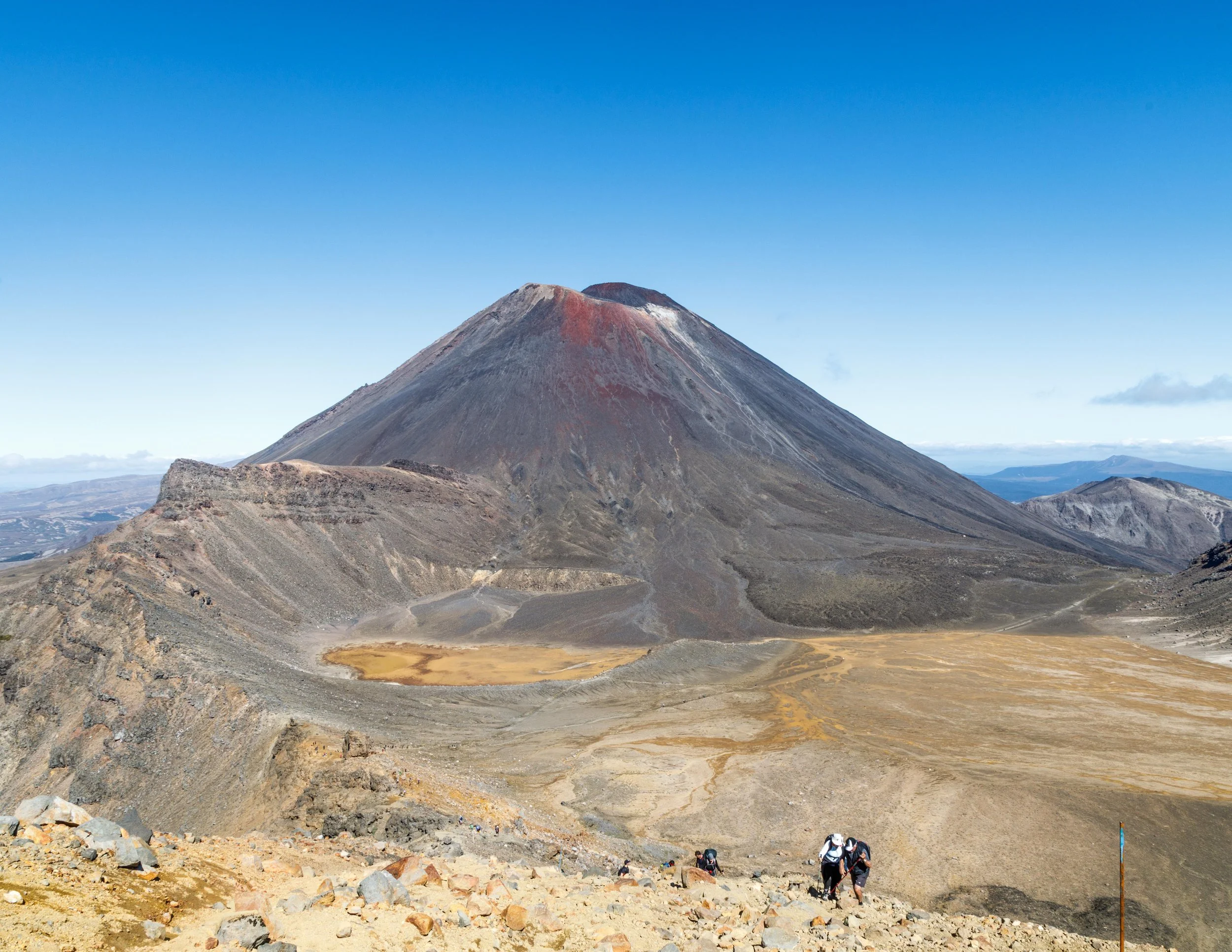
Mount Ngauruhoe from the Red Crater
However, the two day version offers flexibility which is brilliant for Tongariro. If the weather is good on one day and bad on another, then you can change the direction you hike to ensure you get the best weather for the section between Oturere and Mangatepopo (the Alpine Crossing). We had intended to hike in a clockwise direction until we saw the forecast and felt very grateful to be able to switch. Those that hiked in a clockwise direction saw virtually nothing on the alpine crossing section, which includes the spectacular emerald and blue lakes.
It also means you can add some of the really short sections to the other days (Oturere - Waihohonu and Whakapapa - Mangatepopo) , reducing the amount of nights in huts/camping, food carried, and time just sitting around.
Hiking the Tongariro Northern Circuit in 3 days
The three day version of the Tongariro Northern Circuit is probably the best version. Four days is quite long, two days is a little too short.
You can do this by walking from Oturere all the way to Whakapapa (not staying at Waihohonu). This is a fairly easy section and most people would be comfortable adding these two days together.
Some people skip the Whakapapa - Mangatepopo section entirely, getting a shuttle to Mangatepopo. If you don't have FOMO about missing a section of track this would be a good option. This trail on this section is not in good condition and it's by far the least beautiful of all the days.
Clockwise or Anti-Clockwise?
As this Great Walk is a circuit, you can walk in either direction. It makes sense to tailor your direction to how long your walk is, and - if you have the luxury - knowing what the weather is going to be like.
We would strongly suggest going anti-clockwise primarily because the Red Crater section is more manageable in this direction. Going anti-clockwise means you walk up the worst slippery scree section and down the really steep stairs, where there are rails in parts.
The track between Waihohonu Hut and Oturere Hut
Booking the Tongariro Northern Circuit
Strangely, the Tongariro Northern Circuit didn't book out too far in advance. However, this seemed to be because a lot of people waited to see the weather conditions. We noticed there was a last minute flurry of bookings on the days where the weather was good (this was the same as for the Alpine Crossing).
We booked well in advance because our schedule was fixed, but it may be sensible to keep an eye on the DOC website and book as close as possible to your anticipated date.
The track is most safely hiked during the Great Walks season between 19th October and 30 April. Outside of this time the weather is even more unpredictable and should only be attempted by experienced winter hikers. There is a greater chance of avalanches too. Bookings are not required for the huts and camp sites during this period, it is a first come, first served basis.
Hut & Campsite fees
The prices of huts and camping are different for international visitors and NZ residents. International visitors will pay more and only NZ infants go free. Huts are more expensive than campsites and the rates change depending on if you paddle during the “Great Walk Season” - 1st Oct until 31st April or outside of this.
It’s a little complex to write on this article, so we recommend clicking this link to the DOC page . Simply scroll down to the “fees and bookings” section to find the latest rates.
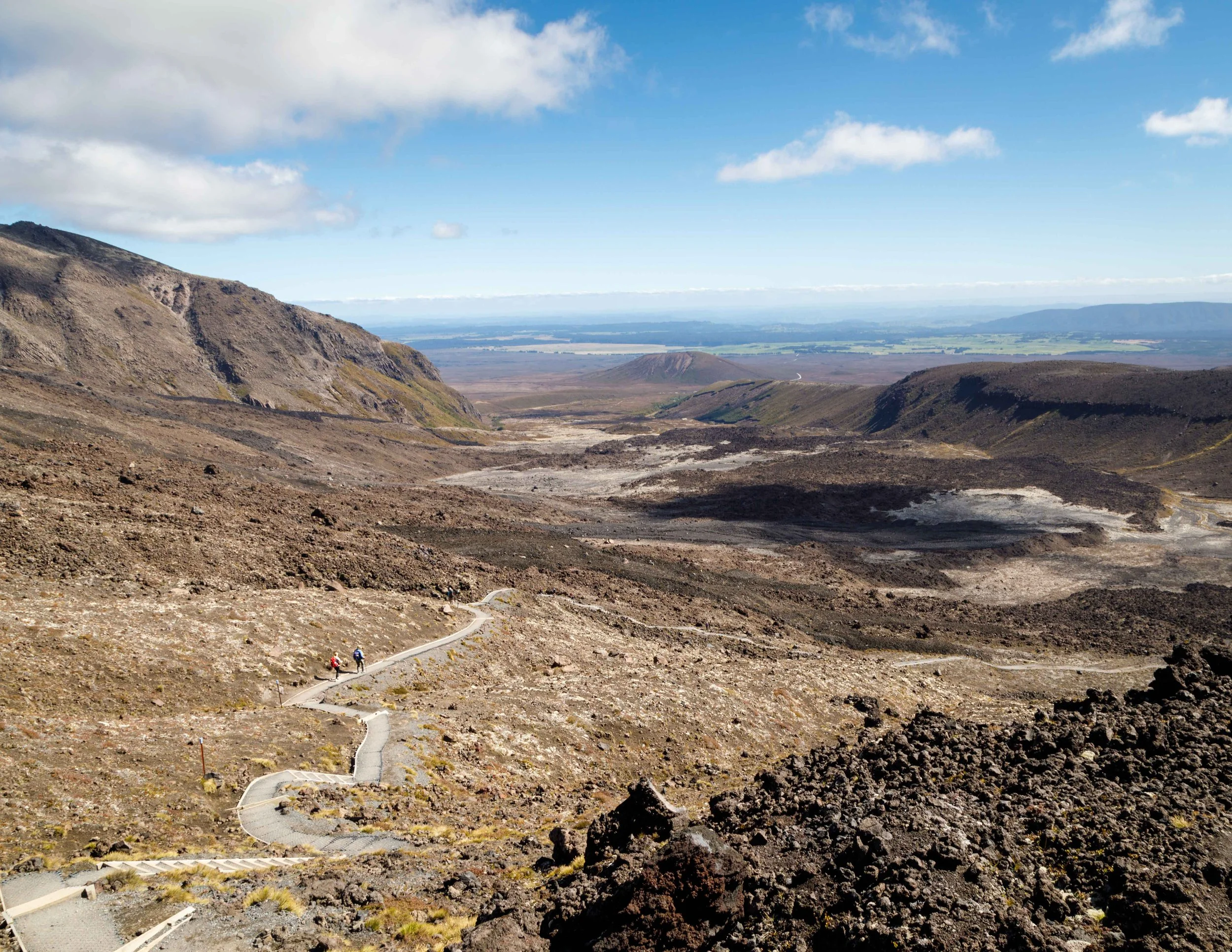
Huts on the Tongariro Northern Circuit
The huts on the Tongariro Northern Circuit were very well kitted out with gas stoves, wood fires and toilet paper. They all seemed to be of pretty good standard with Waihohonu being particularly modern.
Waihohonu Hut
The opposite of Oturere, Waihohonu Hut is large with two separate wings for bunk rooms. It has a very large communal area and outdoor area with picnic benches as well.
It has gas stoves and toilets supplied with toilet paper, but they are separate from the main building.
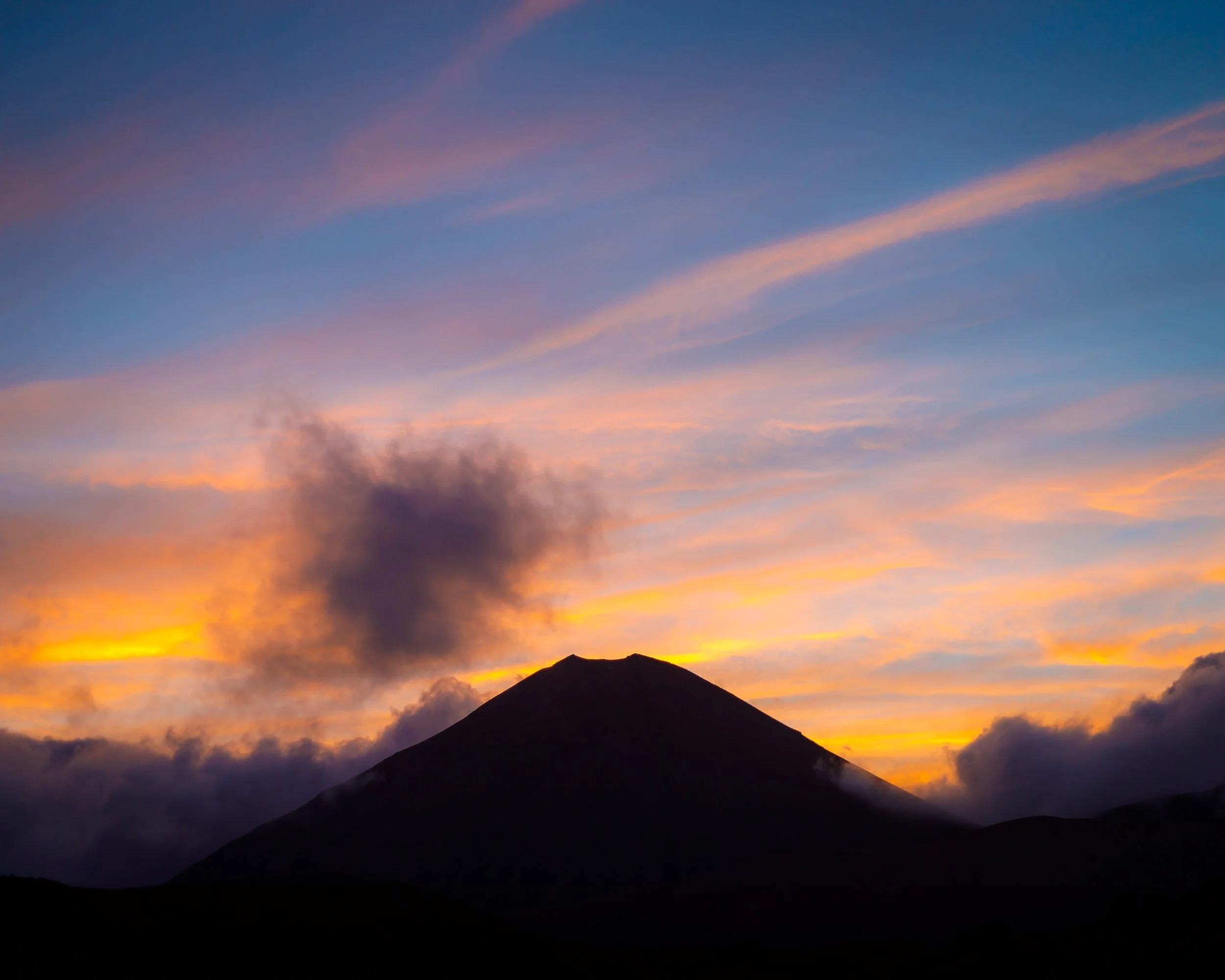
Oturere Hut during a perfect sunrise
Oturere Hut
Perched in the shadow of Mount Ngauruhoe and next to a waterfall, Oturere Hut was a very memorable place for us. If the weather forecast is good, get up before sunrise. You won't regret it, the view is out of this world. We also had a spectacular sunset from here too.
The hut is very small, meaning you'll be pretty snug with everyone else and cooking can be a very cramped affair. The majority of bunks are in the kitchen/communal area which could potentially be problematic if you want an early night's sleep. However, it's the only hut we've seen with a specific snorers room, a blessing!
The waterfall by Oturere Hut
Oturere Hut has gas stoves, and even on a very cold night this made it feel very cosy. The toilets are outdoors, separate from the main hut, and have toilet paper. They can be tricky to find in the dark but the stars and the moon make the walk totally worth it.
Mangatepopo Hut
We only stopped briefly at Mangatepopo Hut, but could see it was more like Waihohonu Hut than Oturere. It was a decent size, looked pretty new and none of the bunks were in the kitchen/communal area.
It has gas stoves and toilet paper supplied but (yes, you guessed it) the toilets are separate from the main hut.
Tongariro Alpine Crossing
Tongariro Alpine Crossing Difficulty
The Tongariro Alpine Crossing is a difficult day walk. It's exposed all the way, is very long, and has some pretty tough climbs to navigate. Although there are a lot of flat sections, there are several incredibly steep parts (you're climbing up a volcano after all!).
You should give yourself at least seven hours to complete as not only is the walk difficult, but you'll want to have time to take in the magnificent views.
Ensure you have the right gear as hiking this day walk in flip-flops is going to make your day a nightmare. Bring good walking shoes, plenty of water, warm clothes, plenty of food and suncream.
The view from the top of the Red Crater
Tongariro Alpine Crossing Shuttle
DOC have recently put a parking time limit on the car park at Mangatepopo, so you'll need to get a shuttle to do the Tongariro Alpine Crossing. You can catch these from either Whakapapa Village or National Park (that's the name of the village).
The shuttles mean you are likely to walk from Mangatepopo and finish at Ketetahi as the shuttles stop picking up at Mangatepopo at midday (meaning you would have to start at 5am from Ketetahi).
We'd recommend taking the earliest available shuttle. This means you don't have to rush this stunning walk, and you might avoid the worst of the crowds at the Red Crater. When we hiked this section, we timed it to meet the bulk of the crowds, resulting in a mass of people on a very narrow section.
Tongariro Alpine Crossing Direction
Personally, I'd prefer walking the Alpine Crossing in the opposite direction to everyone else, starting at Ketetahi and finishing at Mangatepopo. The problem with this is you'll have to finish at midday (as this is when the last shuttle goes), something which could be problematic.
However, you can park your car at Ketetahi, meaning you only have to get the one shuttle. You can also get to the Red Crater before everyone else with an early start, reaching it for sunrise which would be magical.
If you can handle an extremely early start this could be the direction for you.
Finally, the path is better in this direction. You go up the really slippery part and down the steep stairs.
Tongariro Northern Circuit Weather & Safety
Tongariro is a wild place that sees some extreme weather conditions come out of nowhere. We were lucky to have perfect conditions when we hiked, but it is very common to have gale force winds, extreme temperature drops, heavy rainfall and snow. This makes a tricky walk even harder.
We strongly suggest paying close attention to the weather forecasts on these websites: MetService NZ and Yr. Check the weather specifically for Red Crater as this is the area with the most extreme weather conditions. If the forecast is for bad weather or winds over 30 mph on the day you hike between Mangatepopo and Oturere, avoid attempting the hike.
Consult with DOC before the walk and allow flexibility. We can't state enough how dangerous it would be to climb up the Red Crater with a heavy pack in very high winds.
Also ensure you have kit for all conditions. Even on a sunny day the weather can turn cold at any time, and hyperthermia is a real threat.
One of the Emerald Lakes from the climb up to the Red Crater
What To Pack
We have created a comprehensive Great Walks Packing List that lists all the gear you need. However, if you want specific advice for the Tongariro Northern Circuit, read on.
What to pack significantly depends on how many days you're hiking, but you should come prepared for all weather on any of the walks at Tongariro.
What you don't need
Toilet paper - All huts have them.
Water purification tablets - The water at the huts was very clean and didn't need treating.
Gas burners - All huts have gas stoves.
Where to stay before and after the Tongariro Northern Circuit
We stayed in the area a few times and have several recommends. Our pick is the one closest to the trail head, and when we say close we mean close!
Our Pick - Chateau Tongariro
You can't miss Chateau Tongariro as soon as you enter the national park and it is also the starting and finishing point of the hike! This beautiful building is the perfect place to rest up before and after the hike. It also serves a cracking fried breakfast!
Check the latest prices on:


Budget - Oasis Motel Tokaanu
A motel with a thermal pool? Yep, the Oasis Motel is the perfect place to rest those aching legs having taken on the epic Red Crater. The rooms are comfortable and it is good value as well. It's not far from the hike either.
Check out the latest prices on:
How to plan the other Great Walks
North Island
South Island
This post may contain affiliate links, meaning at no additional cost to you, that we will earn a small commission if you click through and decide to make a purchase. This helps towards the costs of running our website. :-)
Like it? Pin it!

Follow us on social media
Would you hike the Tongariro Northern Circuit? Have you hiked any of the Great Walks? Let us know in the comments below!

Having hiked 9 of the Great Walks of New Zealand we know what you need and what you don’t. With advice on how to save weight, how to make sure your gear won’t get soaked and how much clothing you’ll actually need. Whether you’ll be walking the Milford Track or paddling the Whanganui Journey this guide has you covered.